Showing posts with label industrial. Show all posts

27 March, 2017

Gimme a C! - Cheerleader Outfit Designs Protected by Copyright, Says US Supreme Court

Having discussed the Varsity Brands case in the US Court of Appeals nearly 6 months ago, this writer was quite excited to hear the Supreme Court's decision in the same case. While cheerleader outfits and their designs touch on very few people's lives, the matter still will shed light on very seldom discussed aspects of copyright; something that many IP practitioners and academics will appreciate quite a bit. The Supreme Court handed down its decision only last week.

Without discussing the facts in too much detail, the case of Star Athletica LLC v Varsity Brands Inc. dealt with two companies that design and manufacture cheerleading outfits, which often incorporate fanciful designs and patterns to distinguish the cheerleaders from each other (and to bring in their respective schools' colors). Varsity had registered over 200 such designs, many incorporating "...combinations, positionings, and arrangements of elements that include chevrons, lines, curves, stripes, angles, diagonals, inverted [chevrons], coloring, and shapes". The designs at issue are registrations 299A, 299B, 074, 078, and 0815 (viewable at the Appendix to the judgment). Varsity took Star Athletica to court over copyright infringement, specifically relating to the designs above, with the matter ultimately ending in the Supreme Court.

The crux of the matter lies in whether the designs used by Varsity are protected by copyright under 17 USC 102(5) as pictorial, graphic of sculptural works, and whether they would be classed as a 'useful article' under the provision, meaning an article "…having an intrinsic utilitarian function that is not merely to portray the appearance of the article or to convey information", therefore not being protected by copyright. Useful articles would only be protected by copyright if they incorporate "...pictorial, graphic, or sculptural features that can be identified separately from, and are capable of existing independently of, the utilitarian aspects of the article". This would mean that the design used, and wished to be protected, needs to stand out on its own from the article its used on, otherwise it will be deemed as merely functional and won't be protected.

Justice Thomas, handing down the majority's opinion, then moved onto whether the designs actually can be identified separately from, and can exist independently, from the utilitarian aspects of the uniforms.

The Court set out the ordinary interpretation of the statute's text, in that for the design to be identified separately from the useful article, the decision-maker only needs to "...be able to look at the useful article and spot some two- or three-dimensional element that appears to have pictorial, graphic, or sculptural qualities". This is pretty much as simple as it gets, as the identification of a design in the article, so long as it doesn't blend into the article or isn't a part of its functionality, is most likely quite straightforward in many instances. The second part, the independent-existence of the design, is a determination of "...that the separately identified feature has the capacity to exist apart from the utilitarian aspects of the article". The design therefore has to retain its design value, i.e. remain a work capable of being protected under section 102(5); however, it still cannot be a useful article in itself even if separated from the original article it was applied to, nor will it give rise to rights in the useful article it was applied to even if it is protectable outside of that article.

In summary, "...a feature of the design of a useful article is eligible for copyright if, when identified and imagined apart from the useful article, it would qualify as a pictorial, graphic, or sculptural work either on its own or when fixed in some other tangible medium". What remains curious is the subjectivity involved in the test, where the decision-maker has to only identify the design and imagine is outside of the useful article for it to potentially be protected.
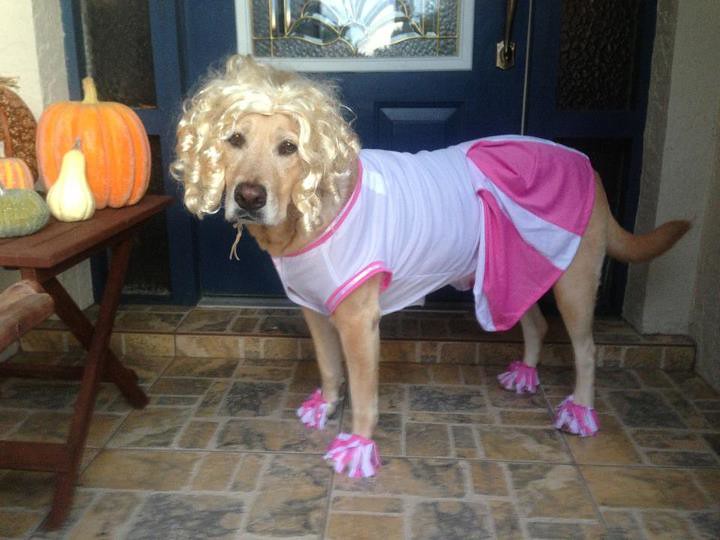
Some don't need fancy patterns to distinguish themselves in cheerleading
In applying the test to the designs in question, Justice Thomas determined that the decorations were features that had pictorial, graphic or sculptural qualities. They also, if removed from the outfits themselves, were separate from the useful article, possibly being usable in another medium, for example on a canvas as a two-dimensional work of art. The removal of the designs would not replicate the uniforms, but merely the designs used in them, therefore not making them a useful article in themselves. While the designs do include the outline of the uniform, Justice Thomas rejected the argument that this would reproduce the useful article as whole, as the artistic value in the work still remains, even recreated with the outline of where it would be applied to. This would not, as discussed above, create rights in the useful article or its construction, but merely the design.

Star Athletica put forth a wealth of arguments to contradict the above determination. Among them Justice Thomas rejected the assertion that, for protection to be afforded for the design, both the design and the useful article have to exist as such when separated (i.e. as a protectable design and a useful article in themselves), where the extracted design would solely be an artistic feature, as the focus is on the design rather than the article it was taken from and the end-result after separation for it is irrelevant. Applied art would be protected if separated, even if it fulfilled some useful aspect in the article.

The Supreme Court therefore held that the designs in the cheerleader outfits are protected by copyright, and rejected the appeal.

While the majority issued its, arguably at least, straightforward decision, there was some dissent from Justice Breyer and Justice Kennedy. The Justices, in their joint dissent, argued that the design and the dress (as depicted in the registrations) were not separable, and would merely reproduce the dress in the new 'separated' design. Due to this lack of both physical and conceptual separation, the design would not be protected under copyright. The dissent's viewpoint clearly stems from the depiction of the designs, but this writer would argue that their perspective would entail a great deal of splitting hairs. While it is clear one has to treat the design as it is presented in the registration, it is still possible to apply common sense when looking at the design from a subjective point of view, which affords this ability to both identify and imagine the design separate from the outline of a dress (or the three-dimensional depiction of the same).

The case if a very interesting one, and has finally set a clear test for the consideration of useful articles and designs in the same. While the subjectivity of the test can, and most likely will, ruffle some feathers, it seems to be the simplest and most logical approach to assessing the designs, but does leave the outcomes of cases in the hands of the respective judges and their subjective viewpoints. In its simplicity lies some level of concern, as it will undoubtedly impact the "knock-off" business, but rightsholders would argue this is the right, and desired outcome.

10 February, 2016

Rights Resurrected - The Use of Abandoned IP Rights

Intellectual property, much like many other forms of property, can become either useless or worthless to a rights holder, even if that would not be the case as it stands when the rights are let go or forgotten. A good example of this is the recent re-emergence of Crystal Pepsi; a clear Pepsi cola drink that was sold during the 1990s. Pepsi had registered the name Crystal Pepsi as a trademark, which it promptly abandoned when the drink failed to become popular. Due to a surge in demand, Pepsi reintroduced the product, and would, arguably, use the previous goodwill associated with the product to protect it (and they did successfully register the trademark again late last year). This begs the question, can you use any abandoned rights you may have in your goods or services, or any other works?

Copyright

Copyright, by its nature, is automatic, and requires no real action on part of the copyright holder. This means that a lack of use does not impact the rights given to the author of any given work, and thus copyright cannot be 'abandoned' through inactivity. In the US the situation is slightly different, and although rights are afforded through common law, one should still register their copyright in order to fully benefit from the federal protection afforded to authors (although a lack of registration does not lead to an 'abandonment' of rights).

In the UK there is no express provision for the abandonment of copyright, and therefore there is no real case of copyright revival, but one could argue that the copyright holder, in ignoring his rights and allowing for the free use and sharing of his works, could be 'abandoning' their rights to the works. One still has to appreciate that the copyright holder can at any time reassert their rights, and thus the copyright in the works is newly resurrected (although, as evident from the above, was never gone to begin with).

Our cousins in the United States do accept the abandonment of copyrights in works. The current law was explained in Capitol Records, Inc v Naxos of America, Inc, where the Court of Appeals set out that "...[the] abandonment of copyright requires (1) an intent by the copyright holder to surrender rights in the work; and (2) an overt act evidencing that intent". Arguably this could be achieved through a statement or the issuance of a public domain licence, or even through another act that shows a clear intent to abandon the rights you have in any given work (although inaction as to the works' protection would not necessarily be enough). It is unclear whether the rights holder could relinquish their rights post-abandonment, but arguably the parties who have used those works during the period of abandonment would clearly be protected.

Trademarks

As illustrated by the above example involving Pepsi, it is very possible to abandon a trademark and re-apply for it (i.e. an alternative), potentially re-appropriating that mark. What is more relevant in the context of trademarks is the potential loss of goodwill, especially in relation to passing off as a common law right, rather than a right under the Trade Marks Act 1994.

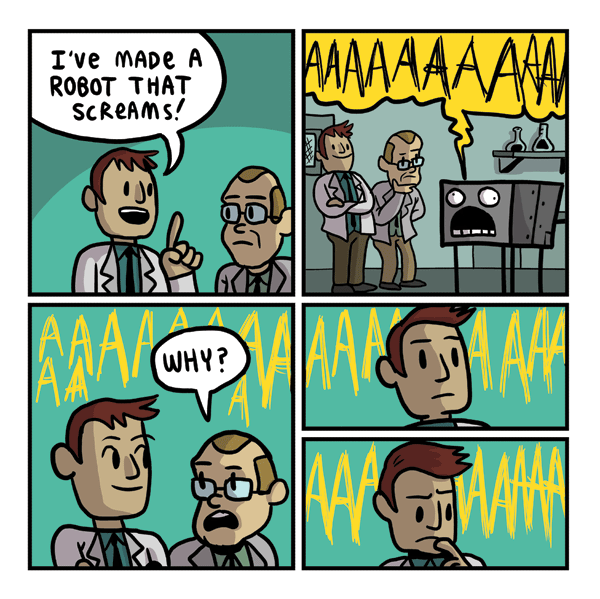
Rodney refused to abandon any invention (Source: Gunshow)
In the case of Star Industrial Co Limited v Yap Kwee Kor the Privy Council considered this question, and reiterated the existing tangible connection between a company and its goodwill; however, the latter cannot exist in a vacuum outside of the company's business activities. If a company, with intention, abandons the goodwill in a given product or company, it cannot use it after the fact. This is not as clear as that, however, as in Maslyukov v Diageo Distilling Limited Justice Arnold saw that "...the test is whether the relevant business has been abandoned so as to destroy the goodwill. Mere cessation of business is not enough... [a] cessation of production of goods or provision of services does not necessarily mean that there has been a cessation of business capable of sustaining goodwill". What his judgment seems to illustrate is a need for an active component of abandonment, rather than just a mere stoppage in trading or production, indicating clearly and without a doubt the company wished to abandon all goodwill in the relevant goods or services.

One can 're-appropriate' goodwill in goods even after the end of their production, provided that some actions have been taken to preserve that goodwill (e.g. conducting business in the area of commerce, retention of the subsidiary or corporate entity that held those rights etc.) and no active efforts have been made to truly abandon those rights. This would enable the party to assert those rights under common law in passing off, as if those rights had never been 'abandoned'.

Patents

One can abandon a patent, or an application for a patent, at any time. This would entail either not paying the requisite maintenance fees on the patent (automatically lapsing the patent), or otherwise surrendering the rights to the invention. This is not, however, the end, as it is possible to seek the restoration of the patent within 13 months of it lapsing, although only in the case of 'unintentional' lack of payment of fees. Once the patent has fully lapsed the rights to the patent expire, and there is no way to reclaim those rights (unlike in copyright or under passing off).

As is clear abandoning the rights in your intellectual property might not pay dividends, although does give the rights holder the flexibility to avoid additional legal costs or fees associated with the rights and asserting them. Nevertheless, it still might be possible to relinquish the rights you have abandoned, in very limited circumstances. This writer is a staunch believer in the retention of ones rights, but has to concede that this might not be the best option for every rights holder.