Showing posts with label third. Show all posts

07 July, 2015

Coffee Shop Conundrum - ECJ Set to Decide on Free WiFi and Third Party Liability

In a time when the internet is nearly always with us, be it in a smartphone, a laptop or other smart devices, you often taken things for granted such as free WiFi. For many travelers it has saved their behinds from being lost, out of money, or in some unfortunate cases, even potential harm, and many of us in bigger cities like London can easily overlook the need for WiFi. But, as Uncle Ben framed it so eloquently: with great power (i.e. Internet connectivity) comes great responsibility. People can be inconsiderate, and at times outright indifferent, to potential liability issues in using other peoples' or organizations' free WiFi, which begs the question: can a third-party be liable for possible infringement on their wireless network?

The answer to the question possible lies in the forthcoming decision of McFadden, faced by the European Court of Justice later this year (this writer hopes). The case, refereed to the ECJ from the Regional Court of Munich (decision in German can be found here), concerned a store owner, Toby McFadden, in Germany who's store specialized in light and acoustic engineering services. To further promote the store and its offerings the owner allowed potential customers to freely access a WiFi connection, with no password protection included. An unknown user used this free network to upload and share an infringing song on an online file-sharing platform, and Mr. McFadden was subsequently sued by Sony Music who argued he is liable for the infringement (among other things) that occurred on his unprotected network.

The case does bring forth several questions concerning Article 12 of Directive 2000/31/EC, more commonly known as the E-Commerce Directive. Although each of the questions merits an assessment in their own right, for the sake of brevity this writer shall endeavor to answer the question above, at least in the light of Article 12.

Wifi can cause some degree of envy
What Article 12 seeks to protect are service providers, or in other words 'mere conduits', who provide a service such as free WiFi, should they remain largely hands-off of the provision of that network (i.e. don't cherry-pick the users accessing the network, don't initiate the transmission of information or alter what is received in some way). This, however, cannot be a service for which the provider is remunerated, per Recital 18 of the Directive, and aims to facilitate the better sharing and access of information within the European Community.

This writer will freely admit his lack of knowledge in German law, but proposes to give a perspective from the UK side of things. Pinsent Masons in their Out-Law blog have set out that, per German law, individuals have to secure their internet connections through reasonable means, such as a password, to avoid liability should a third-party use their connection for nefarious purposes; however, this standard does not extend to commercial entities, which the case aims to settle.

Under the Copyright, Designs and Patents Act 1988 the High Court has the capability to issue an injunction against a service provider, provided that the "...service provider has actual knowledge of another person using their service to infringe copyright". What this has been interpreted in Twentieth Century Fox Film Corp & Ors v British Telecommunications Plc to encompass is true knowledge of one or more infringers using the provided network to do so, and the more detail of knowledge or facts given to the service provider (notices etc.) the less protection the provision offers to them. One could argue that a lack of password protection would not in itself give rise to an actual knowledge of possible infringement, as users, even if filtered through via password protection, could still abuse the network without the knowledge of its provider.

Whether Mr. McFadden was brazenly aware of the infringing acts being committed on his network is unknown to this writer, and he awaits the decision of the ECJ with some interest. Voices have been raised in the protection of open networks and access thereto by entities such as the Electronic Frontier Foundation, and one must agree with them to a certain extent. The 'locking down' of networks does provide a more cumbersome regime through which information and the Internet can be accessed, but one still does have to keep in mind the protection of legitimate rights within that space. What the ECJ decides will undoubtedly have ramifications on our WiFi networks, but one can imagine they'll only remain a login away.

Source: JDSupra

08 May, 2013

The Enterprise and Regulatory Reform Act 2013

A piece of legislation having incited a lot of conversation among the copyright law community in recent times is the Enterprise and Regulatory Reform Act 2013 in the United Kingdom, having been given assent last month, and finally having its final draft released early this month. The discussions around the Act have been largely focused on its approach to orphaned works, especially relating to photographs, but what could the impact of the legislation potentially be?

The Act mainly deals with amendments relating to corporations, mergers and markets, but the inclusion of copyright provisions seems to have fallen into the spotlight more than the rest. Section 77 adds a licensing scheme to works, which after a diligent search, have become orphaned as the owner of the copyright has not been found or cannot be contacted to attain a license to their work. Once this has been established, regulations passed by the Secretary of State could allow for that work to be  licensed to the party or parties seeking to use it for their own purposes for a fee.

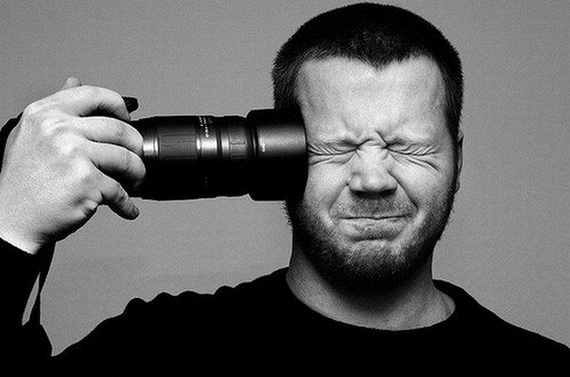
Photographers should never resort to drastic measures
What causes the most concern to owners of copyright works, especially photographers, is the lack of definition for what a 'diligent search' would entail, as it isn't defined in the Act, and the nature of the environment where their works currently reside for the most part; the Internet. Looking at the former, what potentially could amount to a diligent search remains quite open, and will without a doubt be looked at by the judiciary in coming years once the Act has come into force. On the face of it one could imagine it encompassing would be proper investigation, through the means of Internet searches for similar imagery and trying to attain who the real author is, or by the use of other means of identification, such as watermarks or digital signatures in copyright works. What makes this issue difficult is the nature of the Internet, where information (including copyright works) is passed on and on, used and copied, diluting or even eradicating the underlying metadata from works, possibly rendering the identification of the copyright owner near impossible. Also the lack of clarity as to what amounts to a diligent search further adds to the ambiguity, since if a lower threshold is introduced amounting to a diligent search, the Act could potentially create a loophole through which works could be abused by those wishing to use them for their own benefit.

One thing I also have to note is a lack of a way of redress for those whose works have been licensed under the Act. There is no provision enabling the original copyright owners from enforcing their copyright once the license has been granted, even after they have identified the work or works as their own, clearly opening the provision up for possible abuse without repercussions. Surely such an omission is one which could harm the creative industry, however as I've stated this is purely speculative and whether this will cause any abuse or harm remains to be seen. The Act has already ruffled some feathers within the creative community, so its potential impact seems to be real and threatens those within the industry.

The Government has posted a list of Facts and Myths about the Act, and also provided some clarifications as to its effects and implementations.

Independent third party;  Sherlock Holmes
The IPO never addresses the matter of what a diligent search is, even in its notes mentioned above, but it does give some indication as to the process, where a diligent search will be "...verified by the independent authorising body which the Government will appoint before a work can be used". What this means is that the process will be an evidentiary process, so there will be no automatic scheme implemented, and all licenses should go through a more rigorous process before being granted. Not only will this provide a minimum threshold, but also an independent body whose sole job it will be to wade through the sea of applications.

The Act does not remove any automatic rights in works, nor does it allow for them to be 'stripped' from them, contrary to the belief of some parties. What it does is introduce a potentially harmful scheme, but as said, it will remain to be seen how or whether this will impact authors of copyright works. The IPO also indicates that authors will have a say in the final draft of the Rules, giving them more say in the process coming down to its finalization and establishment.

Also the licensing fees paid will be held for the copyright owner to claim, allowing for some amount of compensation should the works' owner or owners come to light, but it still does not address the possible financial loss incurred from a very successful use of a copyright work.