The final third installment of my short introductory series into Chinese intellectual property law will discuss the final big area of intellectual property: patents. The current legislation in force in China dealing with patents in the Patent Law of the People's Republic of China (English translation can be found here, Chinese text here), having been enacted in 1984. The legislation has seen several amendments in the last few decades, with the last having been made in late 2008.
Much like the previous two subject matters discussed, copyright and trademarks, much of the content in the Chinese legislation is dictated by international treaties and conventions, making the legislation similar to those found in other signatory nations. Even though the content of the legislation would seem to afford protection much like in other nations, there are issues which still linger, which shall be discussed later in this piece.
As has been the case in the previous two instances dealing with other intellectual property topics, the Chinese law provides us with a great explanation of its goals:
"This Law is enacted for the purpose of protecting the lawful rights and interests of patentees, encouraging invention-creation, promoting the application of invention-creation, enhancing innovation capability, promoting the advancement of science and technology and the economic and social development".
 |
| Your friendly neighborhood patent troll |
The Chinese legislation sets out patentable subject matter as "...inventions, utility models and designs". All three are defined even further in the provision. Often left as merely an 'invention' in other jurisdictions, such as Australia, all three should cover any and all patentable content accepted in other nations with similar legislation. The law however does not allow the patenting of inventions which violate the law, social ethics or harms public interest. What would constitute as violating 'social ethics' seems to be incredibly vague, but arguably could pertain to human experiments for example.
The law also sets out when a patent is the property of an employer. Should the invention be created "...in the course of performing the duties of an employee, or mainly by using the material and technical conditions of an employer" the employer has the right to apply for the patent, not the inventor. The latter part of the provisions grants the right even when just using the equipment provided by an employer and does not require an explicit agreement as to the transfer of the patent to the employer, which is a relationship defined in a much stricter sense in other jurisdictions. Is the ability to apply for the patent given automatically, what is the degree of use required? Clearly the provision could give the employer an upper-hand and could be abused to strip inventors of their patents. The provision does however expressly state that any contract giving the rights to the inventor shall prevail over the mere use of the technical conditions or equipment.
Basic requirements for an invention to be patentable are very much like ones found in Canada or Australia for example; an invention has to be novel, creative and of practical use. Although worded slightly differently, one can equate the terms in the Chinese provision with terms often used in the common law jurisdictions: novelty requiring the technology being something entirely new; creativity pertaining to a requirement of improvements to any possible prior art (i.e. inventive step); and practical use requiring a possible manner of manufacture or production, with positive results, in other words, is useful. Excluded subject matters are, again, much like in other jurisdictions, including plant and animal varieties, scientific discoveries and methods of diagnosis or treatment of diseases. The Chinese legislation saw some big changes in its third Amendment, one creating a 'absolute' requirement of novelty, which prohibits the patenting of something already published or disclosed either in China or internationally. This is a transition from the old 'relative' novelty in prior provisions, where the use or publication of something outside of China would not prevent its patenting in China.
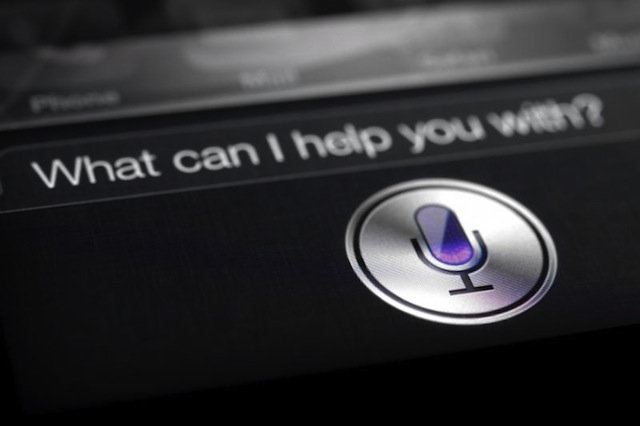 |
| Siri faced patent litigation in China |
What plagues the Chinese patent system is not the process itself, it being much the same as in a plethora of countries, but in the enforcement of the patents and their protection. An extensive report on the matter written by the USPTO details much of the downfalls of the Chinese system, but still showing the improvements being made. The biggest issues noted of in the report relate to the rule of law (transparency, certainty, fairness, impartiality and consistency of judgments); efficacy of remedies and their enforcement; and short-comings in certain types of patents in China, such as pharmaceutical and utility model patents.
For the previous two installments, please refer to the links offered at the top of the article. As these articles are merely meant to be overviews of Chinese law, should any glaring omissions exist please do let me know in the comments of the given article (or this one) and any possible mistakes shall be corrected posthaste. Chinese legislation and its application contains more intricacies than I have even begun to discuss, so some aspects have been left untouched due to lack of knowledge on the writer's part.