Showing posts with label intellectual property. Show all posts

10 March, 2021

Non-Fungible Tokens (NFTs) are All the Rage - It Is Not Copyright and is Ripe for Misunderstanding and Misuse

Anyone who works in the sphere of intellectual property in the law will have come accustomed to misunderstandings in how various IP rights work, what they mean in real terms and how they can be utilized by both people and businesses. Recently I have come across a new world of "copyright" (even though it is not copyright in any form) that seems to be speculated over, which is Non-Fungible Tokens or NFTs that are used to sell "rights" in digital art. 

For the uninitiated, NFTs are a part of the Ethereum cryptocurrency blockchain, allowing for the distribution and/or sale of unique (i.e. non-fungible) tokens that are separate from the cryptocurrency itself. NFTs themselves can be anything that is digital, and identified as unique through the token (proving that the piece is indeed the original), and can be sold much like a physical piece of art, but in the digital world. What has made things surprising to this writer is the misunderstanding and mixing up of NFTs with copyright, so it might be worth discussing the differences between these and the implications of copyright on the sale of NFTs. 

As a brief primer, copyright is an IP rights that protects the expression of ideas, but not the ideas themselves. This means that you will have copyright in e.g. a piece of art you draw, a photo you take or a video you create, and can utilize copyright to prevent others from copying that work. This also enables the licensing of these rights to others, allowing them to copy the works under the terms of the license; however, copyright does not really impact the sale of a physical item such as a painting. Often the latter point leads to confusion as to the application of copyright to the sale of works, but it undoubtedly will impact the sale of digital copies of works. 

The potential problem with how NFTs are portrayed seems to equate them to the world of copyright, meaning the NFT gives you some sort of rights over the digital art you've purchased the token for. In fact, this is not the case, since NFTs don't give anyone any rights over the digital art, but simply act as provenance to the fact that you "own" the original digital piece. Even though you "own" the art, the ultimate copyright holder retains the rights over the distribution of the art piece. 

With that in mind, do you actually own anything? Yes and no. You own the 'receipt' for the digital art piece in the form of the NFT, but this doesn't give you any further rights, especially under copyright. The artist keeps those rights unless they sell it to you along with the NFT (and in most instances they will not do so). 

One issue that can be overlooked here is individuals or companies could conceivably claim an NFT on works that are not their own and take away monetary gains from artists who don't know, or haven't cared to, do so themselves. This could then lead to a wider sharing of works through these "authenticated" copies that negatively impacts the artist, including the aforementioned monetary loss through a missed opportunity to sell a genuine NFT to your works. Artists will have claims under copyright to challenge the sale of any NFTs (and the potential distribution of their works). 

It seems that NFTs are riding the craze of cryptocurrency, and one should be careful and understand what NFTs actually mean in terms of ownership, and what implications there are in the light of copyright. There will be issues that artists, sellers and purchasers will have to keep in mind, and while it might be cool to "own" a 'signed' copy of a piece of digital art when you buy an NFT, its limits are simply that; it's a way to prove that you have potentially purchased the genuine article, but that's it. 

07 March, 2014

Intellectual Property Law and Sports

As an avid fan of a number of sports, this writer for one understands the importance which it carries, not only to individuals who enjoy watching and rooting for their favorite teams and players, but for the organizations who benefit from fans engaging in their sport. Even though sports in general enjoys a massive following all over the world, its relation to intellectual property can allude the layman, and just how much teams and players can have invested in their particular organization or brand.

Probably the clearest example of intellectual property and sports teams being intertwined is their ownership of several trademarks, relating undoubtedly to their name, logos and the like, if possible to register. Such an example is the football club Manchester United, who own trademarks in their logo, name and their respective variations. Issues relating to trademarks and football clubs have gone as far as the European Court of Justice in Arsenal v Matthew Reed, only adding to the clear importance these types of marks carry for teams.

Even the equipment which is used in a variety of sports can be patented. Examples of this are old patents for a basket ball from the 1920s, and a patent for the manufacture of a baseball bat from 1902. As one can imagine, incredibly popular sports such as the above, can produce quite the monetary incentive to lock down the production of a certain essential piece of equipment. In addition to the equipment used in games, apparel used can be, and has been, patented. Basketball shoes and football pants have been patented in the early part of the 20th century. Much like the equipment themselves, the sale of apparel can be quite lucrative, with basketball shoes alone yielding over 2,7 billion dollars under Michael Jordan's name. Something which often does not come to mind as a patentable subject matter in relation to sports are the rules of the sports themselves. The rules of American football were patented in the 1980s, and the game ping-pong was patented as early as 1902.

On a more specific level intellectual property can even protect the personalty of athletes. These are what are called 'personality rights', which exist in the majority of common law countries for example. In the US, States have independent laws which protect personality rights, as opposed to a nation-wide federal law, such as in California. These rights protect the image of a celebrity, which includes the image of professional athletes in sports. This protection can extend to protect the person's image being used without authorization for the sale or promotion of goods or services.

A much lesser known, and more recent, instance of where one can see intellectual property law and sports collide, is in relation to tattoos (something which has been discussed more extensively on this blog before). A very minor issue, and something which will not be noticed by many, but goes to show just how nuanced the relationship between law and society can be, even when talking about sports.

As you can very well see, intellectual property has its place even in sports. What has been said above is only a slight overview, with much more to discuss on a more in depth scale, so if this piques your interest, please do read more about the subject.

28 April, 2013

Safe Harbors and 70s Music

Online services in the United States, such as websites where content is shared, have relied heavily on the protection of the Safe Harbor provisions in the Digital Millennium Act to protect themselves from infringement through their services. The provision itself excludes online service providers from liability should the users of their services do so, on the condition that they are unaware of this activity and should they be notified of any infringements, take immediate action to stop the infringements or remove any infringing material. As one can see, the legislation encourages service providers to take a proactive stance, and limits their liability should their services be misused in a way which they're unaware of. From a provider's stand-point not only does this allow for start-ups to engage in their respective service provision, but it also prevents them from being immediately swamped by law suits and therefore never getting off the starting line. The matter of whether service providers, specifically music streaming services, would be protected from liability for sound recordings made before protection was awarded to them through Statute in 1972 (albeit still existed through common law) was deliberated by the New York State Appeals Court a mere few days ago in the case of UMG Records Inc v Escape Media Group Inc.

The grooviest of all sharks
The case concerned the website Grooveshark, where users could stream content that uploaded by other users,creating playlists or listening to selected artists, with revenue coming through user subscriptions or advertisements during streaming. The claimant, UMG Records argued that the Safe Harbor provisions did not offer escape from liability for service providers, due to the DMCA amending the prior Copyright Act which expressly set out that any sound recordings made before 1972 would not be covered under the Federal legislation. This would in turn mean that the amendments made in the DMCA would not apply to those songs, rendering the Safe Harbor provisions unusable to protect service providers, as liability would still exist through the common law.

In their decision the court stated that the provisions would not apply to songs made before 1972, causing the service provider to potentially be liable under common law. The decision went against a District Court decision a few years before, Capitol Records v MP3tunes, where Judge Pauley saw that there was no indication that the legislation would exclude sound recordings made prior to 1972. The decision in the NY Court is one of strict interpretation, and in this writer's honest opinion, lacks the common knowledge and application to today's needs for service providers. The legislation does not expressly limit its scope, and applying pre-Internet legislation in its interpretation would undermine what the Safe Harbor provisions set out to achieve; to offer protection for service providers in an age where millions have access to services, making their full control and prevention of infringement an arduous and difficult undertaking. The case will be appealed and hopefully rectified in higher courts.

The case itself shows yet again, as has been discussed in this blog several times, the datedness of copyright legislation in the US. Without express and clear provisions dealing with subject matters such as this, bringing copyright legislation to the 21st century, both users and service providers will end up fighting an uphill battle trying to protect their rights and ability to utilize the Internet to its fullest. Whether action will be taken will remain to be seen, but there clearly is a need for reform.

Source: Thomson Reuters

18 April, 2013

The First Sale Doctrine takes a hit - you can't resell digital music

The anticipation of whether the Kirtsaeng v John Wiley and Sons would change the way in which we're allowed to resell our legally purchased goods (discussed on this very blog here) was huge, both in the legal world, and in the minds of consumers just aching to sell off that CD collection bought in Europe. Well, it looks like we've taken the first step towards the limitations of the First Sale doctrine.

A US Federal Court handed down its judgment in the case of Capitol Records v ReDigi Inc at the end of last month. The case concerned the resale of digital music bought on iTunes or other digital marketplaces through the service offered by ReDigi, where users could sell their legally acquired smash hits to others who are looking for said music - much like a digital flea market if you will. The company was then sued by Capitol Records for copyright infringement.

The case in itself presents and interesting view of whether the First Sale doctrine could be applied in a digital world. Kirtsaeng dealt with the resale of physical goods, i.e. books, whereas the resale of digital goods would require the transfer of a new copy from the original music file through ReDigi's service. This is the reason which felled ReDigi's argument in the eyes of the court. The US Copyright Act  mentions a 'specific' phonographic record (a fancy way of saying a music recording), and making a copy from the original would not be within the remit of the doctrine. In ReDigi's defense they did argue that "technological change has rendered its literal terms ambiguous...", which in this writer's mind would be a valid point. If the copy could be traced to a legitimate copy, that should surely allow for it to be sold regardless of it being in a physical medium or not. Alas ReDigi's argument was rejected, and from a lawyer's perspective that holds to be true. The Court further noted a provision in the Digital Millenium Act which effectively prevents the redistribution of digital works. The Judiciary is not in the place to change laws, but to merely interpret them, and the approach taken by the Federal Court seems to be right in this case.

Spending all that money on vinyl finally paid off!
Here the law perfectly illustrates its dated approach to copyright law, having been enacted well before a time where such transfers of music or any other digital medium were even possible. Discussion in most common law countries over needed changes to the law, as noted on this blog as well, has been very active in the last few years, and cases such as this do highlight this fact very well. Should we be able to sell the goods we legally buy regardless of their tangible or intangible nature? Of course, especially when more and more music is being sold digitally than ever before. As it has been said before the gauntlet has been thrown to the legislatures of most common law countries to modernize their approach to copyright in current times. Whether they will act on this call to action remains to be seen, but as more and more commercial interests shift to the digital arena, the pressure for them to act will grow and change should come.

08 April, 2013

Retrospective - Stop your downloading! The liability of ISPs in Australia

The advent of fast Internet connections and the abundance of copyrighted material on offer through various channels and consumer's taking full advantage of both in getting their media fix. Content is available through legitimate means, for example iTunes or other online distributors, or through streaming services such as Netflix. However the flip-side of the coin is thought to be darker; downloading of music illegally, the streaming of movies and TV, all presenting an issue in themselves. The question often raised by both rights holders and the legislature is; "who is responsible for all of this?!" At the core of it, the choice to illegally download material is one which the consumer (yes, you) makes, and supervision is purely on the legislature to ensure it stays on top of the alleged infringements. But what if responsibility is passed on, not to the person infringing, but the entity providing them the service? To understand the relationship between an infringer and an ISP (Internet Service Provider) when it comes to copyright, let me give you an analogy. Should the entity providing the roads where we drive on be responsible for the misuses of those roads (owned by a company in this example)? The roads would presumable be intended for all who follow the laws and rules related to driving on the road, yet there still are people who drive over the speed limit or under the influence of substances. Should the company providing the roads be liable for the drivers’ potential infringement of those rules? The issue of responsibility came up in the High Court of Australia in the Roadshow Films Pty Ltd & Others v iiNet Ltd case back in 2012.


"Can't see any infringements here, Dave"
Under the Copyright Act 1968 in Australia, section 101 sets out that an entity 'authorizing' an infringement of copyright would be liable in their own right, depending on a number of variables. The degree of control they have over the user in preventing their act; the nature of their relationship; and whether they took any action to stop or avoid the infringement by the user. Purely looking at the legislation you could imagine ISPs being in hot water. Due to ISPs controlling an individual's access to the Internet, you could imagine shutting down their illegal use of that service would be simple? Not so much. The sheer amount of subscribers makes monitoring the network usage a massive endeavor, and from the get-go, should ISPs even control what we do on the Internet? After all, that could be an infringement of their freedom of speech. No laws state any liability for ISPs currently, making their responsibility for our actions farfetched at best. Also with a lack of any guidelines adopted by all ISPs, the user could simply switch to another provider without any ramifications, avoiding his ban on his illegal use.

The High Court quickly dismissed iiNet's liability, due to the nature of their relationship with their subscribers. An ISP hardly can control the decisions its subscribers make, nor can they change or control the software which they use to attain or upload any infringing material. The Court also agreed with my earlier notion of the amount of subscribers, as overseeing thousands of users on a daily basis would be near impossible. One judge however did not see it the way the majority did (Justice Jagot) and stated in her opinion that iiNet's effectively approved the infringements of their users through their indifference. I for one cannot understand how her Honor could equate the relationship between an ISP and a single user of its network from thousands to effectively that of a parent ignoring its child's bad behavior. The High Court subsequently dismissed Roadshow Films' appeal.


Post-iiNet reaction from a network administrator
When wondering how the dynamic of an ISP and a user would have changed, if the High Court would have seen things much like Justice Jagot, the nature of the Internet could have been completely changed in Australia. Presuming ISPs would need to monitor and control all of their users’ traffic and web activities would have turned the Internet from a bastion of freedom of sharing, expression and connectivity, to an ultra-controlled authoritarian network, much like that in China where information is filtered and fully controlled. The freedom of the Internet is built on the ability to utilize it as one sees fit, and pay for any consequences that might come from their use. There have been talks about imposing further liability, yet with the European Union stepping back from such legislation, the Internet should remain the same, at least for now.

01 April, 2013

The Register’s Call for Updates to US Copyright Law

Not to be confused with a copyrighted seal
Being one of the biggest producers of copyrighted material in the World, the United States and its laws have clout all over, regardless of jurisdictions, through either free-trade agreements, or sheer market power. In a society where more material is accessed outside of the domestic market of a nation than ever, legislatures in all countries have to try and keep up with the constant change that we experience in the consumption of said material. In a call for copyright law reform, as reported by the Creative Commons blog, Maria Pallante of the US Register of Copyrights seeks to close the rift that exists between the consumer and the copyright holder's rights in the United States today.

In her statement Ms. Pallante says that:
"The law is showing the strain of its age... authors do not have effective protections, good faith businesses do not have clear roadmaps, courts do not have sufficient direction, and consumers and other private citizens are increasingly frustrated."
This can be applied, not only in the US, but in Europe as well. With a clear lack of proper guidelines and laws to govern both personal use by consumers, be it copying or sharing, and the courts stretch existing laws to cover areas which they were not meant to cover. Copyright laws in most common law jurisdictions are lagging behind, and there seem to be no efforts in trying to pull them towards a new era. Even in the United Kingdom there have been calls for reform, yet they seem to have fallen on deaf ears.

Orphaned works are a perfect example of the law failing to accommodate the needs and wishes of today's public. Orphaned works are effectively works which are still under copyright, where the author(s) or other copyright holders cannot be located or contacted. Google started the mass digitization of orphaned works, and faced litigation because of this, showcasing the clash of the interests of those holding the rights to the works and not utilizing them, going against the greater good through free access to these works. Should copyright prevent access to information not being used, or move towards an avenue more akin to that of trade marks, where the rights holder should actively use the work being protected? The current legal framework does not address this issue.

Ms. Pallante further expands that:
"...it is time for Congress to think about the next great copyright act, which will need
to be more forward thinking and flexible than before... A central equation for Congress to consider is what does and does not belong under a copyright owner’s control in the digital age. I do not believe that the control of copyright owners should be absolute, but it needs to be meaningful."
Flexibility is what the modern age requires. When technology moves at such a pace that it does these days, the new law would have to be flexible and maneuverable, both to protect the interests of copyright holders, and to help consumers use the content they have legally acquired. The path modern laws have taken in a variety of nations has been increasingly draconian, and in this writer's opinion, this trend needs to end.

The new law needs to be worded in anticipation of the ever more digital world, with the old laws concentrating on the physical mediums of copyright, the new law has to look forward to the intangible. The wording has to be open enough for the judiciary to easily apply it in a variety of situations, while being specific enough to protect the interests of rights holders. I will admit this will be a challenge for any legislature, but one where consultation needs to be sought from both sides, not merely from the ones with a clear monetary interest.

Ms. Pallante also brought up the main question that needs addressing in the new law:
"If Congress considers copyright revision, a primary challenge will be keeping the public interest at the forefront, including how to define the public interest and who may speak for it... Congress should look to the equities of the statute as a whole, and strive for balance in the overall framework. It is both possible and necessary to have a copyright law that combines safeguards for free expression, guarantees of due process, mechanisms for access, and respect for intellectual property."
Rounding up her argument, Ms. Pallante points out that:
"The issues of authors are intertwined with the interests of the public. As the first beneficiaries of the copyright law, they are not a counterweight to the public interest but instead are at the very center of the equation."
The Harlem Shake, an example of "proper" free use of copyrighted material
This writer fully agrees with Ms. Pallante in her call for reform - not just in the US, but all over the common law. The interests of the public, and rights holders, are of equal standing, and the shift towards a more common and level playing field for both parties needs to be taken. The consumer has to have rights in using the material they have rightfully acquired, yet still keeping them from freely copying and sharing that content to provide an illegal way for others to get that material. Whether this call for reform will result in any changes remains to be seen, but this writer will remain hopeful.

27 March, 2013

Retrospective - Where it all began

The history of IP law is a colorful one. The changes it has undergone and how the rapid evolution of both the creation and sharing of ideas and expression has made the landscape where the law operates very different to what it was when it all started.

Copyright

Queen Anne was a fan of books, and a snappy dresser
Great Britain was the first nation to enact a law which regulated copyright, instead of it being handled by the parties involved without any government interference, mainly the Stationers' Company. The law in question was the Statute of Anne 1710. The law sought to encourage learning and advance it through the limitation of certain rights in books, ones which echo even today's legislation, although very faintly: it gave the rights to print and copy published material to its creators, not the publishers of the books. This was a significant move from a system that lasted for almost 50 years. Copyright didn't exist automatically in any works, unlike like today, but all works needed to be registered for any rights to exist in that material. The Statute of Anne was a major piece of legislation until its repeal through the Copyright Act 1842, lasting for well over 100 years. The Americans largely followed the Statute, although it is still disputed whether they actually did. This lasted till the enactment of the US Constitution.

Patents

Most of the Commonwealth countries have their patents laws base on the Statute of Monopolies 1623. It is seen as the first real law dealing with patents, both in the United Kingdom, and through it subsequently adopted in one form or another in its former colonies. It both abolished old patents existing before the law, during and in the future. It also restricted the application of patents and set strict limits to who can give them. The Statute was a major change, and is one of the most important pieces of legislation in the history of patents. The US, yet again not wanting to conform, did not follow the Statute of Monopolies as such, however their use of patents in commerce is believed to have stemmed from the law. The US Constitution set out broad principles for all IP matters, which also dealt with patents, however more specific legislation was enacted both in individuals States, and finally on a Federal level in 1790. Patents have since gotten more specific and complex, yet the heart of the original laws still remain.

Trade Marks

A relatively late bloomer in the sphere of IP legislation, trade marks did not have any codified protection until the Merchandise Marks Act in 1862. The old law, much like copyright and patents, also echoes the sentiment of current legislation, although speaking of "defrauding", which is not used in today's laws. The United States, much like the UK and its colonies, protected trade marks through the common law (meaning no laws protected them specifically, but unwritten customs and precedent), until the enactment of the Trademark Act 1881

Designs

The first instance of designs protection was in the UK, with the enactment of the Designing and Printing of Linen Act in 1787. The Act, as its name so implies, dealt with the designs related to a number of different fabrics, and only offered protection for a measly two months after printing. The Act was expanded on almost 50 years later, in the Copyright and Design Act 1839, taking designs protection further than the textile industry alone, and introduced a system of registration for designs.

As you can see, the roots of IP law are deep in all common law countries. What it was a few centuries ago can still be seen in today's laws, and the impact their development has had, and continues to have, on people and their expression is profound. Most of them were protected well before the enactment of specific laws relating to them through the common law, so their roots go even further if you go beyond laws alone. 

25 March, 2013

You bought it, you own it - The First Sale doctrine in the US Supreme Court

The American Supreme Court delivered its judgment a few days ago on a case which was long anticipated to possibly change the landscape where copyright exists, both in the US and globally. And it possibly might have done just that.

Kirtsaeng v John Wiley & Sons set an interesting precedent in the world of reselling a copyright work you have legally purchased, once you're done with the item. The case itself dealt with the resale of College textbooks by Mr. Kirtsaeng, which he brought over from Thailand, having been sold there for significantly less than in the US, making this the perfect opportunity for him to make a quick buck, while retaining the moral high-ground of helping his fellow students saving said buck (to use on nice things, I'm sure).

In previous years, had you done just what Mr. Kirtsaeng did, you would've been sued for copyright infringement the moment you brought the books over into the US and attempted to sell them. How was this allowed, even if you legally bought the books and merely brought them over to sell what's yours? This is due to the interpretation of the First Sale doctrine in the US Copyright Act under section 109, which states that: "the owner of a particular copy [of a copyrighted work]... lawfully made under this title, or any person authorized by such owner, is entitled, without the authority of the copyright owner, to sell or otherwise dispose of the possession of that copy..." When looking at the language of the section in itself, one cannot understand why it would act exactly against what it plainly says; that a person can sell what he has legally purchased without asking the copyright holder's for permission to do so. The interpretation of the section limiting it only to copies bought within the US was yet another Supreme Court statement in a different case, Quality King v L’Anza Research International. In the case the Supreme Court found that the definition of section 109, albeit stated purely as dicta (a legal term meaning it was not a matter contended in the case itself, but is merely a statement of opinion as to what the law is, making it non-biding in future cases, but can be used as a persuasive argument), that it would prevent the sale of copies in the US bought outside of the US itself. This definition has since been used to do exactly what Mr. Kirtsaeng contended. The outcome allows a person to sell what's rightfully theirs, even if it was bought outside of the US (though the copy has to be a legally made one, authorized by the copyright holder - I'm looking at you, bootleg CDs, videos and the like!).


These kids paid nothing for their books
So what does this mean for the consumer or the media industry? It will remain to be seen. Whether it will change the pricing dynamic in the US, bringing prices more closer to foreign ones if cheaper, is something that only time will tell. Will consumers take this and run with it? Will companies act preemptively to undercut their own prices to match those in cheaper countries? Personally I can't really say. With college textbook prices increasing over 600% since the 1990s, one can only hope the benefit will be to the end consumer, even in other categories of media.

Overview

So now you might be scratching your heading thinking "I have heard of intellectual property, but I'm not entirely sure what it encompasses". Let me enlighten you!

Intellectual property law covers a number of areas, and without getting too technical they are as follows:

Copyright

Internet pirates are real
The first, and far most influential and controversial topic of them all in today's society. Internet piracy and its alleged effects are discussed almost on a weekly basis in the news, and as technology evolves how copyright grows with it is an interesting sight to behold. Remember when cassettes were killing the music industry? No? Well you just made me feel incredibly old. Whether it is 8 tracks or torrents, what's protected is still the same; the artistic output of an individual. It deals with a wide variety of things. That song you wrote and sang on the train? Covered. That "amazing" joke you came up with? Protected. That book you've been writing for years and 'totally will finish and publish soon'? Safe. As long as it's tangible (i.e. in a physical or real form, even electronic), and it's original, it'll be covered under copyright.

Trademarks

A brand in its natural habitat
You've probably seen the  or ® signs next to slogans, logos etc? That is what trademarks cover. Essentially what it is is the protection of the reputation of something, established through activity and popularity, also called 'good will'. Are all slogans or logos covered under trademarks? No. It depends heavily on circumstances, and sometimes, intention as well. Brands like Apple and Coca-Cola have invested a lot of money on marketing and selling their brand, and rightfully seek for it to be protected, and that is what trade marks do.

Patents

Now this is a topic which cannot be easily explained, especially in practice. What patents protect is innovation - something that takes an inventive step to either build on prior technology, or to create something completely new. This topic requires in depth knowledge as to the inner workings of medicine, engineering or what ever subject matter any given patent deal with. Patents award a monopoly for that innovation for a certain period, but for a price; you have to provide detailed instructions as to how the thing is made, so once the patent expires, it is free to be used, built upon etc. This is best showcased by generic medicines, which have been under patent but have expired. Other pharmaceutical companies can then use the formula to make their own and freely sell it (Cialis via email anyone?). Patents require more evidence and have stricter requirements to attain, but offer better and stronger protection than other forms of IP.

Designs

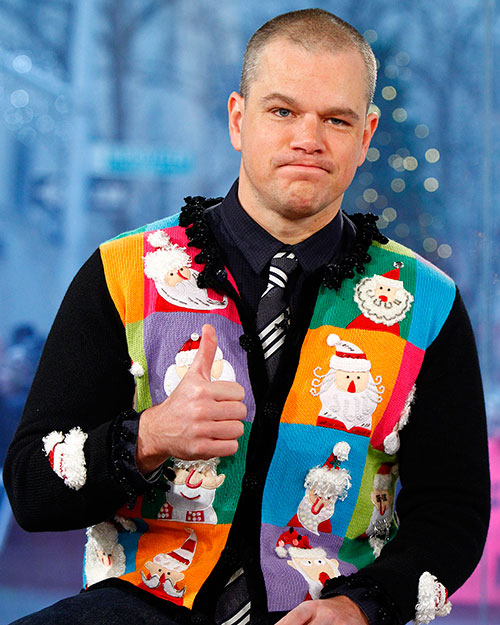
Matt Damon loves his Grandma's knit work 
The last topic is one which protects the overall look of something, and possibly its separate components. Largely relevant in the clothing industry, but can protect a variety of things. That sweater grandma knit you last Christmas is probably ok, don't you worry. The topic I'm the least familiar with, but will endeavor to touch upon as much as possible.

That should give you a nice overall view of the areas dealt with in IP law. Albeit a very simplified overview, brevity is beauty isn't it? Specific cases will address specific issues within the topics, and will offer a better view into them when dealt with, but if one or more of them strike a cord with you, please do go ahead and read more about them.

24 March, 2013

Welcome to IP Iustitia

The idea behind this blog is simple: to discuss, explain and expand on current developments within the field of IP law, and to also revisit old land mark cases (relevant or not today), and to give a broader overview of the topic to both laymen and professionals alike. The topic is more relevant today than ever, and the dynamic nature of it has the topics constantly change, evolve and influence the modern world we live in. Due to this impact I found it interesting to attempt to aid those interested to understand the topics more, and for the ones more knowledgeable to keep up with further developments. Legal topics tend to be tough to read, so I'll attempt to approach the subject with a light-hearted view, while still trying to keep the substance there.

I will discuss items of interest as they happen, but I will also do Retrospectives, where I will look at cases from days past, and discuss their influence and why they mattered. I might also touch on cases of interest, not necessarily because of legal precedent, but because of facts that some might find entertaining.

As the blog is still in its infancy, feedback is essential, and I encourage everyone to comment and let me know what might be wrong or what doesn't seem right. I'm only human, and even though I have dealt with the law for years, I make mistakes and can overlook things.

Thanks for reading and hopefully I might inspired you to learn more about your rights and how IP influences you.