Showing posts with label kingdom. Show all posts

01 June, 2016

Plain as Day - Plain Packaging Regulations In Force in the UK

Plain packaging laws are a controversial topic, and undoubtedly cause quite the wave of discussion between IP professionals, the tobacco industry and even laymen (especially smokers) who will be, one way or another, impacted by the introduction of the regime. Whether you believe stripping cigarette packaging of their signature garb is a good or a bad thing, the trend seems to push towards the introduction of plain packaging worldwide in a systematic fashion. This blog has discussed plain packaging in the Australian context on a few occasions (more on which here and here), but this writer has followed similar developments in Europe with great interest. In the last few weeks plain packaging has taken great leaps in the UK, and The Standardised Packaging of Tobacco Products Regulations 2015 came into force on the 20th of May 2016. This piece will endeavor to give you an overview of the legislation and its effects; however, undoubtedly there will be a few wrinkles in the years to come.

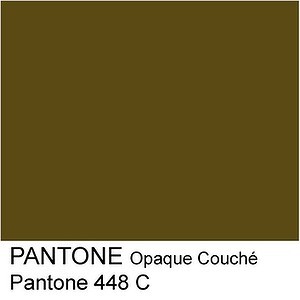
Section 3 deals with the packaging and color thereof of cigarettes, stipulating that all packaging has to be the color Pantone 448 C with a matt finish (already used in Australia), but the use of white is also permitted, more likely on the inside and/or to distinguish the health warnings put on the packaging. The section does permit the inclusion of other elements, set out in Schedule 1, such as the brand of the cigarettes, number of cigarettes in the pack, details of their producer and barcodes (following strict rules on style). This does include the striking health warnings present in packs today as well. Sections 4 and 5 set out rules on the material, shape and function of the cigarette box itself, and the cigarettes contained within. The former is given more allowances, with soft and hard materials being left as a choice, but also on the lid design and its shape. The latter are very much left as they mostly seem to be, with cigarettes only allowed to be a matt white color, but the filter end (or the end that is not intended to be lit) can be colored to resemble cork (as many these days seem to do). The cigarettes can also contain their brand, but under strict design rules. Schedule 2 builds on the above, adding specific rules regarding wrappers, surfaces and inserts in cigarette packs.

Sections 7, 8 and 9 prescribe very similar rules for hand rolling tobacco packaging, allowing only the same Pantone color for the outside and/or for the interior, including plain white. The packaging also allows the inclusion of health warnings or other symbols sanctioned by Schedule 3. The shape of the bag containing the rolling tobacco can also be a variety of shapes, including a cuboid or a cylindrical shape. Similarly to Schedule 2 above, Schedule 4 adds on other provisions regarding the tabs, seals and wrappers in the packaging of rolling tobacco.
Cigarette Lives Matter
Sections 10, 11 and 12 add additional restrictions on packaging for both types, including (through section 10) the denial of any markings that encourage smoking, display information on the chemical composition of the cigarettes and compares favorably a given tobacco product to another. This is in place clearly to further prevent express benefits to any given brand that may, for example, contain less nicotine (or other harmful chemicals) or cost less per cigarette, and to even the playing field for all brands. Sections 11 and 12 prescribe that no packaging can emit smells or noise that is not normally a part of the packaging or product itself, or that the packaging cannot change appearance post purchase.

All of the above changes are quite logical and clearly aim to create an even playing field for all cigarette products, but for many, the question of why these provisions were introduced still remains. The government described the Regulations as a means to "...discourag[e] people from starting to use tobacco products; encourag[e] people to give up using tobacco products; reduc[e] the appeal or attractiveness of tobacco products, the misleading elements of packaging and the potential for packaging to detract from the effectiveness of health warnings; and [to] hav[e] an effect on attitudes, beliefs, intentions and behaviours relating to the reduction in use of tobacco products". The objective is clearly one of policy regarding health, especially targeting more image vulnerable young people and the early days of tobacco use. This writer commends the government for its bold initiative, following its Australian cousins across the way.

The Regulations were challenged in the High Court by all of the major tobacco companies (British American Tobacco (UK) Ltd & Ors, R (On the Application Of) v Secretary Of State For Health), where the companies, as summarized by Mr. Justice Green: "...challenged the Regulations upon the basis of international trade mark and health law, EU law, the European Charter of Fundamental Rights, the European Convention of Human Rights, and the domestic common law. They attack not only the Regulations themselves but also the process by which Parliament came to adopt the legislation". The judge ultimately found that the Regulations were lawful in all respects, and the introduction of plain packaging is almost inevitable.

The looks of products can be hugely beneficial for the sale and mind-share of any goods, and thus the loss of these external attractive features is yet another blow to the tobacco industry, including since the banning of the advertisement of tobacco products in the latter part of the 20th century. This writer thinks the change is nothing but a good one, but the legal professional in him seems to dislike the idea of the removal of all IP in cigarette packaging. Nevertheless, his opinion stays merely a single opinion, and the attitudes of the world have changed and plain packaging will probably spread further after this change.

19 February, 2014

The Future of Copyright by Lawrence Lessig - Thoughts on His Views

Recently this writer posed a question to Lawrence Lessig, a current lecturer at Harvard and a person of much acclaim in the copyright field, on the website Six Question as to the future of copyright in his mind. More specifically the question posed was: "What do you think is the future of copyright, especially in light of recent developments in other common law countries such as the UK and Australia?" This clearly relates to the avalanche of copyright reviews being conducted in the common law countries such as Australia, the United Kingdom and Ireland. To this writer's pleasant surprise the question was thought to merit an answer, and one was provided by Mr. Lessig a few days ago. Albeit brief, his thoughts do merit some discussion.

In Mr. Lessig's mind "...the future of copyright is up for grabs"; and this can be said to be very true. Where copyright will be taken, and how evolving technologies will both impact and potentially necessitate the possible change, is wholly up for grabs. A certain desire for change can be felt in the public mindset, and rightfully so, as how we consume media has changed radically since the enactment of most copyright laws in the past 30 years. Much like was noted in the preliminary thoughts over the UK copyright modernization, it aims to "...align the law with behaviour most people consider to be reasonable", at least in the context of evolving media. This matches well with Mr. Lessig's thoughts as well: "...[the US] regime needs to be radically updated to the 21st century to digital technologies".

But the future of copyright is not without its uncertainty according to Mr. Lessig: "The biggest problem we have now is that nobody in government, at least in America, is interested in having that conversation [about copyright reform]". What this can be argued to relate to is a reluctance to expand or extend fair use. The current wave of reform clearly is focusing on a change for much more free and flexible approach to the consumption of copyrighted media. Extending those rights could diminish the profits of copyright holders, or at least extinguish secondary avenues of revenue through the restriction of fair use. Corporate lobbyists have fought over the current change in Canada, which quite heavily is beginning to endorse fair use, showcasing a possible rationale for the restriction over the discussion about copyright reform in the US.

Finally, Mr. Lessig notes that "...the battles here are really as much battles about how to open up a conversation about what the right answer is". How would one initiate such a conversation? Quite frankly, there is no clear answer as to how this could be done. The change a lot of common law countries are facing, and the discussion around the reform, will undoubtedly put pressure on the review of US copyright legislation, at least on an international setting. The more people use media as they see as "proper", the more it also merits discussion on the fact. What can be said as a counter-acting interest is one which Mr. Lessig also points out: "...[the legislature] see[s] copyright as an opportunity to produce incredible wealth for campaigns". The acquisition of campaign funds is highly important in the US system, and clearly inhibits the proper function of the legislature as the protector of its peoples' interests, rather than those who fund their campaigns.

The future of copyright is uncertain, but in that uncertainty one can have hope and optimism. With the change that is occurring all over the copyright world, US change seems all but inevitable. Where that change will take copyright within our American friends' regime is very unclear, and the competing interests on both sides seem to have their position firmly entrenched. This writer, much like Mr. Lessig, is optimistic as to the future.

I would like to thank Lawrence for taking the time to answer my question, and hope this can inspire some more discussion around copyright in the near future.

03 February, 2014

Pornography and Copyright Law

Often overlooked by many as 'artistic', pornography and other adult materials still carry quite the value in today's society. An estimated 3000 dollars is spent every second on pornographic material, netting 13 billion dollars yearly on average. As such there clearly is huge value in the protection of adult materials, yet more often than not the material is dismissed due to its nature as a sexual work. Regardless of some prevailing attitudes towards pornography, I thought it would merit exploration as a protected work under copyright.

United States

Under US law certain works are protected under copyright, which include both motion picture works and photographic works, among which most pornographic materials are produced. The categories do not mention any exceptions for obscene works, and prima facie should include any and all adult materials, provided they do not infringe any other legislation relating to the protection of children for example. Whether pornographic materials were protected under copyright was a question that had not been unequivocally answered until the case of Mitchell Brothers Film Group v Cinema Adult Theater. In the case the Court of Appeal saw that "[c]reating a defense of obscenity [may]... actually frustrate the congressional purpose underlying an all-inclusive copyright statute". In addition to this, the Court saw that "[i]t will discourage creativity... Requiring authors of controversial, unpopular, or new material to go through judicial proceedings to validate the content of their writings is antithetical to the aim of copyrights. If the copyright holder cannot obtain financial protection for his work because of actual or possible judicial objections to the subject matter, the pro-creativity purpose of the copyright laws will be undercut". The position in the aforementioned case has been since affirmed in later cases, clearly showcasing that the judiciary has no intention to exclude 'obscene' materials such as pornography. The Court did not discuss any potential negative impacts that obscene materials could have, and arguably this does not merit much argument, as sex and sexual activities are inherently a part of human culture, and have been for as long as culture has existed. A line has to be drawn when the material crosses over to the territory of illegality, but "normal" pornography should be protected under copyright.

Ann Bartow has argued that Article 1 of the US Constitution could provoke more discussion as to the copyrightability of pornography, as the law's intention is to "...promote the progress of science and useful arts, by securing for limited times to authors and inventors the exclusive right to their respective writings and discoveries", as one could argue that pornography does not promote the progression of useful arts. This writer would see that adult materials could just as well promote the useful arts, as sexuality and sex represent a side of humanity which is essential and necessary, both as arguably a form of art, and as a form of entertainment, bar the exceptions of illegal materials in such a category.

United Kingdom

In the UK the Copyright, Designs and Patents Act 1988 functions in a similar fashion to its US counterpart, although the precedent is still unclear as to the legislation's position in relation to pornography. In the case of Glyn v Weston Feature Film Company Justice Young, obiter, saw that potentially obscene works could be protected, such as the one in question in the case; however refused to do so as "[t]he episode described in the plaintiff's novel, and which she alleges has been pirated by the defendants, is in my opinion grossly immoral in its essence, in its treatment, and in its tendency". Arguably societal norms have changed immensely since the decision in Glyn, and immorality through sexual acts is not seen as wholly good or evil, especially in a more entertainment based medium such as pornography.

The Obscene Publications Act 1959 does provide some offenses relating to 'obscene' materials; however its potential impact on pornographic material is questionable. The CPS has provided some guidelines in terms of such materials, and clearly indicates it would only apply to "extreme pornography" or material containing children.

Conclusion

Similar views have been shown in other common law jurisdictions, and it can be argued that pornography is protected under copyright, bar some exceptions mentioned above. As the morals of society change, and the consumption of different forms of media evolve as well, whether adult materials will be fully accepted will remain to be seen. Some measures have been initiated in the UK to block pornographic materials, and the outcry goes to show just how important this topic is in the public mindset. Morality should not be wholly dictated by the legislature or the judiciary, and those decision should reflect society as a whole, not merely the values of a small part. Pornography and the law will keep on finding a balance, and it can be said the medium is here to stay, and protected under copyright.

18 October, 2013

Retrospective - How Much is 'Substantial'?

An essential component of copyright infringement in all of the common law is that the infringement, be it copying or other restricted acts, has to be done in relation to the work as a whole or a 'substantial' part of that work (Australia, UK, and Canada). The former is more than self-explanatory; however the latter has always been an abstract concept, as what can be deemed to be a 'substantial' amount can be anything between 99% of the work or a fraction of it. Due to this ambiguity the duty to define what a 'substantial' amount would be fell on the courts, being settled in the UK courts in the 1930s.

The defining case of what a 'substantial' amount is is Hawkes & Son (London) Ltd v Paramount Film Service Ltd, which concerned the song "Colonel Bogey". The plaintiffs in the case were the owners of the copyright to the song in question, a march written in 1914, often used in military settings. The song was subsequently used by Paramount Film Service in a newsreel of the opening of the new Naval College. The reproduced part of the march lasted for an approximate 20 seconds in the newsreel, with the entire march being roughly 4 minutes long. The incidental inclusion of the song was also considered; however our main focus would be on whether that 20 second snippet from the song could amount to a 'substantial' part of the song, therefore infringing the plaintiff's copyright.

The UK Court of Appeal tackled the matter after it was initially dismissed by Justice Eve at first instance. In the Court of Appeal's view the matter boiled down to assessing the copied material not merely based on quantity, but other factors as well, or as presented by Lord Hanworth MR: "...we must look into the question of degree and what was the nature of the reproduction". Agreeing with Lord Hanworth, Lord Justice Slesser further developed the Court's view on the matter:
"I agree with my Lord that this reproduction is clearly a substantial part of 'Colonel Bogey', looked at from any point of view, whether it be quantity, quality, or occasion. Any one hearing it would know that it was the march... [and] it is clearly, in my view, a substantial, a vital, and an essential part which is there reproduced."
Not that Colonel
Now what can be taken from Lord Slesser's view is that a 'substantial' part of a work can be any amount, not merely a large part of it through a purely quantitative analysis. His Lordship talks about recognition, and although one can argue that this view is a particularly weak one, one can say this would be much akin to what was stated in Harper & Row Publishers v Nation Enterprises; the "heart" of the work. The part which was copied has to be essential and vital to the work as whole, and recognition plays a part in that. For example a very  recognizable introduction to a song or a particularly memorable riff in the middle can be a substantial part if deemed sufficiently vital to the work as a whole.

As can clearly be seen what is 'substantial' is purely subjective and assessed by the court according to each instance, not providing a clear-cut rule which applies to all works. What is deemed 'substantial' in each instance will vary depending on the type of work in question, how it has been modified (if at all), and whether it is sufficiently important to the work as a whole. Under modern laws there are exceptions aplenty for a variety of uses, which did not exist under the UK Copyright Act 1911 at the time of the case, but the case still remains an important part of the common law system in copyright infringement.

11 October, 2013

Color Me Purple - Cadbury Trademark Ends on Appeal

Colors have always been an interesting area of trademark legislation, and to the layman more often than not, something which proves to be inconceivable. In a world where distinguishing your goods from other similar ones is imperative, and can prove to be a vehicle of imitation if you are not careful (more of which can be read here). In the latter part of 2012, Cadbury successfully had their trademark on the color purple (a variant of the color to be more specific) upheld by the court, in the field of chocolate, which was subsequently appealed by the initial challenging party, Nestle.

On appeal, which was decided earlier this month, the court had a further look at the issue of whether the color purple could be trademarked in this instance. In the Court of Appeal's opinion the Hearing Officer, the initial body responsible for the approval of trademarks in the UK, erred in his decision to allow the color to be registered. More specifically, the error "...stems from the misinterpretation of the verbal description of the graphic representation of the mark for which application is made... i.e. being the predominant colour applied to the whole visible surface".

In the Court of Appeals judgment, the description given by Cadbury "...[when] properly interpreted, does not constitute "a sign" that is "graphically represented" within Article 2 [of the Trade Marks Directive 2008/95/EC of 22 October 2008]. If the colour purple is less than total, as would be the case if the colour is only "predominant", the application would cover other matter in combination with the color, but not graphically represented or verbally described in the specific, certain, self-contained and precise manner required". Due to the fact that Cadbury had used the word 'predominant' in their description, the description was not sufficiently clear to be accepted as a 'sign' under the UK Trade Marks Act 1994 and the EU Directive. Cadbury used the color purple in a multitude of products, associating other elements with it along with the color purple, thus creating a multitude of variants of that sign,  making the sign unclear.

Purple was George's favorite color. No one could've guessed.
To summarize the Court saw that "[t]o allow a registration so lacking in specificity, clarity and precision of visual appearance would offend against the principle of certainty. It would also offend against the principle of fairness by giving a competitive advantage to Cadbury and by putting Nestlé and its other competitors at a disadvantage". Clearly one can agree with the Court in their decision, as the registration of a color in itself is acceptable; however should it only be an element amongst other elements, it would not be a sign that distinguishes that product by itself. This is highlighted by such cases as Mars Australia Pty Ltd v Société des Produits Nestlé SA, where the color used was clearly the sign used (although the case in question did include other factors, such as the color's creation by Mars) and would distinguish the goods from others.

Source: Bloomberg

04 October, 2013

Retrospective - Distinctiveness of Appearance

Often called the "...less glamorous cousin of other intellectual property regimes", the law protecting designs is overlooked by most as being a less 'sexy' point of discussion among more prevalent copyright and patent legislation. Amongst this one has to note that designs are something that most of us will deal with almost daily, as it pertains to how things look. This simple, yet very important aspect of intellectual property is taken for granted by most, however still much appreciated by those who work in the fashion industry and other fields which heavily rely on distinguishing their goods from others because of their distinctive appearance. Keeping this in mind, what does this regime protect then more specifically?

This matter was tackled in the 1970s case of AMP Inc v Utilux Pty Ltd. The case concerned the Registered Designs Act 1949 in the UK, under which any 'design', as defined as "...features of shape, configuration, pattern or ornament applied to an article by any industrial process or means, being features which in the finished article appeal to and are judged solely by the eye", would be capable of being registered. The design which was sought to be registered by AMP was the shape of an electrical terminal for a washing machine, which was used to join electrical wiring. AMP entered into a contract with Hoover to produce such a terminal for them, which was subsequently registered under the Act as a registered design. In taking action against Utilux, AMP's designs validity under the Act was questioned. Could an electrical terminal have 'eye appeal'  under the Act, and therefore have been registrable to begin with?

Eye appealing, or just overcompensating?
Evidence was produced as to the similarities of electrical terminals made by others and AMP, all possessing different features and looks while still performing the same essential task. Lord Reid however found similarities amongst the terminals despite their varying styles. In a similar vein, these varying features had to play a part in the consumer's decision over which washing machine to buy in order for it to fall under the Act. Designs are concerned with physical appearances and their enticing nature, not its function.

In his judgment Lord Reid saw that "[f]or a design to be protected there must be a special or distinctive appearance, something in the design which captures and appeals to the eye. To have that effect, the design must be noticeable and have some perceptible appearance of an individual character". What his Lordship refers to is the eye of the consumer, not merely an aesthetic or artistic eye, further highlighting a need for it to catch the consumer's eye, not just be eye-catching. As the terminal in question was an internal component, it might not be fully visible, if at all, to the consumer, therefore not necessarily falling under the Act.

In the matter the infringer, the party claiming the terminal was not a registered design, would have to prove on a balance of probability that the article would not have greater appeal to any member of the public than an article which did not have that particular design which it possessed. In the case the House of Lords saw that the terminal did not fulfill this requirement, and the defendant had not subsequently infringed on their design rights.

One has to note that even if a design does not fall under a potential registered designs regime, it might still infringe the copyright of the entity in question. Should the design fulfill all the requirement of copyright, there could be an avenue of recourse through this measure. This pertains more to aesthetic elements, such as intricate patterns and such, but does not necessarily exclude other factors.

23 June, 2013

The United Kingdom Looking Ahead with new Copyright Exceptions

In a recent blog post I talked about the possible direction where Australian copyright was heading based on a Discussion Paper released by the Australian Law Review Commission. Well, it seems like the old motherland has awoken from its copyright hibernation in the wake of Australia's steps forward. In an effort to modernize copyright, the UK Intellectual Property Office is seeking opinions based on new potential exceptions which are under consideration: an exception for private copying, parody and quotations. I think each of these potential categories merits examination as to what their current formulation is, and where they could be headed.

Exception for Private Copying

In their plans, the UK Government plans to introduce "...a narrow private copying exception which will allow an individual to copy content they own, and which they acquired lawfully, to another medium or device for their own personal use". What this clearly is is an equivalent for something Australia has already had for some years; format shifting. Provisions such as this will allow you to copy your lawfully bought content, such as music or movies, to a different format - often from a CD onto your MP3 player for example. There is a distinct difference to what the UK approach, at least for now, is when compared to the Australian one. In further expanding on how the copying will extend, the IPO says that "...it would not allow them to make copies of their CDs and give them to other people". If this were to be looked at from a literal perspective, should you make a copy of a CD for your kids to listen to on their iPods, or give a copy of a DVD for your cousin to watch on a Saturday night, you would be infringing copyright. The Australian provision allows for copies to be given to family or people living in your household, but on the condition that those copies are of a temporary nature and not given to keep. If the IPO would only permit the copying for personal use in excluding family they would go against the very principle why they're enacting these additions to begin with: "The exception aims to align the law with behaviour most people consider to be reasonable, to remove unnecessary regulation, and to help build confidence in and respect for copyright". 
Steve hasn't quite gotten the hang of "private copying"

Arguably the exception should be shaped to be similar to that of Australia's approach. The Canadian provision only allows for the copying for the individual, much like the potential UK provision, so the direction where this could head is unclear. One could easily predict that the courts could potentially extend the provision to apply to family, but that would remain to be seen. A draft of the section can be found in the document discussing the exception. 

Exception for Parody

An exception that the UK has needed for the past several years, yet again lagging behind its Australian cousins, is the exception to allow for the use of works for parody, caricature or pastiche. As the IPO explained, this would "...give people in the UK’s creative industries greater freedom to use others’ works". If introduced the provision would be included with other fair dealing provisions, so the use would have to be 'fair', preventing the use of works in the veil of parody to purely abuse it for personal gain. A draft of the possible provision can be read in the IPO's documentation as well.

Exception for Quotation

The final exception being introduced is one which would amend the current exception for criticism and review to one allowing for the quotation of material, not merely restricting it to those uses. Broadening the existing fair dealing exception seems like a perfectly sensible option, and in the words of the IPO: "ensure[s] that copyright does not unduly restrict the use of quotations for reasonable purposes that cause minimal harm to copyright owners, such as academic citation or hyperlinking". Should the provision be enacted it would be the first of its kind, as both in Australia and Canada similar provisions relating to criticism and review, on the face of the provisions, would be much more restrictive.

Source: IP-Watch

27 March, 2013

Retrospective - Where it all began

The history of IP law is a colorful one. The changes it has undergone and how the rapid evolution of both the creation and sharing of ideas and expression has made the landscape where the law operates very different to what it was when it all started.

Copyright

Queen Anne was a fan of books, and a snappy dresser
Great Britain was the first nation to enact a law which regulated copyright, instead of it being handled by the parties involved without any government interference, mainly the Stationers' Company. The law in question was the Statute of Anne 1710. The law sought to encourage learning and advance it through the limitation of certain rights in books, ones which echo even today's legislation, although very faintly: it gave the rights to print and copy published material to its creators, not the publishers of the books. This was a significant move from a system that lasted for almost 50 years. Copyright didn't exist automatically in any works, unlike like today, but all works needed to be registered for any rights to exist in that material. The Statute of Anne was a major piece of legislation until its repeal through the Copyright Act 1842, lasting for well over 100 years. The Americans largely followed the Statute, although it is still disputed whether they actually did. This lasted till the enactment of the US Constitution.

Patents

Most of the Commonwealth countries have their patents laws base on the Statute of Monopolies 1623. It is seen as the first real law dealing with patents, both in the United Kingdom, and through it subsequently adopted in one form or another in its former colonies. It both abolished old patents existing before the law, during and in the future. It also restricted the application of patents and set strict limits to who can give them. The Statute was a major change, and is one of the most important pieces of legislation in the history of patents. The US, yet again not wanting to conform, did not follow the Statute of Monopolies as such, however their use of patents in commerce is believed to have stemmed from the law. The US Constitution set out broad principles for all IP matters, which also dealt with patents, however more specific legislation was enacted both in individuals States, and finally on a Federal level in 1790. Patents have since gotten more specific and complex, yet the heart of the original laws still remain.

Trade Marks

A relatively late bloomer in the sphere of IP legislation, trade marks did not have any codified protection until the Merchandise Marks Act in 1862. The old law, much like copyright and patents, also echoes the sentiment of current legislation, although speaking of "defrauding", which is not used in today's laws. The United States, much like the UK and its colonies, protected trade marks through the common law (meaning no laws protected them specifically, but unwritten customs and precedent), until the enactment of the Trademark Act 1881

Designs

The first instance of designs protection was in the UK, with the enactment of the Designing and Printing of Linen Act in 1787. The Act, as its name so implies, dealt with the designs related to a number of different fabrics, and only offered protection for a measly two months after printing. The Act was expanded on almost 50 years later, in the Copyright and Design Act 1839, taking designs protection further than the textile industry alone, and introduced a system of registration for designs.

As you can see, the roots of IP law are deep in all common law countries. What it was a few centuries ago can still be seen in today's laws, and the impact their development has had, and continues to have, on people and their expression is profound. Most of them were protected well before the enactment of specific laws relating to them through the common law, so their roots go even further if you go beyond laws alone.