Showing posts with label trademark. Show all posts

20 September, 2022

Cadbury's Color Conundrum - UK High Court Considers Registration for the Color Purple for Cadbury's After Settlement with Nestle

Sometimes a specific color is really important. Nothing highlights this more than the seemingly never-ending story of Cadbury's fight to register the color purple (or more specifically, Pantone 2685C) in relation to its iconic chocolate products. The fight over the color started nearly 20 years ago in 2004, so those born in the same year can now legally buy alcohol in the UK - which really puts the time spent in perspective. Nevertheless, color marks have always been difficult to register, however, in a highly anticipated victory Cadbury have done just that, potentially putting this matter to bed once and for all.

The case of Societe des Produits Nestle SA v Cadbury UK Ltd concerned an appeal against a decision by the UKIPO Hearing Officer, in which they rejected the registration of three trademarks (specifically applications 3019362, 3025822 and 3019361). Nestle opposed all three applications on the grounds that: (i) the marks did not fulfil the requirements of a "sign" under section 1(1) of the Trade Marks Act 1994, challenged under section 3(1)(a) of the Act; and (ii) whether the marks had distinctiveness under section 3(1)(b) of the Act. The oppositions against marks '361 and '822 were successful. Cadbury then appealed the decision against those two marks to the High Court, which handed down its decision this Summer.

Justice Meade initially focused on the core cases that were argued to be central to the matter. 

The first case was CJEU decision in Libertel Groep BV v. Benelux-Merkenbureau, which set out that "a colour per se, not spatially delimited, may... have a distinctive character within [the Trade Mark Directive then in force] provided that... it may be represented graphically in a way that is clear, precise, self-contained, easily accessible, intelligible, durable and objective". The key here is that a color mark has to be represented graphically clearly for it to be distinctive, and not merely set out as e.g. 'purple' without any distinction as to the hue or use of the color in packaging or otherwise. The case also noted that "...the latter condition could not be satisfied merely by reproducing on paper the colour in question; there had to be a designation using an internationally recognised code" (such as Pantone). 

The second case was the Court of Appeal decision in the Cadbury saga itself in 2013, where the Court of Appeal saw that the mark that was being applied for registration did not meet the requirements for registration, because it was not a "sign".

Justice Meade then discussed the legislative position in the matter, namely Article 2 of the Trade Mark Directive. Article 2 requires that, for a mark to be registered as a trademark, it has to: (i) be a sign; (ii) be capable of graphical representation; (iii) be capable of distinguishing the goods or services of one undertaking from those of other undertakings. 
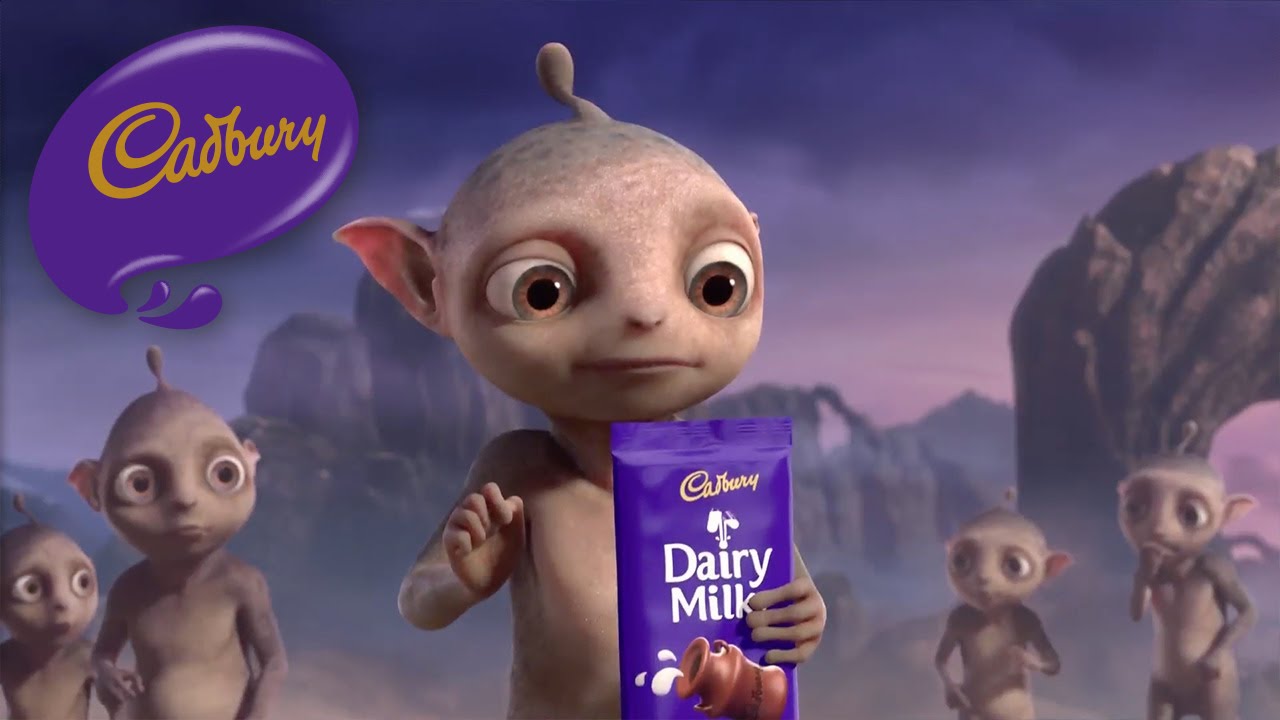
"I wish I had any idea who owned this color..."

The main issue at hand in the Court of Appeal decision was whether the mark was indeed a 'sign', largely focused on its description as "applied to the whole visible surface, or being the predominant colour applied to the whole visible surface, of the packaging of the goods". The latter part of the description left a lot of leeway in the application of the color, so long as it was the "predominant colour" being applied to the packaging. The Court of Appeal rejected the mark as not being a 'sign' as it couldn't be clearly graphically represented and therefore lacks "clarity, precision, self-containment, durability and objectivity".

Justice Meade then moved on to the Hearing Officer's decision. 

The Hearing Officer noted, in relation to mark '361, that although it only referred to the application to packaging of the goods without any limitation to the surface area covered, it still didn't mean the mark would be a single color with no variation and would cover the representation of the trade mark that the Court of Appeal rejected. 

Justice Meade agreed with this position and set out that the formulation of the ‘361 mark is indeed worse than what was rejected by the Court of Appeal, nothing that "[r]emoving the wording held by the Court of Appeal to let in multiple forms and to be objectionably ambiguous is cosmetic at best and does not help".

In relation to mark '822, the Hearing Officer aligned its position to that of the above '361 mark, since it does not explain the use of the color and where it will be in the packaging or advertising materials. Justice Meade, however, disagreed with the Hearing Officer. 

He determined that the mark was for the color, which can include its application on the packaging or otherwise. He also distinguished the wording "predominant" from simply the color, which does not cause the same issues. There is no need to specify a simple color mark in relation to, for example, an area of packaging, since requiring that would limit color marks significantly. 

The appeal therefore succeeded in relation to the '822 mark, but not the '361 mark. 

Justice Meade did give some parting words on the issues around the '361 mark, highlighting that it "…leaves it significantly, undesirably and unnecessarily unclear whether combination marks including purple and other colours would be within the scope of the right applied for (and in particular whether they would be identical to ‘361)". How he distinguished the '822 mark from this is through its simplicity; only covering the color purple. 

Although the case is not a huge upheaval of the world of color marks, it does give some clarity as to appropriate wording for similar marks in the future and notes the pitfalls that can befall any application drafter. The key is sufficient specificity so as to not make the mark very difficult or impossible to understand but considering the '822 mark there is clearly room for some degree of generality. If anything Cadbury will be happy that the saga might just be over now, but who knows what the future will bring. 

06 September, 2022

You Gonna Keep That? - EU General Court Considers Trademark Registrations of Dormant Brands and Bad Faith

Many brands from the distant past have fallen by the wayside or haven't been used in years or even decades, despite some still fondly remembering them. These 'dormant' brands do also present an opportunity for revival and use of the potential remaining goodwill in those brands, but what happens when an unrelated third party decides to "revive" one of these dormant brands and register it as a trademark? The answer isn't always crystal clear, but a recent decision by the EU General Court set to look at just that and whether this could amount to a bad faith registration. 

The case of Ladislav Zdút v EUIPO concerned a trademark for a figurative mark for the brand "NEHERA" (EUTM 11794112), which was applied for and registered in 2013-2014, including a number of different types of goods such as clothing and footwear. Some 5 years after registration three interveners, Ms Isabel Nehera, Mr Jean-Henri Nehera and Ms Natacha Sehnal, filed an application for a declaration of invalidity of the trademark, alleging that the registrant, Mr Zdut, had acted in bad faith when he filed the application for registration of the contested mark. This was due to the first two interveners' grandfather, Jan Nehera, having established a business using the same brand in Czechoslovakia in the 1930s and had acquired a trademark in Czechoslovakia for the same. However, the brand has not been used since the 1940s. The application was rejected at first instance by the Cancellation Division, but the decision was reversed by the Second Board of Appeal which declared the trademark invalid. Mr Zdut subsequently appealed that decision, with the matter ending up with the General Court.

Considering the law around the matter, Article 52 of the CTM Regulation sets out that an EU trademark should be declared invalid where the applicant was acting in bad faith when they filed the application for registration of that trademark. 'Bad faith' in this regard "… presupposes the presence of a dishonest state of mind or intention" so it means that the applicant "…has filed the application for registration of that mark, not with the aim of engaging fairly in competition but with the intention of undermining, in a manner inconsistent with honest practices, the interests of third parties, or with the intention of obtaining, without even targeting a specific third party, an exclusive right for purposes other than those falling within the functions of a trade mark". 

However, the subjective intentions of the applicant must still be assessed objectively considering all the factual circumstances relevant to the particular case. These circumstances can include: (i) the fact that the applicant knows or must know that a third party is using, in at least one Member State, an identical or similar sign for an identical or similar product or service capable of being confused with the sign for which registration is sought; (ii) the applicant’s intention to prevent that third party from continuing to use such a sign; and (iii) the degree of legal protection enjoyed by the third party’s sign and by the sign for which registration is sought. 

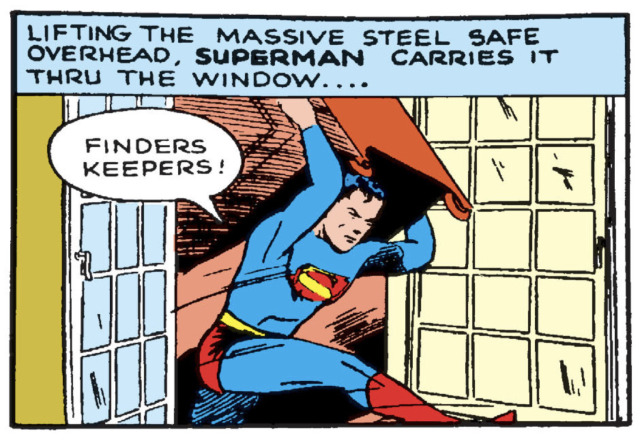
Even Superman had no respect for historical ownership
of things

Even outside of the specific circumstances above, the General Court noted that other factors, such as the origin of the sign at issue and of its use since its creation, the commercial logic underlying the filing of the application for the trademark, the reputation of the sign at the time of the registration, and the chronology of events leading up to that filing might be very relevant. 

The General Court then turned to the actual matter at hand. It initially noted that there is currently no registration for the "NEHERA" brand in the EU, and that the earlier Czechoslovakian trademark had lapsed in the 1940s and hasn't been used since. 

Interestingly Mr Zdut had been fully aware of the existence and reputation of Jan Nehera and of the old trademark in Czechoslovakia, and even had noted that he wanted to launch the brand to ‘pay a tribute’ to the ‘great days of the Czechoslovak textile industry of the 1930s’ and in particular to Mr Jan Nehera. 

Considering the law in light of the matter, the General Court set out that "[f]ree-riding behaviour with regard to the reputation of a sign or of a name… is, in principle, only possible if that sign or that name actually and currently enjoys a certain reputation or a certain celebrity". With that in mind, the EU courts have found an intention to take unfair advantage of the surviving reputation of an earlier mark, including where that mark was no longer used or of the current celebrity of the name of a natural person, where the surviving reputation or fame was established.  

In contrast to this position, there is no usurpation of the reputation of a term claimed by a third party and, therefore, no bad faith, where that term was neither registered, used, nor renowned in the EU. 

With that in mind, the General Court noted that in the absence of surviving reputation in respect of the former Czechoslovak trademark and of current celebrity in respect of Jan Nehera’s name at the time of filing, the use of the mark wouldn't be free-riding behavior indicating bad faith. Even though Mr Zdut knew of the individual and the original trademark, it isn't sufficient to establish the existence of bad faith. 

The interveners also highlighted an intention to create a link between the name and the new brand, but the General Court saw that this wasn't in itself sufficient to support a finding that unfair advantage was taken of the reputation of the sign or of the former name. 

The General Court also focused on the lack of a current reputation in relation to the old trademark or the name. As they noted, currently both have been forgotten by the relevant public, and the applicant had made considerable efforts to build up the brand again. This was far from merely parasitically taking advantage of an existing reputation. 

The General Court also determined that it is possible, in certain specific circumstances, that reuse by a third party of a previously renowned former mark or of the name of a previously famous person may give a false impression of continuity or of inheritance with that former mark or with that person. This can happen where the applicant presents itself to the relevant public as the legal or economic successor of the holder of the former mark, when there is no continuity or inheritance relationship. That could then be considered in establishing bad faith. However, no such intention was found in relation to Mr Zdut. 

In summary, the General Court found that the concept of bad faith presupposes the presence of a dishonest state of mind or intention, which they were unable to find in the present matter, and overturned the Board of Appeal's decision. 

The case is an important reminder for any brand owners (even historical ones), or their potential legatees, to make sure that those brands are properly registered if any use of the brand is ever even contemplated. If this isn't done it may present an opportunity for a third party to jump in and take over the brand, which could very well be fully legal and without much recourse down the line. It is possible that this matter will be appealed to the Court of Justice for an ultimate decision, but in the absence of that any dormant brands could very well be up for grabs. 

16 August, 2022

These Shoes are Made for Selling - AG Szpunar Opines on Intermediary Liability and the 'Use' of a Trademark for Online Marketplaces

Intermediaries in e-commerce are a near necessity for many online sellers of products, but they can produce headaches and issues where potentially unauthorized goods are sold through them that infringe a company's IP rights. The status of intermediaries' liability has been slowly evolving in the courts, and a hotly anticipated decision by the CJEU on the issues is very close in the horizon that should clear matters up significantly in Europe. Before this, however, Attorney General Szpunar has had their say and issued their opinion earlier this Summer (the opinion only being available in English very recently). The opinion sets the scene for the CJEU and could be a glimpse into the CJEU's position on the matter in the near future. 

The case of Christian Louboutin v Amazon Europe Core Sàrl concerned infringement proceedings launched by Christian Louboutin against Amazon, under which they alleged that: (i) Amazon is liable for infringement of his trade mark; (ii) it should cease the use, in the course of trade, of signs identical to that trade mark in the EU; and (iii) he is entitled to damages for the harm caused by the unlawful use at issue. Amazon unsurprisingly challenged this position, arguing that it is merely an operator of an online marketplace and cannot be held liable for the actions of its sellers. The Luxembourg courts referred the matter to the CJEU for clarification, which is closing in on the crescendo of the decision itself following AG Szpunar's opinion.

The case combines two separate actions in Luxembourg and Belgium involving the two parties. 

AG Szpunar noted that they both concerned the interpretation of the concept of ‘use’ for the purposes of Article 9(2) of Regulation 2017/1001. In essence the referring courts are asking "…whether Article 9(2)… must be interpreted as meaning that the operator of an online sales platform must be regarded as using a trade mark in an offer for sale published by a third party on that platform on account of the fact that, first, it publishes both its own commercial offerings and those of third parties uniformly without distinguishing them as to their origin in the way in which they are displayed, by allowing its own logo as a renowned distributor to appear on those advertisements, and, secondly, it offers third-party sellers the additional services of stocking and shipping goods posted on its platform by informing potential purchasers that it will be responsible for those activities". The courts also asked "...whether the perception of a reasonably well-informed and reasonably observant internet user has an impact on the interpretation of the concept of ‘use’". 

As a primer, Article 9(2) provides that the proprietor of an EU trademark is entitled to prevent all third parties not having their consent from using, in the course of trade, any sign which is identical with the trademark. However, what amounts to 'use' in this context is paramount to determining potential liability under the provision for any would-be infringer. 

AG Szpunar then moved on to discussing the current definition of 'use' under Article 9. Some of the main decisions here are Daimler AG v Együd Garage Gépjárműjavító és Értékesítő Kft, Coty Germany GmbH v Amazon Services Europe Sàrl, Google France SARL and Google Inc. v Louis Vuitton Malletier SA and L’Oréal SA v eBay International AG. 

The CJEU has found that the term 'using' in terms of intermediaries involves active behavior and direct or indirect control of the act constituting the use, and that the act of use presupposes, at the very least, that that third party uses the sign in its own commercial communication. The latter point was key in this according to the AG and without it any such use would be lacking.

In terms of the commercial communication aspect, the CJEU has determined that a referencing service provider does not use a sign in its own commercial communication since it only allows its clients themselves to use the relevant signs, with the result that it "…merely creates the technical conditions necessary for the use of a sign". 

Similarly, a marketplace operator would not be using a sign in its own commercial communication when it provides a service consisting in enabling its customers to display that sign in their commercial activities, and that the stocking of goods bearing the relevant sign is not a use of that sign in a third party’s own commercial communication since it has not itself offered the goods for sale or put them on the market. 

The AG does highlight that this set of definitions is not a clear one and needs to be more specific and focused to make better sense. 

The AG very cleverly shifted the definition towards the recipient away from the actual communicator, i.e. the platforms. He discussed that the commercial communication of an undertaking would be to promote goods or services to third parties. To put simply, the intermediary adopts the sign to such an extent that that sign appears to be part of its activity.

The adoption condition still has to be looked at from the perspective of the recipient, i.e. the user of the marketplace, to determine whether the sign is perceived by that user as being integrated into that commercial communication. The user that this would be assessed against is a "reasonably well-informed and reasonably observant internet user". 

AG Szpunar then moved on to discussing Amazon's particular business model and whether they would be 'using' a trademark in the course of their business. 

The first question referred to the CJEU concerned, primarily, if "…the activity of a marketplace operator of publishing commercial offerings from third-party sellers on its website where those offers for sale display a sign which is identical with a trade mark". 

As noted above, this activity would not constitute a 'use' of a trademark (specifically decided in the eBay case), however, Amazon operates differently to eBay as a marketplace. Amazon provides a much more comprehensive offering, where third party sellers can post their own advertisements for goods in addition to Amazon's own. In those instances, the Amazon logo is merely present to indicate to consumers that the ad was posted by a third party seller. 

In that instances the AG noted that that would not lead to a reasonably well-informed and reasonably observant internet user to perceive the signs displayed on the advertisements of third-party sellers as part of Amazon’s commercial communication. The same would apply to the integration of third-party ads by Amazon into specific shops on the platform, which is the type of organization that is integral to the functioning of these types of online platforms. 

The referring courts also asked whether "…the fact that Amazon offers a ‘comprehensive’ service, including providing assistance in preparing advertisements and the stocking and shipment of certain goods, has an impact on the classification of the use of a sign displayed on those advertisements by Amazon". 

To properly consider this the AG highlighted that you must consider Amazon’s activities as a whole to determine whether the involvement of that company might be classified as use of that sign. The AG thought that this would not be the case. 

Amazon's involvement, while able to give them more control over the sale of a product that may infringe a trademark, but that involvement was only for the benefit of the consumer so that they could ensure prompt and guaranteed delivery after a product is purchased. In the AG's view this is not sufficient to establish that Amazon has used the sign at issue in its own commercial communication. 

This position ties in with the decision in Coty, where the CJEU determined that "…a sign cannot be regarded as having been used in the marketplace operator’s own commercial communication where that operator stocks goods bearing a sign on behalf of a third-party seller without itself pursuing the aim of offering those goods or putting them on the market". 

The AG also noted that Amazon's posting of the ads in question would not be 'using' the sign in question either. 

To round things off, the AG summarized their position as answering the questions that "…Article 9(2)… must be interpreted as meaning that the operator of an online sales platform cannot be regarded as using a trade mark in an offer for sale published by a third party on that platform on account of the fact that, first, it publishes both its own commercial offerings and those of third parties uniformly, without distinguishing them as to their origin in the way in which they are displayed, by allowing its own logo as a renowned distributor to appear on those advertisements, both on its website and in the advertising categories of third-party websites and, secondly, it offers third-party sellers the additional services of assistance, stocking and shipping of goods posted on its platform by informing potential purchasers that it will be responsible for the provision of those services, provided that such elements do not lead the reasonably well-informed and reasonably observant internet user to perceive the trade mark in question as an integral part of the operator’s commercial communication".

The AG's opinion really sets the scene for the CJEU and seems very sensible in protecting the functionality of online marketplaces, like Amazon. If the courts would see things otherwise, this would clearly massively impede the functionality of these services, and in fact, without heavy moderation by the platforms themselves, would make them impossible to operate. This should not be seen as carte blanche for the platforms either, but could set sensible, clearer boundaries for both platforms, brands and third party sellers, but it remains to be seen what the CJEU's position will be. 

28 July, 2020

None of My Concern - CJEU Looks at TM Infringement on Online Marketplaces and Operators' Liability

Online business, particularly for consumer goods, has exploded in the last ten years, and this writer for one can attest to being one of the most rabid online shoppers. However, with the explosion in popularity comes the legal challenges that often accompany popularity, especially due to the use of third party sales platforms to sell illegitimate goods to unsuspecting consumers. The misuse of trademarks by third-party sellers is not a new thing to be battled over in the courts, but online platforms like Amazon do present new challenges as to the liability of the marketplace itself, which allows for the sale of these goods with relative impunity. Even with this in mind, the CJEU has been set up to answer the question of whether platforms like Amazon can have any liability in relation to the misuse of trademarks by sellers and handed down their judgment on this topic only a few weeks ago.

The case of Coty Germany GmbH v Amazon Services Europe Sàrl concerned the sale of knock-off Davidoff perfume on Amazon. The claimant, Coty, owns the rights to distribute Davidoff perfumes in the EU under the registered trademark (EUTM 876874). After a number of test purchases on the Amazon platform for Davidoff perfumes sold by third parties, with orders being fulfilled by Amazon, Coty pursued the platform itself due to the infringement of the trademark by the third-party sellers. Coty pursued an order that third-party sellers, and Amazon, would not be able to stock the knockoff Davidoff goods - with the matter ultimately ending up with the CJEU through the German courts.

The CJEU only had to look at one question, which asked "...whether Article 9(2)(b) of Regulation No 207/2009 and Article 9(3)(b) of Regulation 2017/1001 must be interpreted as meaning that a person who, on behalf of a third party, stores goods which infringe trade mark rights, without being aware of that infringement, must be regarded as stocking those goods in order to offer them or put them on the market for the purposes of those provisions, if that person does not itself pursue those aims". In essence, the question concerns liability for the proprietor over the sale of goods on an online marketplace, like Amazon.  

As a part of the prohibitions under Article 9(3)(b), a third-party is prevented from offering trademark protected goods, putting them on the market or stocking them. This could include the proprietors of online marketplaces if they are seen to be doing this through the offering of goods on their website by third-party sellers. 

As a part of the platform's service, Amazon stored the goods of third-party sellers, including the counterfeit perfume, which are sold on the platform and processed by Amazon after sale. The Court therefore had to determine whether such a storage operation may be regarded as 'using' or 'stocking' the trademark goods under the above Regulations. 

According to case law, 'using' a trademark entails active behavior and direct or indirect control of the act constituting the use, which includes the activities under Article 9 of the Regulations. However, the prohibitions only apply to third-parties that have direct or indirect control of the act constituting the use, and can therefore comply with those prohibitions. 

Also, the Court noted that operators of e-commerce platforms are not using trademarks in relation to goods sold by sellers on that platform, and the ultimate 'user' of the trademarks is the seller. Similarly, any warehouse-keeper who is sent goods to be held for sale does not use the trademarks contained in those goods. 

Following an extensive discussion of the above precedent and other cases, the Court determined that "...in order for the storage of goods bearing signs identical, or similar to trade marks to be classified as ‘using’ those signs, it is also necessary... for the economic operator providing the storage itself to pursue the aim... which is offering the goods or putting them on the market". In essence this means that requires Amazon, or other similar operators, to actively offering goods they hold for sale, and not simply allowing for third parties to do so using their platform (and their logistics facilities).

This led the Court to conclude that Amazon was not using the trademarks when third parties sold goods through their platform. 

The Court then summarized the matter as "...a person who, on behalf of a third party, stores goods which infringe trade mark rights, without being aware of that infringement, must be regarded as not stocking those goods in order to offer them or put them on the market for the purposes of those provisions, if that person does not itself pursue those aims". 

The decision makes perfect sense, since Amazon, or any other similar operator, is not actively selling any counterfeit goods on their platform, but merely enable third parties to be doing so. To conclude that the marketplaces themselves would be liable would hinder their effective operation, and potentially cause them to be liable for 'actions' that they have not taken; namely selling goods unknowingly that are counterfeit. The decision does, however, put them on notice, and ensures that marketplaces that do indeed actively sell counterfeit goods can still be pursued for trademark infringement in that event. 

01 July, 2020

This is my Domain - US Supreme Court Decides on the Registration of Generic ".com" Domains as Trademarks

Since the advent of the world wide web, domain names' value to their owners have skyrocketed, with some, such as Google.com, being valued by some at roughly $31 billion. Although the valuation of that domain is a little ridiculous, being able to have the right domain at the right time can in itself create a business opportunity and thus be very valuable. However, domain names and their registration and trademarks has been a hot-button issue for some time, since the inclusion of ".com" along with a descriptive element might not be enough to allow for their registration. The USPTO has had a long-standing position where the inclusion of ".com" with a generic word would render that mark as generic and therefore ineligible for registration. This position has since been challenged, and the matter went up all the way to the US Supreme Court, which handed down its opinion earlier this week.

The case of USPTO v Booking.com BV concerned the registration of the mark "Booking.com" by, you guessed it, Booking.com BV, which is a site specialized in the booking of hotels for travelers. At first instance the mark was refused registration as the USPTO deemed it to be generic under the above rule, meaning the name would only have the descriptive meaning to consumers of the service and would not signify that particular website to consumers. Booking.com challenged the ruling, and ultimately took the matter all the way up to the Supreme Court.

Handing down the majority's judgment, Justice Ginsburg first discussed the registration of trademarks overall, particularly the requirements for a mark to be registered. This includes that the the mark has to be one "...by which the goods of the applicant may be distinguished from the goods of others", i.e. it has to be distinctive. Word marks, such as the domain above, can be distinctive in a sliding scale of sorts, namely (from least to most distinctive)  (1) generic; (2) descriptive; (3) suggestive; (4) arbitrary; or (5) fanciful. A mark will have to achieve distinctiveness specifically "...in the minds of the public".

Justice Ginsburg then moved onto considering whether the mark in question is registrable or not. Booking.com applied to register the domain (and other variants of it, including visual features) as a trademark in relation to travel-related services; however, the application, as discussed above, was rejected at first instance. 

The main question the Supreme Court had to therefore consider is whether the term "Booking.com" is generic, specifically naming "...a “class” of goods or services, rather than any particular feature or exemplification of the class". As the domain is also a compound term (consisting of "Booking" and ".com" as separate elements), the Court would have to consider its meaning as a whole and not in isolation of those parts. Its meaning would have to be considered in the light of its meaning to consumers. In short, as noted by the Court, the consideration is "...whether “Booking.com” is generic turns on whether that term, taken as a whole, signifies to consumers the class of online hotel-reservation services".

The Court quickly noted that under evidence, consumers don't perceive the domain as being generic for hotel-reservation services, and as such, the term cannot be generic. The USPTO argued that, irrespective of that evidence, the term should be seen as generic since when a generic term is combined with a generic top-level domain like “.com,” the resulting combination is generic, barring exceptional circumstances. 

Finally, the Court considered whether the registration of  “generic.com” terms as trademarks would hinder competition, i.e. prevent a competitor from using the term "booking" when describing their services. The Court outright rejected this notion, noting that the risk of deterrence of using a term exists in relation to all descriptive marks. Even if a competitor uses that term, provided it's done in good faith, they would most likely be protected by fair use. 

The Court subsequently affirmed the decision of the Court of Appeals, and allowed the registration of the mark as it was not considered generic.

The case is a very important one, and surprisingly very late into the existence of domain names. It's important for brands that have more descriptive names to be able to potentially register their name as a trademark, particularly if it's in relation to a specific domain that is the heart and soul of that business. Competitors should be adequately protected by fair use and other similar doctrines, allowing for the use of those terms in describing their business, while allowing for sufficient protection of legitimate registered trademarks for those domains. 

14 April, 2020

Mind Your Language! - CJEU Decides on the Registration of Offensive Trademarks

Rude language can be a sore point of contention for many people. The offensive nature of trademarks has been litigated quite a bit in high-profile cases recently, including the case regarding the band "The Slants" (discussed more here) in the US. The European courts have faced the question of offensive trademarks sometime ago, and Advocate General Bobeck looked at this in some detail in the Summer of 2019. Following the AG's decision, the CJEU has finally considered the question of offensive trademarks and handed down their judgment earlier this year.

The case of Constantin Film Produktion GmbH v EUIPO concerned an application to register the name "Fack Ju Göhte" (EUTM 13971163), which is the name of a German comedy film produced by Constantin. The film saw tremendous success in the year it was published, and Constantin released a subsequent two sequels under the same name. The EUIPO refused the application under Article 7(1)(f) of the CTM Regulation, which prevents the registration of trademarks "...which are contrary to public policy or to accepted principles of morality". Constantin then appealed the decision, which ultimately ended up with the CJEU.

The Court began by limiting the scope of the issue, following the guidance of the Advocate General, to only consider whether the mark was contrary to accepted principles of morality, as the matter didn't relate to any issues of public policy.

To consider the above, the Court noted that, to determine the scope of Article 7(1)(f) "...it is not sufficient for the sign concerned to be regarded as being in bad taste. It must, at the time of the examination, be perceived by the relevant public as contrary to the fundamental moral values and standards of society as they exist at that time". This clearly shows that the morality the courts will be concerned with is transient, and the standard can fluctuate as morality does within wider society; however, the examiner will have to consider it within a snapshot in time when applied for.

Mittens just couldn't handle Rover learning any more bad words
Furthermore, the Court saw that this would be determined according to "...the perception of a reasonable person with average thresholds of sensitivity and tolerance, taking into account the context in which the mark may be encountered and, where appropriate, the particular circumstances of the part of the Union concerned". This includes "...elements such as legislation and administrative practices, public opinion and, where appropriate, the way in which the relevant public has reacted in the past to that sign or similar signs, as well as any other factor which may make it possible to assess the perception of that public".

Reviewing the judgment of the General Court, the CJEU determined that they had misapplied the law concerning Article 7. In their assessment, the General Court should have included, among the things they considered, the great success of the comedy, the fact that its title does not appear to have caused controversy, as well as the fact that access to it by young people had been authorised and that the Goethe Institute (which promotes the German language abroad) uses the movie for educational purposes. The General Court should not have merely considered the inherent vulgar nature of the English phrase it was compared to, namely "Fuck You", to decide that the mark would be contrary to public morality.

The Court also noted that one would have to take into account the freedom of expression, enshrined in Article 11 of the Charter of Fundamental Rights of the European Union when considering any infringement of Article 7(1)(f). The General Court considered that this would not be the case, which the CJEU clearly did not agree with.

Following the dismissal of the General Court's decision the CJEU then moved onto consider the trademark in question under Article 7(1)(f).

The CJEU thought that, following a discussion of the Board of Appeal's decision, the title of a film need not be descriptive of its content in order to constitute a relevant contextual factor in assessing whether the relevant audience perceives that title and an eponymous word sign as contrary to accepted principles of morality. Additionally, although the success of a film does not automatically prove the social acceptance of its title and of a word sign of the same name, it is at least an indication of such acceptance which must be assessed in the light of all the relevant factors in the case in order to establish the perception of that sign in the event of use of that sign as a trademark.

As said above, the movie spawned a further two sequels with the same name, all of which have had great success, and is used in educational purposes, it goes to show that it isn't against the public morality in Germany. The Court did note that, however, the perception of the phrase "Fuck You" will be different between German-speaking countries and English-speaking ones, especially when dealing with a phrase written phonetically and inclusive of other words, such as the name Goethe.

The CJEU determined that the EUIPO has failed to demonstrate to the requisite legal standard that Article 7(1)(f) precludes registration of the mark applied for under the above grounds.

The case is a very important one and highlights the potential evidence looked for when determining whether a mark is contrary to public morality or not. The case also demonstrates that freedom of expression is very relevant in this exercise, which this writer agrees with since the remit of trademarks should by no means be exempt from freedom of expression even though one could describe it as "commercial expression" rather than traditional expression as you would commonly think of it.

16 July, 2019

That's Just Offensive - US Supreme Court Allows for the Registration of 'Immoral' Trademarks

The notion of morality is deeply embedded in human society, coloring most facets of it in some ways. Whether it is laws prohibiting deplorable actions, or simply stopping you from saying hateful things (in some jurisdictions), morality is an important part of the legislative framework. In the world of IP you rarely deal with issues of morality, but sometimes they do crop up. In the last few years, the registration of 'disparaging' trademarks has been a hot topic in the US (discussed more here and here), but what about marks that one could class as immoral? The Supreme Court were therefore tasked with deciding this part of trademark law, and handed down their judgment very recently.

The case of Iancu v Brunetti concerned an application to register the mark "FUCT", which was the brand of Mr Brunetti's clothing line. Under examination by the USPTO, the application was rejected due to it being immoral due to vulgarity under 15 USC 1052(a). Mr Brunetti subsequently appealed the decision, arguing that it infringes on his First Amendment right to free speech, with the case ultimately landing on the Supreme Court's desk.

As decided in the Tam case, preventing the registration of 'disparaging' trademarks violated the First Amendment as it "...discriminate[d] against ideas that offend". The grounds for rejecting trademarks that are 'immoral' falls within the same provision of US legislation as rejecting the registration of 'disparaging' ones.

Justice Kagan, handing down the majority's judgment, swiftly determined that the provision similarly violates the First Amendment. The Government argued that the prohibition was a viewpoint-neutral one, and would only be restricted to certain kinds of immorality, therefore being somewhat restricted. The Court didn't buy this argument, and saw that "...It covers the universe of immoral or scandalous—or (to use some PTO synonyms) offensive or disreputable—material". This means that almost anything that fits that criteria could therefore be rejected by the USPTO.

The Court honed matters down further, noting that the provision aims to suppress certain views, albeit 'immoral' ones, and would violate free speech., even if allegedly captured through the use of "viewpoint-neutral" legislative language.

Justice Kagan wrapped matters up by drawing a line in the sand: "There are a great many immoral and scandalous ideas in the world (even more than there are swearwords), and the Lanham Act covers them all. It therefore violates the First Amendment".

While most Supreme Court decisions are incredibly important, the decision in this case is in no way revolutionary. The Court has clearly put an end to the limitation on registering negative trademarks, no matter how offensive or immoral. Applicants can therefore rejoice over the possibility to go ham on registering ever-more offensive marks to their hearts' content...

09 July, 2019

Walking the Dotted Line - CJEU Decides on what Dotted Lines mean in Trademark Applications

The Devil is often in the details, especially when applying to register trademarks and/or patents. Sometimes the smallest of 'mistakes' or strategic choices could lead to the revocation or devaluation of your IP, so it is important to be sure you have set out the exact parameters in the best way possible to avoid potential issues. One such matter is how trademarks are presented in graphical form, including dotted lines (the Trunki case being a good example of when the illustration of a mark really mattered). With this in mind, how does the inclusion of dotted lines in trademark applications impact the mark, and can they be excluded as being simply illustrative?

The case of Deichmann SE v EUIPO concerned the registration of a trademark involving a cross design on the side of a shoe, where the shoe itself was marked using dotted lines to illustrate the position of the mark (EUTM 2923852). Infringement proceedings involving the mark were initiated by Deichmann 6 years after the registration of the mark, and the other party, Munich SL, counterclaimed for revocation and invalidity. The matter then ultimately ended with the CJEU for determination.

The crux of the matter is whether the mark can be revoked under Article 51 of the EU Trade Mark Regulation for a lack of genuine use in the EU. What the Court also had to consider was whether the mark was a figurative or a position mark, and whether that was an irrelevant fact for the determination of genuine use.

Does it really count if I signed on a dotted line?
The Court considered that "…it [is] irrelevant whether the mark at issue should be regarded as a position mark or a figurative mark". The General Court had previously determined that the mark was a figurative mark at the same time as being a position mark – which the Court agreed with. They further noted that "…‘position marks’ are similar to the categories of figurative and three-dimensional marks as they related to the application of three-dimensional elements to the surface of a product", and the distinction between a figurative and a position mark in the light of distinctiveness is irrelevant.

Similarly it was irrelevant to the assessment of genuine use. The Court emphasised that the acquisition of genuine use is analogous to that of distinctiveness, therefore rendering the distinction between a figurative and a position mark unnecessary for genuine use.

The Court then looked at the mark itself, which they saw consisted of "…broken or ‘dotted’ lines, which represent the appearance of the product covered by that mark, and two solid lines, representing an affixed cross". The dotted line therefore clearly denotes the location of the mark itself, rather than forming a part of the mark, i.e. making it a position mark.

The mark had been registered as a figurative mark, and even though the above sets it out as a position mark, this ultimately does not matter in the light of the mark's registration.

The case is by no means revolutionary, but does draw a line in the law in the light of dotted lines. Most of the time common sense prevails, and applicants can let out a sigh of relief in their world of dotted outlines.

04 June, 2019

It Ends Now - US Supreme Court Decides on Trademark Licence Expiry on Bankruptcy

An often overlooked facet of business is the aftermath of bankruptcy, particularly in commercial arrangements that don't directly involve a debt to the solvent third party. An example of such an arrangement is trademark licencing, where the party licensing a trademark merely enjoys the benefit of using the mark, and does not have any monies owed to them through the use of the mark (to put things very simply by way of example). One question that hasn't been fully answered in the US is what happens to the licence after the licensor goes bankrupt. The Court of Appeals has been torn on the issue of whether the company going bankrupt can effectively cancel the licence, which has now been looked at by the Supreme Court, who handed their decision in late May.

The case of Mission Product Holdings Inc. v Tempnology LLC concerned the brand "Coolcore", which was owned by Tempnology. The mark had been licenced to Mission in the US and worldwide and also exclusively allowed them to distribute certain Coolcore products in the US. Tempnology filed for bankruptcy during the licence term, and subsequently requested the 'rejection' (i.e. revocation) of the licence through the US Bankruptcy Court. Mission challenged the rejection of the licence, with the matter ultimately ending up with the Supreme Court.

Under section 365(a) of the US Bankruptcy Code the debtor gives a debtor the option, subject to court approval, to "assume or reject any executory contract", i.e. a contract that neither party has finished performing prior to the bankruptcy proceedings. Any rejection of a contract under the provision is an immediate breach of that agreement under contract law, giving the other party the possible route of seeking damages as a result of that breach.

Michael's strategy was no longer a desirable option
In considering the actual meaning of the provision, the Court set out that the section is there to preserve the rights owned by the company before bankruptcy in bankruptcy, and similarly cannot expand on those rights in the same vein. Any trustee in bankruptcy would, therefore, retain those rights and obligations even once bankruptcy proceedings have begun. The Court continued that "…If trustees (or debtors) could use rejection to rescind previously granted interests, then rejection would become functionally equivalent to avoidance… [and] would roll back a prior transfer". The Court was therefore very careful in protecting granted rights, even in the event of bankruptcy.

The Court also rejected Tempnology's argument that, due to exceptions being present in section 365 (providing for protection after 'rejection' to specific parties), that all other parties would therefore not be protected in the same way, including trademark licensees.

Ultimately, the Court therefore held that, under section 365(a), a rejection of a trademark licence under the provision would amount to a breach of contract, and therefore the company cannot rescind that the contract previously granted.

The decision gives needed clarity due to a split in the Court of Appeals Circuits, but does raise further uncertainties that will need to be answered in the future. This writer understands that those would include the scope of non-debtor parties' post-rejection rights under law outside of bankruptcy. In any event, the decision will have a big impact on any bankruptcy proceedings, and companies will have to take heed if any bankruptcy involves trademark licences.

09 May, 2019

It's all the Same - US Court of Appeals Considers When a Trademark is Generic

Having a well-known brand along with an innovative product can be a cruel mistress to many companies. As your product becomes the market leader, and your brand 'the brand' within that category, there is a risk that your trademark can come under threat of becoming generic. This writer for one has caught himself many times asking someone to "Google" something (found to not be a generic term) or referring to sticky bandages as "Band-Aids" - both of which are examples of misusing a trademark and illustrate the perils of becoming 'the brand'. This issue is rarely litigated extensively in the courts, but a recent case in the US Court of Appeals took it on again and giving us yet more insight into how the courts determine if a trademark is generic or not.

The case of Booking.com BV v USPTO concerned applications by Booking.com to register the name "BOOKING.COM" in a few variations. The marks were initially rejected by both the USPTO and the Trademark Trial and Appeal Board, which considered that the mark was generic as applied to the relevant services, finally succeeding with the District Court. The matter was ultimately appealed to the Court of Appeals, who was tasked with determining whether the mark is generic or not.

In terms of provenance of whether a mark is generic or not, according to the Court, the onus lies on the USPTO to prove this is indeed the case.

The Court then moved onto setting out the test to determine whether a mark is generic or not. The test consists of three factors: (i) identify the class of product or service to which use of the mark is relevant; (ii) identify the relevant consuming public; and (iii) determine whether the primary significance of the mark to the relevant public is as an indication of the nature of the class of the product or services to which the mark relates, which suggests that it is generic, or an indication of the source or brand, which suggests that it is not generic. Once a mark has been deemed to be generic, it cannot become distinctive.

Both parties agreed that, in relation to the first and second steps, the mark is used to identify the class or product to which it belongs (i.e. making hotel reservations for others) and the relevant purchasing public consists of consumers who use hotel reservation services offered via the internet or in person. What remains at issue is the third step, i.e. "…the public's understanding of what the term BOOKING.COM primarily refers to".

In considering the public's understanding of a term the courts may look at "…purchaser testimony, consumer surveys, listings and dictionaries, trade journals, newspapers, and other publications". To ascertain whether the same term is understood to primarily refer to the service or the source the Courts consider the proposed mark as a whole.

The Court subsequently had to consider whether the USPTO's evidence that the public use "booking.com" generically, and whether the inclusion of a top-level domain to a generic second-level domain 'booking' means the mark is necessarily generic.

The USPTO failed to show in their evidence that the mark had become generic. Even though other domain names featured the term 'booking', these alone didn't make the mark generic since the term 'booking' is used to book a multitude of things, not just hotels. Consumers, therefore, wouldn't necessarily understand the mark to automatically mean the provision of hotel booking services. Booking.com's consumer survey also indicated that over 70% of consumers identified the mark as meaning the company, and not just any booking service for hotels. The mark was descriptive, and not generic. The Court of Appeals, therefore, rejected the USPTO's first argument.

The USPTO then argued that the addition of the second-level domain ".com" meant that the mark was necessarily generic.

The Court followed by expanding on its considerations of compound marks, like Booking.com. This focusses on how the public perceives the mark as a whole, not simply as a collation of separate constituent parts. Leading from this the Court noted that the addition of ".com" doesn't in itself make a mark generic, as the public's perception would have to be considered in the light of the whole mark. Additionally, even though the mark describes the activity within the website "...it does not necessarily follow that the public commonly understands the mark to refer to the service broadly speaking". The Court, therefore, rejected the argument on the addition of ".com" making a mark generic.

The Court finally noted that, even though the mark does describe the activity of booking something via a website (specifically hotels), it doesn't prevent others from using the mark in a different context, e.g. booking a car rental or travel tickets.

The case does provide further discussion of an important facet of trademark law in the US, which isn't often touched upon by the courts. While the subject matter is somewhat established, it sets out in more detail the world of trademarks in an online environment, which is growing in importance as we become more and more entwined in an online marketplace.

24 April, 2019

It Ain't Bad - Advocate General Kotott Considers Bad Faith in TM Applications

Picking the right trademark can sometimes feel like it's the make-or-break moment for a brand, particularly when you are building a brand from nothing. Maybe taking 'inspiration' from a very well-known brand might be the boost you need, since people might naturally gravitate to your brand thinking it is another – but of course without meaning it is that one! Toeing the line of registering a trademark in bad faith is a tough one, since when is an application truly made in bad faith? This issue hasn't been touched on by the EU courts in a while, and in the lead-up to a CJEU decision Advocate General Kokott has given their two cents in a recently published opinion discussing this very issue.

The case of Koton Mağazacilik Tekstil Sanayi ve Ticaret v EUIPO concerned the application for the registration of a figurative mark by Nadal Esteban for the trademark "STYLO & KOTON", with the letters o written using symbols that look like flowers (EUTM 9917436). The application was opposed by Koton, who had earlier rights in the figurative trademark "KOTON", in which the letter o was also written using flowers. Koton argued that Mr Esteban's mark had been registered in bad faith, and should be declared invalid. After a rejection most recently by the EUIPO General Court, the matter has moved for determination by the CJEU, with the AG issuing their opinion ahead of the decision.

Under Article 52(1)(b) of the Trade Mark Regulation, an application can be declared invalid if the applicant was acting in bad faith when filing the application. For the Article to apply the mark applied for has to be identical or similar for identical or similar goods/services to the third-party mark being 'copied'. The General Court rejected Koton's argument under this premise since the mark being applied for was in relation to dissimilar good/services.

The AG emphasized that in assessing bad faith you have to, in addition to the above "…take into account all the relevant factors specific to the particular case which pertained at the time of filing the application". Factors in considering bad faith could include a lack of intention of using the mark at all, or the intention to use it in order to mislead consumers over the origin of goods or services. This could also include the attempt to register a mark knowing or thinking that registration by another would be imminent (i.e. registering iPad thinking Apple might start a line of tablets).

The AG therefore considered that based on the variety of factors raised by the AG (as discussed above) "…It is not therefore essential for recognition of bad faith that a third party is using an identical or similar sign for an identical or similar product or service capable of being confused with the sign for which registration is sought". Bad faith can include the registration of a similar or identical mark for wholly unidentical goods/services. 

The General Court had not considered Mr Esteban's earlier application as a factor when assessing bad faith, which was refused, for identical goods and services. After the EUIPO rejected his application Mr Esteban changed the goods and services included in his application and the mark was registered. The AG considered this to be an important factor and one that needed to be included. What the earlier application allows an inference to be drawn as to his intentions at the time of filing.

This highlights just how different bad faith is to other causes for invalidity, as it "…is not an inherent defect in the trade mark itself, but stems from the circumstances in which it was applied for". An application also cannot be divided into good and bad faith parts under Article 52 of the Regulation, but must be looked at as a whole in the light of bad faith. As such the AG saw that "…The fact that an application was originally filed for a trade mark for goods and services in respect of which the applicant knew or should have known that identical or similar trade marks existed may in any event be an important indication that the application to register that trade mark for other goods or services was also filed in bad faith".

The General Court also failed to properly assess whether Mr Esteban's defense to bad faith had any 'economic logic'. Having considered the new factor, and Mr Esteban's defense to bad faith, the AG concluded that the application had indeed been filed in bad faith.

While we wait for the CJEU's decision in the matter, it seems that the Advocate General has highlighted important oversights made by the General Court.

06 February, 2019

McLoss - McDonald's Big Mac Trademark Revoked by EUIPO

It is not often when the 'little guy' wins in a court of law, particularly when coming up against more established and well-known brands and companies. This is even more monumental when the brand in question is near ubiquitous with an industry, namely McDonald's. Although the case has been very widely reported on in the IP community and the wider press, some nuance has been lost in the discourse on the case and what it ultimately means.

The case of Supermac's (Holdings) Ltd v McDonald's International Property Company Ltd concerned the trademark for the iconic Big Mac, which McDonald's had registered as an EU trademark in 1998 (EUTM 62638). Supermac's is an Irish fast food chain, which has been operating in Ireland since the late 1970s. After a prolonged legal fight due to the chain's name against McDonald's (unrelated to the revocation proceedings), Supermac's sought the revocation of the Big Mac trademark at the EUIPO Cancellation Division.

Supermac's argued at the EUIPO that the Big Mac trademark was not put to genuine use within the EU under Article 58 of the EU Trademark Regulation, which stipulates that "...if, within a continuous period of five years, the trade mark has not been put to genuine use in the Union in connection with the goods or services in respect of which it is registered" an EU trademark should be revoked.

What is key is that the Big Mac trademark was registered for a number of goods and services in classes 29 and 30 (covering food items), but also under class 42 for the provision of restaurant services.

The Cancellation Division first set out that genuine use requires "...actual use on the market of the registered goods and services and does not include token use for the sole purpose of preserving the rights conferred by the mark, nor use which is solely internal". Genuine use is assessed looking at all of the relevant facts and circumstances in establishing whether the commercial exploitation is real; however, this does not include commercial success or its scale.

Having reviewed an extensive amount of evidence filed by McDonald's, including affidavits, marketing and internet materials, the panel considered whether they demonstrated genuine use of the Big Mac trademark. Although a great deal of evidence was filed, the panel considered that it didn't prove the extent of the use of the trademark itself. this includes looking at "...the nature of the relevant goods or services and the characteristics of the market concerned, the territorial extent of use, its commercial volume, duration and frequency".

With regards to internet materials, McDonald's failed to submit evidence on the actual data relating to visitors, their locations and the time frame in which this was done. Similarly, the Cancellation Division considered that, although sandwiches using the trademark were demonstrated in the excerpts from the proprietor's website, it was not possible to order the items online (or information on total orders placed and their details if possible). Finally, while brochures were provided as evidence, details on their circulation were not provided to the panel. Clearly McDonald's failed to submit detailed evidence on the use of its trademark, even though common sense demonstrates that the trademark is used within the EU.

The Cancellation Division concluded that "...the evidence analysed above does not provide sufficient details concerning the extent of use; other than exhibiting the sign in relation to goods which could be considered to be part of the relevant goods, these materials do not give any data for the real commercial presence of the EUTM for any of the relevant goods or services".

The proprietor therefore failed to demonstrate that the products marked with the trademark are offered for actual sale, as there is no confirmation of any commercial transactions, either online, or via brick-and-mortar operations. The trademark was deemed to not have been genuinely used within the EU, and the panel revoked the mark.

Clearly the case is an instance of poor evidence selection and provision, and undoubtedly will be appealed by McDonald's to the EU Boards of Appeal. It only goes to show that even the biggest and most resourceful entities can fall foul of a lack of preparation and consideration of evidence. To McDonald's chagrin, their competitors are already taking advantage of the opportunity.

07 August, 2018

But I've Done Nothing Wrong! - Can You Infringe a Trademark Without Using the Trademark At All?

Quite often the simple use of a mark will amount to trademark infringement (to put things very simply). While there is some level of uncertainty that related to the specific assessment of infringement, many practitioners have no problems establishing trademark infringement when a particular mark is used by an unauthorised third-party. Even with that in mind, a recent case in the CJEU has challenged the simplicity in assessing trademark infringement; can you infringe a mark without ever using it? This puzzling question landed on the CJEU's desk late last month, which sets an interesting precedent for future infringement cases.

The case of Mitsubishi Shoji Kaisha Limited v Duma Forklifts NV concerns the sale of Mitsubishi forklifts, for which Mitsubishi's European arm has the exclusive rights to. The forklifts of course include the Mitsubishi logo, which the company has had as a registered trademark for nearly 20 years (EUTM 117713), and its name. Duma is a company that specialises in the sale of new and second-hand forklifts, including some under its own brands, and historically operated as the sub-dealer for Mitsubishi forklifts in Belgium. Since then Duma parallel imported Mitsubishi forklifts from outside the EEA to Europe, without authorisation, removing all signs from them identical to ones owned by Mitsubishi, and bringing them up to spec under EU regulations. All identification plates and serial numbers were also replaced. Mitsubishi took Duma to court over trademark infringement over the matter, with the case ending up all the way at the CJEU this summer.

The referring court asked the CJEU two questions, which it considered together, asking in essence "…whether Article 5 of Directive 2008/95 and Article 9 of Regulation No 207/2009 must be interpreted as meaning that the proprietor of a mark may oppose a third party removing all the signs identical to that mark and affixing other signs, without its consent, on products placed in the customs warehouse… with a view to importing them or trading them in the EEA where they have never yet been marketed". The articles are identical, so we're only concerned with the interpretation of the newer 2009 Regulation.

The Regulation, as decided in the Davidoff case, allows for the marketing of goods outside the EU, as is the case here, without losing your rights in the EU to those goods and the marks they bare, so long as those marks are registered within the EU. The Regulation also affords the proprietor the right to protect those rights within the EU against third parties, should they employ an identical mark in the marketing and/or selling of the goods in the EU.

After chiselling the badge off of his car for an hour
Tony realized it was a big mistake
What makes this case tricky is the removal of all Mitsubishi marks from the forklifts, and necessary modifications to comply with EU law, before they are imported into the EU. The court did, however, consider that the removal of the marks "…deprives the proprietor of that trade mark of the benefit of the essential right… to control the initial marketing in the EEA of goods bearing that mark". The placing of new marks on the goods also, according to the court, adversely affects the functioning of the original mark in the EU. The court considers that, as discussed in the TOP Logistics case "…any act by a third party preventing the proprietor of a registered trade mark in one or more Member States from exercising his right to control the first placing of goods bearing that mark on the market in the EEA, by its very nature undermines that essential function of the trade mark" (emphasis added). Clearly the court's thinking is that the act of removal should be reserved only for the proprietor of the mark, and Duma undertaking to do so undermines the function of that mark, or at least the choice in the use of the mark in the territory by the proprietor.

The Court also noted that consumers could identify the forklifts simply from their outwards appearance, and the removal of the marks from those goods and the subsequent harm to the marks would only be accentuated by that fact.

The removal of the mark additionally precludes the proprietor "…from being able to retain customers by virtue of the quality of its goods and affects the functions of investment and advertising of the mark where, as in the present case, the product in question is not still marketed under the trade mark of the proprietor on that market by him or with his consent". The placing of the goods without the mark further highlights the Court's reluctance to allow for the choice of introducing the goods to the market to be taken away from the proprietor by a third-party. They also emphasise the loss in reputation and economic value, among other things, due to the removal and subsequent marketing/sale of the goods in the EU by the third-party, and not by the proprietor.

The Court noted that the removal of the marks is also, in their view, a way to try and avoid the possibility of the prevention of the goods' importation into the EU by the proprietor, further adding to their reluctance to take away power from the proprietor (and therefore preventing distorted competition).

Importantly, the Court saw that the in concept of 'use in the course of trade' (a key component in establishing infringement) "…an operation consisting, on the part of the third party, of removing signs identical to the trade mark in order to affix its own signs, involves active conduct on the part of that third party, which, since it is done with a view to importing those goods into the EEA and marketing them there and is therefore carried out in the exercise of a commercial activity for economic advantage… may be regarded as a use in the course of trade". This only emphasises the removal of the choice from the proprietor, and the Court is clearly protecting the ability to do so for the proprietor, and also the easy avoidance of trademark infringement.

In short: "…Article 5 of Directive 2008/95 and Article 9 of Regulation No 207/2009 must be interpreted as meaning that the proprietor of a mark is entitled to oppose a third party, without his consent, removing all the signs identical to that mark and affixing other signs on the products placed in the customs warehouse, such as in the main proceedings, with a view to importing them or trading them in the EEA where they have never yet been marketed".

The decision is definitely an oddity, but to this writer at least, is clearly a marker being put down by the Court to protect the interests and rights of trademark holders, and to prevent the avoidance of infringement through the removal of registered marks from goods. What makes the decision weird is that the Court is saying that the removal of marks equates to the use of an identical trademark, even though no such mark exists on the goods themselves. In the end, it seems like the decision is one that will stand out, particularly from a trademark infringement perspective, and it will be interesting to see whether the decision will have more significant impact than you would initially think.

31 July, 2018

KitKat Cut - The KitKat Shape Trademark Ultimately Rejected by CJEU

The KitKat shape trademark saga has been detailed on this blog in great detail, going back several years (e.g. here, here and here). The fight over the chocolate bar shape seems to have gone on forever, and this writer thought he would be old and grey before the matter ultimately concluded. After Advocate General Wathelet's opinion in April, the CJEU has finally taken the matter on, and the decision will decide the fate of the current KitKat shape registration.

While the facts of the case have been discussed extensively, it is still useful to recite the basics to anyone not familiar with the background. The case of Société des produits Nestlé v Mondelez UK Holdings & Services concerns the registration of the shape of the KitKat chocolate bar (EUTM 2632529), owned by Nestle. Cadbury challenged the registration, seeking to invalidate it, with the matter ending up with the CJEU 11 years later.

The case revolves around Article 52(2) of the CTM Regulation, which allows for the registration of marks that have acquired distinctiveness through the use of the mark in conjunction with the goods or services. The distinctive character of the mark has to exist in the entirety of the EU for it to avoid invalidation.

What underpinned the matter was whether evidence has to be proved for the entirety of the EU, and not just a select sample of countries. In the case of August Storck KG v OHIM, the CJEU saw that a mark can be registered under Article 7(3) (which has to be read in conjunction with Article 52 above) "…only if evidence is provided that it has acquired, in consequence of the use which has been made of it, distinctive character in the part of the [EU] in which it did not, ab initio, have such character". If no distinctiveness exists in relation to the mark from the very beginning, acquired distinctiveness would have to be shown in the EU.

When it comes to acquired distinctiveness, the Court emphasised that, for any mark devoid of inherent distinctiveness, "…evidence be submitted, in respect of each individual Member State, of the acquisition by that mark of distinctive character through use, the evidence submitted must be capable of establishing such acquisition throughout the Member States of the European Union". Evidence therefore does not have to be produced for each individual Member State, but can be produced in a way that shows acquired distinctiveness due to proximity in geography, culture or linguistics, and therefore acquired via another Member State even in the absence of evidence for that particular Member State.

The assessment of whether the evidence produced is enough to give the mark acquired distinctiveness in the EU is a matter for the EUIPO or its appellate courts in any given case.

The CJEU agreed with the General Court's decision, which rejected the argument by Nestle that the evidence covered the entirety of the EU, or a substantial part of it, leading to sufficient coverage. The Court therefore rejected all of Nestle's appeals, and the mark was invalidated.

The decision is a huge culmination of years of litigation, but by no means is the end of the KitKat shape trademark. While evidence was lacking for the current registration with regards to Belgium, Ireland, Greece and Portugal, Nestle are still within their rights to apply for a new registration, producing evidence to cover any missing Member States. Due to the clear monetary value of the mark, it is clear that Nestle will pursue to register the shape one way or another; however, this might just be the beginnings of a reboot for this particular litigation series

24 July, 2018

Victory Plain and Simple - Australia Triumphs on Tobacco Plain Packaging Law Challenge at WTO

Discussion around plain packaging laws in relation to tobacco products has gone quite in recent times, and the slow movement towards more plain packaging laws hasn't helped this movement. Nevertheless, this blog has discussed the topic to some degree (more here, here and here), and one particular issue in the back burner has been a WTO challenge against the Australian plain packaging legislation. The matter started nearly 5 years ago, and only recently found its ultimate conclusion. The decision by the WTO panel is a behemoth at nearly 900 pages, so this blog post will endeavour to only focus on the main parts, rather than summarise the whole decision. For anyone wanting to know more, please refer to the full decision.

By way of a primer, the case of Australia v Indonesia and others concerned WTO proceedings with regards to the Australian Tobacco Plain Packaging Act 2011, which set certain rules on the packaging of tobacco products. According to Indonesia (and other countries such as Honduras, Cuba and the Dominican Republic) the law contravenes a number of WTO agreements, including the TRIPS Agreement, TBT Agreement and GATT 1994.

The panel first looked at whether the Australian Act contravened Article 2.2 of the TBT Agreement, which prohibits regulations that create unnecessary obstacles for trade that go beyond what's necessary to protect a legitimate objective, including "…protection of human health or safety, animal or plant life or health, or the environment". The panel concluded that the objective of protecting people's health by reducing smoking rates, as put forth by Australia, was a legitimate objective, and didn't restrict trade beyond achieving that legitimate objective (although did potentially restrict trade volumes). They made a 'meaningful contribution' to those ends, and the risk of the non-fulfilment of the objectives by declaring the measures unlawful under Article 2.2 would potentially have grave consequences.

Tobacco manufacturers yearn for the 'good old days'
In relation to the arguments under Article 15 of the TRIP Agreement, which prevents the prohibition of the registration of trademarks where the application of the mark would form an obstacle for registration of the mark. The panel rejected this argument, as the Act does not prevent the registration of marks, even if might impact the level of protection to those marks. They can be registered just as well, just not applied to tobacco products. In terms of Article 16.1 of the TRIPS Agreement, the panel saw that the reduced likelihood of confusion between brands was not an infringement of the article, as "…Article 16.1 does not require Members to refrain from regulatory measures that may affect the ability to maintain distinctiveness of individual trademarks or to provide a "minimum opportunity" to use a trademark to protect such distinctiveness". Article 16.1 is only concerned with the rights afforded to rightsholders relating to trademarks, and not their efficacy (or reduction thereof) through legislation. Rightholders still have the capability to prevent unauthorized use of identical or similar tobacco trademarks on identical or similar products where such use would result in a likelihood of confusion.

Similarly, the Panel saw that Article 16.3 was not infringed either (mandating the protection of 'well-known' trademarks), as the possibility of a reduced knowledge of previously well-known trademarks in the market does not, in itself, constitute a violation of Article 16.3. The panel emphasised that "…Article 16.3 does not require Members to refrain from taking measures that may affect the ability of right owners to maintain the well-known trademark status of individual trademarks, or to provide a "minimum opportunity" to use a trademark in the market".

The Panel then moved onto Article 20 of the TRIPS Agreement, which prevents the unjust encumbering of trademark use through special requirements. They ultimately concluded that Australia's public policy considerations offered an appropriate intervention in the use of tobacco related trademarks through special requirements, i.e. plain packaging. The Panel acknowledged the economic value in the trademarks themselves, but the efforts to curb smoking in Australia through plain packaging have had a genuine impact on smoking rates, and are therefore justifiable under Article 20.

Ultimately the panel saw no infringement of Australia's international obligations under the treaties, and allowed the law to stand.

The decision goes into great detail in many aspects of trade and international legislation surrounding trademarks – well beyond what this blog can, and should, discuss. The decision is hugely important, and will undoubtedly encourage other countries in their adoption of plain packaging measures. Honduras has already stated that they have appealed the decision, so the plain packaging saga will go on for a further number of years, due to the sheer value of the marks and brands at stake.

Source: BBC News

27 June, 2018

A Terrible Cover-Up - Addition of a Small Label is not Repackaging (and Doesn't Infringe TMs), says CJEU


Repackaging branded goods can be a legitimate way to resell branded goods in a different jurisdiction, avoiding the potential confusion of where the goods actually originate from (and whether they are counterfeit). The allowance is still a tough line to toe, particularly when minimal efforts are taken to repackage the relevant goods. In the light of this, what amounts to repackaging, and what would be a potential minimum standard for repackaging so as to avoid trademark infringement in the EU? Luckily, the CJEU was poised to answer this question in a case that was decided last month.

The case of Junek Europ-Vertrieb GmbH v Lohmann & Rauscher International GmbH & Co KG concerned the sale of medical dressings made by Lohmann, sold under the brand "Debrisoft" (TM No. 8852279). Junek parallel imported and sold sanitary preparations in Austria, including Debrisoft products. In a package of Debrisoft, purchased by Lohmann in Austria, Junek had affixed a label onto the box that contained its address and telephone number, a barcode and a central pharmaceutical number. The label was applied to a non-printed part of the packaging. Junek had not notified Lohmann of the reimportation of the products, nor had they supplied Junek with the modified packaging. Lohmann then took Junek to court for trademark infringement.

The referring court set out a single question for the CJEU, which, in essence, asked "…whether Article 13(2) of [the CTM Regulation] must be interpreted as meaning that the proprietor of a mark may oppose the further commercialisation, by a parallel importer, of a medical device in its original internal and external packaging when an additional label, such as that at issue in the main proceedings, has been added by the importer". Additionally the court asks whether the principles in the cases Bristol-Meyers Squibb and Boehringer Ingelheim apply without restrictions to parallel imports of medical devices.

When it comes to repackaging of goods, the Court emphasised that any repackaging done by a third party without the proprietor's consent could create a risk in terms of the guarantee of origin of the goods. Even so, original proprietors cannot prevent the importation of repackaged goods simply to derogate from the free movement of goods, although the repackaging should not adversely affect the original condition of the goods or the reputation of the mark.

When repackaging, be honest
The CJEU has previously in the above two cases set out the principles under which exhaustion of rights operates in relation to parallel imports. A proprietor can oppose the further commercialisation of pharmaceutical products imported from another Member State in its original internal and external packaging with an additional external label applied by the importer, unless:

(i) it is established that the use of the trade mark rights by the proprietor thereof to oppose the marketing of the relabelled products under that trade mark would contribute to the artificial partitioning of the markets between Member States; (ii) it is shown that the repackaging cannot affect the original condition of the product inside the packaging; (iii) the new packaging states clearly who repackaged the product and the name of the manufacturer; (iv) the presentation of the repackaged product is not such as to be liable to damage the reputation of the trade mark and of its owner; thus, the packaging must not be defective, of poor quality, or untidy; and (v) the importer gives notice to the trade mark proprietor before the repackaged product is put on sale, and, on demand, supplies him with a specimen of the repackaged product.

In the light of the above, 'repackaging' of goods also includes relabeling the products bearing the mark.

The Court distinguished the current case from the facts of Boehringer Ingelheim, which dealt with repackaging, albeit both affixing an external label and opening the packaging and inserting an information leaflet. In contrast, Junek had only affixed a small label on the outside of the packaging, which didn't obscure the mark or any other details. The Court concluded that their actions therefore would not amount to repackaging as set out in Boehringer Ingelheim. Due to this the Court precluded Junek from preventing the importation of the goods to the Member State.

The Court summarised its answer to the question as "… Article 13(2)… must be interpreted as meaning that the proprietor of a mark cannot oppose the further commercialisation, by a parallel importer, of a medical device in its original internal and external packaging where an additional label… has been added by the importer, which, by its content, function, size, presentation and placement, does not give rise to a risk to the guarantee of origin of the medical device bearing the mark".

Clearly the Court drew a line in the impact a small label could have to the guarantee of origin of goods, as it does not affect the consumer's knowledge of the origin or the contents of the package. One can indeed appreciate this common sense approach, as the prohibition of the addition of a parallel importer's details could also result in the impossibility of resolving any issues with the product when imported separately from the original proprietor.

12 June, 2018

Well Red - Louboutin's Red Shoe Sole TM is Registrable, Says CJEU

The build-up with the Louboutin red sole case has been quite extensive and unique in that Advocate General Szpunar had to give not one, but two opinions on the case ahead of the CJEU's decision (discussed more here and here). There was some degree of uproar with the latest opinion, and hence many trademark practitioners have been salivating at the prospect of the CJEU decision, which could have quite a bit of an impact on the current trademarks regime in Europe. With that in mind, the decision has finally been released by the CJEU earlier this week.

Even though the facts of Christian Louboutin v Van Haren Schoenen BV have been discussed extensively on this blog, they are worth revisiting. The matter concerned a trademark registration (TM 0874489) in Benelux for a red colored sole on a women's high-heeled shoe by Christian Louboutin. The mark consisted of the color on the sole of the shoe, but did not take into account the contours of the shoe, which only served an illustrative purpose on the positioning of the mark. Van Haren sold a similar red soled shoe in the Netherlands, for which they were sued by Louboutin for trademark infringement. The mark was contested by Van Haren, and ultimately ended up with the CJEU.

The referring court asked, in essence, "…whether Article 3(1)(e)(iii) of Directive 2008/95 must be interpreted as meaning that a sign consisting of a colour applied to the sole of a high-heeled shoe… consists exclusively of a ‘shape’, within the meaning of that provision".

Stephanie had to forget her 'totally unique' shoe design
after the decision
The Court initially affirmed that EU legislation generally accepts that the 'shape' of a trademark within the meaning of Article 3(e), means a set of lines or contours that outline the product concerned, potentially excluding any colors that don't have an outline defining said 'shape'. Any marks that merely consist of that shape would be deemed invalid.

Nonetheless, the Court did determine that "…while it is true that the shape of the product or of a part of the product plays a role in creating an outline for the colour, it cannot, however, be held that a sign consists of that shape in the case where the registration of the mark did not seek to protect that shape but sought solely to protect the application of a colour to a specific part of that product". This would exclude any signs that merely apply a color to an apparent shape from the remit of Article 3(e), such as the shoe in the Louboutin trademark.

If the shape of the shoe is excluded from the mark, the Court considered that the mark therefore could not exclusively consist of a shape, as the main element of that sign is a specific colour designated by an internationally recognised identification code (in this instance Pantone 18‑1663TP).

In short, the Court concluded that "…Article 3(1)(e)(iii)… must be interpreted as meaning that a sign consisting of a colour applied to the sole of a high-heeled shoe… does not consist exclusively of a ‘shape’, within the meaning of that provision".

The case is quite important, as the registration of a trademark for a color, excluding any shape that is used to illustrate the placement of the color, would be allowed under the ruling. The decision completely ignored the AG's considerations of reputation and the addition of value through the introduction of the mark, which were the main points that many found contentious. Whether this omission will be challenged in future case law remains to be seen.