Showing posts with label Australia. Show all posts

24 July, 2018

Victory Plain and Simple - Australia Triumphs on Tobacco Plain Packaging Law Challenge at WTO

Discussion around plain packaging laws in relation to tobacco products has gone quite in recent times, and the slow movement towards more plain packaging laws hasn't helped this movement. Nevertheless, this blog has discussed the topic to some degree (more here, here and here), and one particular issue in the back burner has been a WTO challenge against the Australian plain packaging legislation. The matter started nearly 5 years ago, and only recently found its ultimate conclusion. The decision by the WTO panel is a behemoth at nearly 900 pages, so this blog post will endeavour to only focus on the main parts, rather than summarise the whole decision. For anyone wanting to know more, please refer to the full decision.

By way of a primer, the case of Australia v Indonesia and others concerned WTO proceedings with regards to the Australian Tobacco Plain Packaging Act 2011, which set certain rules on the packaging of tobacco products. According to Indonesia (and other countries such as Honduras, Cuba and the Dominican Republic) the law contravenes a number of WTO agreements, including the TRIPS Agreement, TBT Agreement and GATT 1994.

The panel first looked at whether the Australian Act contravened Article 2.2 of the TBT Agreement, which prohibits regulations that create unnecessary obstacles for trade that go beyond what's necessary to protect a legitimate objective, including "…protection of human health or safety, animal or plant life or health, or the environment". The panel concluded that the objective of protecting people's health by reducing smoking rates, as put forth by Australia, was a legitimate objective, and didn't restrict trade beyond achieving that legitimate objective (although did potentially restrict trade volumes). They made a 'meaningful contribution' to those ends, and the risk of the non-fulfilment of the objectives by declaring the measures unlawful under Article 2.2 would potentially have grave consequences.

Tobacco manufacturers yearn for the 'good old days'
In relation to the arguments under Article 15 of the TRIP Agreement, which prevents the prohibition of the registration of trademarks where the application of the mark would form an obstacle for registration of the mark. The panel rejected this argument, as the Act does not prevent the registration of marks, even if might impact the level of protection to those marks. They can be registered just as well, just not applied to tobacco products. In terms of Article 16.1 of the TRIPS Agreement, the panel saw that the reduced likelihood of confusion between brands was not an infringement of the article, as "…Article 16.1 does not require Members to refrain from regulatory measures that may affect the ability to maintain distinctiveness of individual trademarks or to provide a "minimum opportunity" to use a trademark to protect such distinctiveness". Article 16.1 is only concerned with the rights afforded to rightsholders relating to trademarks, and not their efficacy (or reduction thereof) through legislation. Rightholders still have the capability to prevent unauthorized use of identical or similar tobacco trademarks on identical or similar products where such use would result in a likelihood of confusion.

Similarly, the Panel saw that Article 16.3 was not infringed either (mandating the protection of 'well-known' trademarks), as the possibility of a reduced knowledge of previously well-known trademarks in the market does not, in itself, constitute a violation of Article 16.3. The panel emphasised that "…Article 16.3 does not require Members to refrain from taking measures that may affect the ability of right owners to maintain the well-known trademark status of individual trademarks, or to provide a "minimum opportunity" to use a trademark in the market".

The Panel then moved onto Article 20 of the TRIPS Agreement, which prevents the unjust encumbering of trademark use through special requirements. They ultimately concluded that Australia's public policy considerations offered an appropriate intervention in the use of tobacco related trademarks through special requirements, i.e. plain packaging. The Panel acknowledged the economic value in the trademarks themselves, but the efforts to curb smoking in Australia through plain packaging have had a genuine impact on smoking rates, and are therefore justifiable under Article 20.

Ultimately the panel saw no infringement of Australia's international obligations under the treaties, and allowed the law to stand.

The decision goes into great detail in many aspects of trade and international legislation surrounding trademarks – well beyond what this blog can, and should, discuss. The decision is hugely important, and will undoubtedly encourage other countries in their adoption of plain packaging measures. Honduras has already stated that they have appealed the decision, so the plain packaging saga will go on for a further number of years, due to the sheer value of the marks and brands at stake.

Source: BBC News

09 May, 2017

Plainly Winning - Australia Wins Plain Packaging Challenge at the WTO

Plain packaging seems to be a nigh inevitability in the current legislative climate, especially with countries pushing for stricter laws surrounding cigarettes and their marketing. This blog has discussed the challenge against the Australian Tobacco Plain Packaging Act 2011 in the WTO and in Asia (discussed here and here) by a number of countries, but the conclusion of those disputes has been coming for some years now. While similar initiatives have been introduced in a number of countries, including the UK, the disputes seem to have put a damper on those efforts, if nothing at least for the duration of the cases.

The WTO dispute (including others made by other nations) concerns the TPP Act 2011, which introduced measures to standardize tobacco product packaging, including changing the color to a boring olive green, and prominently displaying graphic warning labels. The arguments presented against the legislation were that it presents a technical barrier to trade under the Agreement on Technical Barriers to Trade (Articles 2.1 and 2.2), and infringing various provisions under the TRIPS Agreement, for example giving other Member countries more or less favorable treatment (Article 3.1) or creating an obstacle for the registration of a trademark due to the nature of the goods it is used for (Article 15.4). Finally, the Act allegedly gives imported products less favorable treatment under The General Agreement on Tariffs and Trade (Article 3.4).

As discussed above, while the judgment hasn't been released yet, sources at the WTO have claimed that the WTO has sided with the Australian government's argument on the measure qualifying as a legitimate public health measure. The restriction of branding, therefore, does not infringe the above Agreements, and is appropriate for the aim sought by the legislation.

The details of the case will be discussed more when the decision is released in July, but it still remains an important signpost in the development of plain packaging legislation worldwide.

Without a doubt, the tobacco companies and the relevant countries will appeal the decision, as has been indicated by British American Tobacco.

'Quitting clearly had no benefits', Alan thought
According to the WTO, a barrier to trade would amount to, for example, any methods that would give domestically produced goods an unfair advantage. Additionally, countries have the prerogative to "...adopt the standards they consider appropriate — for example, for human, animal or plant life or health, for the protection of the environment or to meet other consumer interests". Even if the standards are brought in to protect these legitimate aims, they still cannot be "...applied in a manner which would constitute a means of arbitrary or unjustifiable discrimination between countries where the same conditions prevail or a disguised restriction on international trade".

This writer does not claim to be a master of international trade law, but would argue that the application of a plain packaging standard to protect human life and health would not amount to a barrier on trade, as the standard would apply equally to Australian and foreign tobacco producers, and is clearly not an arbitrary or unjustifiable measure to do so. Plain packaging evens the playing field for all tobacco producers, but also seeks to stop the starting of a smoking habit, lowering the amounts of tobacco products used in that particular country (Australia showing a drop of 6% in smoking rates in adults, and the reduction of sales of tobacco products by nearly $500 million after the law's introduction).

In the end, plain packaging will be a hard fought, long battle, which will clearly go on for years to come. The tobacco industry is also in a state of transition from the old business models to new ones, including vape products, but the core remains the same and the brands equally valuable to that business. This writer is wholly for plain packaging, but its impact on IP will be a milestone for not just tobacco, but for other possibly harmful products in the future.

Source: Sydney Morning Herald

22 March, 2017

A Gentleman's Code - The Copying of Software Code and Copyright

Computer programming, especially to the layman, can be both incredibly daunting and very confusing, as the languages, while logical, can be quite impenetrable. Since computers and computing have become near ubiquitous in modern society, so has programming become a part of our lives, even if not directly. Due to this, the value of code and programs can be substantial, especially for ones that are lucky enough to become standards, or just plain popular. Code and copyright rarely meet, but in the vein of the above, can code be construed as a copyright protected work, and if so, how much can you copy before you're infringing the rights attached to the code?

The case of IPC Global Pty Ltd v Pavetest Pty Ltd (No 3) dealt with equipment used to test asphalt and construction materials, built by IPC, which included custom programming to enable the user to test said materials and view results. This piece of software was installed on the users' computer. Two individuals, Con Sinadinos and Alan Feeley, worked at IPC (with the latter working as a consultant as a part of Alueta). The pair then resigned from IPC in 2012, establishing a competitor company, Pavetest, which launched competing testing products. Mr Feeley had in his possessions copies of IPC's programs on his computer that he took with him when leaving IPC. He then provided them for a programmer who made copies of the programs, leaving some parts of the Pavetest identical to that of IPC's programs. IPC then took Pavetest (and the individuals) for, among other claims, copyright infringement and breach of confidence.

Although Justice Moshinsky had a wide array of issues to decide, focus for the purposes of this article will remain on the question: "...did Pavetest infringe copyright in the UTS software by the creation of version 1 of the TestLab software? In particular, did version 1 of the TestLab software reproduce a substantial part of the UTS software?"

After discussing, at length, the companies and the development of the two competing pieces of software, the court focussed on the matter of copyright infringement.

Original code? Nah... (Source: xkcd)
The courts have struggled with defining what amounts to a 'substantial amount', as per section 14 of the Copyright Act 1968, which was discussed by the High Court of Australia in IceTV: "The case law does disclose that special difficulty has been encountered in considering the relationship between the phrase “a substantial part” in s 14(1) of the Act and the definition in s 10(1) of that species of “literary work” which is a “computer program”, being: “a set of statements or instructions to be used directly or indirectly in a computer in order to bring about a certain result.” (Emphasis added) The phrase emphasised suggests the importance of function, although this is usually encountered in patent and designs law, rather than in the “traditional” law of copyright respecting original literary works".

The courts have developed a test to determine whether a computer program has been infringed, there is ‘the need for some process of qualitative abstraction of the material features of the computer program in question’, and the copying of those features in the potentially infringing program (i.e. of a program calculates figures based on data, the program features of the calculation would be more important than the aesthetic function of the same under this context).

While the respondent conceded that the code is a copyright protected work, that substantial parts of the code were copied (but not to the degree of being a substantial part under section 14), and that this was done on behalf of Pavetest with the authorization of the individuals above, the court still had to consider whether the copying was indeed substantial under the law.

Due to the coder working for Pavetest to be able to rewrite the code so as the new version didn't infringe IPC's copyright, there clearly was a wide margin of expression in how the code could be implemented, while still having the same functionality. The writing of the code therefore included a degree of choice and judgment, making the expression of that functionality original under copyright. While some parts of the code would not be essential, Justice Moshinsky still upheld that they were original works equally to those parts that were essential. Finally, the amount of code, albeit a small amount (roughly 10,000 lines of code from about 250,000 lines), the copying was substantial, according to the judge, due to its necessity to achieve the desired functionality, rather than just simply through a quantitive measure. Pavetest had subsequently infringed the rights in the code.

The case is a very interesting one, and highlights a need for anyone copying others' code (which seems to be an industry standard, albeit only in parts of programming) to be cautious, and to rewrite anything that could be deemed to be a substantial copying. Software creation is incredibly complex and difficult, and one can appreciate the adoption of shortcuts, but the courts will clearly combat any abuses of others copyright works, even if it's just 'meaningless' code.

Source:  IP Whiteboard

16 August, 2016

Parallel Infringement - Parallel Importation of Rebranded Cigars Okay, Says Australian Full Federal Court

Tobacco packaging has been a popular topic in the last couple of years, including on this very blog (articles on which can be found here, here and here), particularly in the remit of plain packaging. Whether you dislike the initiative or support it, one can still appreciate the sentiment behind it. What the legislation has done is caused severe issues for products like cigarettes that heavily rely on these distinctive markings to indicate their own brand and distinguish its features from the rest. In Australia the law has been in effect since 2011 under the Tobacco Plain Packaging Act 2011, which means all tobacco products must conform to the requirements of the law in their packaging. With that said, could one repackage purchased tobacco products and subsequently resell them in Australia? The Full Federal Court took this question on after an appeal from the Federal Court whose decision was handed down in late 2015.

The case of Scandinavian Tobacco Group Eersel BV v Trojan Trading Company Pty Ltd dealt with the sale of tobacco products in Australia, specifically cigars manufactured by STG Eersel. The company, in relation to the sale of these goods, also holds several trademarks for cigar brands, including Café Créme (No. 761892), Henri Wintermans (No. 179680) and La Paz (No. 643779). The cigars were manufactured in Belgium, Holland and Indonesia, using packaging incorporating the aforementioned marks. The same cigars are packaged differently for the Australian market in order to conform to the plain packaging legislation mentioned above, which is done abroad similarly to the branded products. Trojan is an importer and supplier of cigars and other tobacco products, supplying, among other items, STG's cigars to the Australian market from overseas, repackaging them to conform to the same legislation. At first instance, Chief Justice Allsop saw that Trojan had not infringed STG's trademarks by repackaging their branded products; however, the decision was appealed by STG.

The Full Federal Court firstly sought to establish was whether the trademarks mentioned above had been infringed by Trojan through their parallel importation, i.e. were STG's marks used "as a trade mark" under section 120 of the Trade Marks Act 1995 and if section 123 (allowing for the use of a trademark if the mark has been applied to the goods prior to or with the consent of the rightsholder) of the same Act applied to those uses.

Lewis now doubted the legitimacy of his cigarettes
What constitutes use "as a trade mark" was initially set out by the Court as "...[a] use of the mark as a “badge of origin” in the sense that it indicates a connection in the course of trade between goods and the person who applies the mark to the goods". This use still has to be assessed within its context, including how the marks are used, as "...not every use of a mark which is identical with or deceptively similar to a registered trade mark infringes the right of property which the proprietor of the mark possesses in virtue of the registration".

The Court concluded that "...a person who, in the course of trade, imports and sells goods to which a registered mark was applied by its owner at the time of manufacture will have used the mark as a trade mark". Their conclusion relies heavily on the impact of parallel importation on the original manufacturer, and the existence of section 123, which, if this were not the case, would be largely redundant. This position follows previous Federal Court case law quite well, even with the existence of foreign cases accepting the opposite position.

As the Court had determined that the importation of the branded goods was indeed a use of the marks, they moved onto the question of whether the use amounted to an authorized use under section 123 of the Act. The section is engaged when, in the past or prior to the use under section 120, the rightsholder (or someone authorized by them) has applied the mark onto the packaging of the goods, which are subsequently sold onward by the third-party (i.e. used "as a trade mark" as discussed above). What seems to remain key here is the reapplication of the mark onto the new packaging by Trojan, which, according to the Court, should be covered by the section through a much wider interpretation of it. Ultimately what the Court concluded was that Trojan were protected under section 123 and did not infringe STG's trade marks.

Finally, the Court did briefly discuss issues surrounding a passing off claim and Australian consumer protection laws, and deemed that Trojan had not passed the repackaged cigars off as STG's, nor had they been in breach of any consumer legislation in their repackaging efforts (specifically deceive or mislead consumers).

The case is a very interesting illustration of the possible perils of parallel importation, and shows the differences in the approaches in the UK and Australia (and, to some extent, the EU). As the world and trade have become more and more global, parallel importation will be a bigger issue for the future. Even so, the Full Federal Court's approach is very sensible, considering the packaging environment that exists in the country for tobacco products. It is unclear whether the decision will be appealed to the High Court, but this writer thinks, after two successive losses, STG might have to just accept defeat.

Source: IP Whiteboard

12 August, 2016

One, Not the Other - Misuse of Confidential Information is Not (Necessarily) Copyright Infringement

Many areas of IP infringement often intersect, with one aspect potentially leading to the next. It can be difficult to distinguish these separate acts, and even harder to judge for one to have been committed and not the other. This separation, however, can be a crucial aspect of protecting both parties' interests, even if it could logically (in its non-legal definition) make sense to bundle the acts together. A recent case was dealt with by the Federal Court of Australia that touched on the intersection of breach of confidentiality and copyright infringement, tackling the aforementioned separation head on.

The case of TICA Default Tenancy Control Pty Ltd v Datakatch Pty Ltd dealt with the provisions of services relating to background checks for prospective tenants, conducted by TICA, showing any defaults on previous leases and other tenancy applications they might have made. This is conducted via the company's website for an annual fee, or, for non-corporate entities, possibly on a one-off fee as well. What the case mainly concerned were the databases and the software that underpinned the service. Former employees, Anthony Nounnis, Reginald Joshua and Nathan Portelli, after leaving the company under varying circumstances, set up their own company called Datakatch Pty Ltd. After its incorporation, it came to light that the company might have copied the database and software used from TICA, who subsequently took them to court over breach of confidence and copyright infringement.

Copying software is nothing like the Matrix, Adam realized
The first question addressed by the Federal Court was whether the TICA system was indeed taken by the respondents in the matter. Justice Perram extensively discussed the circumstances and pleadings surrounding the case, additionally focusing on the similarities and dissimilarities of the source code and the stylesheets for each system. There were two things to note, which were highlighted by the judge. Mr Joshua and Mr Nounnis were deemed to have accessed the TICA website using some clients' login details, specifically for the purpose of assisting in the design of the Datakatch website. This included accessing the HTML code, which was subsequently modified heavily in its use in Datakatch's system. Even with access to the website they still were deemed to have not accessed and copied the source code, due to the circumstantial nature of the evidence put forth on this point. Justice Perram determined that the only aspect that was directly copied was the HTML code.

The judge then moved onto the question of copyright infringement, prior to dealing with the issue of a breach of confidentiality. This would be assessed, as many would be aware, as whether there was a substantial copying of the materials by Datakatch or not. A further layer was added in the decision in CA Inc v ISI Pty Limited, where the substantiality of any copying of computer software would be assessed looking at the "...taking into account the importance of function" of the software and its code. Justice Perram quickly concluded that the copyright in the work had not been infringed as "[t]he amount of code copied is trivial from a quantitative point of view" and no functional analysis was done. Although unnecessary after a finding on non-infringement, the judge still looked at the ownership aspect of the copyright issue, i.e. whether TICA owned the copyright in the works allegedly copied. He concluded that they did own the copyright in the works.

Justice Perram finally took on the issue of breach  of confidence against the defendants, who, as stated above, had clearly used usernames and passwords to access confidential information on TICA's systems, which were deemed to have the necessary protectable quality of confidentiality in them. After some discussion, the judge concluded that only Mr Nnounis had breached confidentiality, although only under section 183 of the Corporations Act 2001 (which prevents officers of a company to use information acquired through their position for their own personal gain). He additionally imposed an injunction against Datakatch over the use of the usernames and passwords, as Mr Joshua is a shareholder and director of the company.

The case shows clearly the distinction between intellectual property rights and confidential information, and how an infringement of one right does not necessarily automatically bring about an infringement of the other. Although not by any means a landmark case, this writer still found it interesting, and wonders where the case would've gone had the claimants argued their case differently (and admittedly, better, by the looks of the comments made by the judge).

Source: Davies Collison Cave

01 June, 2016

Plain as Day - Plain Packaging Regulations In Force in the UK

Plain packaging laws are a controversial topic, and undoubtedly cause quite the wave of discussion between IP professionals, the tobacco industry and even laymen (especially smokers) who will be, one way or another, impacted by the introduction of the regime. Whether you believe stripping cigarette packaging of their signature garb is a good or a bad thing, the trend seems to push towards the introduction of plain packaging worldwide in a systematic fashion. This blog has discussed plain packaging in the Australian context on a few occasions (more on which here and here), but this writer has followed similar developments in Europe with great interest. In the last few weeks plain packaging has taken great leaps in the UK, and The Standardised Packaging of Tobacco Products Regulations 2015 came into force on the 20th of May 2016. This piece will endeavor to give you an overview of the legislation and its effects; however, undoubtedly there will be a few wrinkles in the years to come.

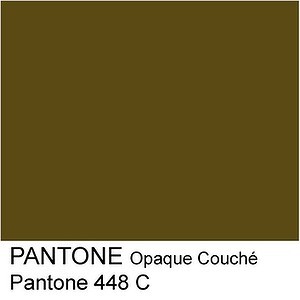
Section 3 deals with the packaging and color thereof of cigarettes, stipulating that all packaging has to be the color Pantone 448 C with a matt finish (already used in Australia), but the use of white is also permitted, more likely on the inside and/or to distinguish the health warnings put on the packaging. The section does permit the inclusion of other elements, set out in Schedule 1, such as the brand of the cigarettes, number of cigarettes in the pack, details of their producer and barcodes (following strict rules on style). This does include the striking health warnings present in packs today as well. Sections 4 and 5 set out rules on the material, shape and function of the cigarette box itself, and the cigarettes contained within. The former is given more allowances, with soft and hard materials being left as a choice, but also on the lid design and its shape. The latter are very much left as they mostly seem to be, with cigarettes only allowed to be a matt white color, but the filter end (or the end that is not intended to be lit) can be colored to resemble cork (as many these days seem to do). The cigarettes can also contain their brand, but under strict design rules. Schedule 2 builds on the above, adding specific rules regarding wrappers, surfaces and inserts in cigarette packs.

Sections 7, 8 and 9 prescribe very similar rules for hand rolling tobacco packaging, allowing only the same Pantone color for the outside and/or for the interior, including plain white. The packaging also allows the inclusion of health warnings or other symbols sanctioned by Schedule 3. The shape of the bag containing the rolling tobacco can also be a variety of shapes, including a cuboid or a cylindrical shape. Similarly to Schedule 2 above, Schedule 4 adds on other provisions regarding the tabs, seals and wrappers in the packaging of rolling tobacco.

Cigarette Lives Matter
Sections 10, 11 and 12 add additional restrictions on packaging for both types, including (through section 10) the denial of any markings that encourage smoking, display information on the chemical composition of the cigarettes and compares favorably a given tobacco product to another. This is in place clearly to further prevent express benefits to any given brand that may, for example, contain less nicotine (or other harmful chemicals) or cost less per cigarette, and to even the playing field for all brands. Sections 11 and 12 prescribe that no packaging can emit smells or noise that is not normally a part of the packaging or product itself, or that the packaging cannot change appearance post purchase.

All of the above changes are quite logical and clearly aim to create an even playing field for all cigarette products, but for many, the question of why these provisions were introduced still remains. The government described the Regulations as a means to "...discourag[e] people from starting to use tobacco products; encourag[e] people to give up using tobacco products; reduc[e] the appeal or attractiveness of tobacco products, the misleading elements of packaging and the potential for packaging to detract from the effectiveness of health warnings; and [to] hav[e] an effect on attitudes, beliefs, intentions and behaviours relating to the reduction in use of tobacco products". The objective is clearly one of policy regarding health, especially targeting more image vulnerable young people and the early days of tobacco use. This writer commends the government for its bold initiative, following its Australian cousins across the way.

The Regulations were challenged in the High Court by all of the major tobacco companies (British American Tobacco (UK) Ltd & Ors, R (On the Application Of) v Secretary Of State For Health), where the companies, as summarized by Mr. Justice Green: "...challenged the Regulations upon the basis of international trade mark and health law, EU law, the European Charter of Fundamental Rights, the European Convention of Human Rights, and the domestic common law. They attack not only the Regulations themselves but also the process by which Parliament came to adopt the legislation". The judge ultimately found that the Regulations were lawful in all respects, and the introduction of plain packaging is almost inevitable.

The looks of products can be hugely beneficial for the sale and mind-share of any goods, and thus the loss of these external attractive features is yet another blow to the tobacco industry, including since the banning of the advertisement of tobacco products in the latter part of the 20th century. This writer thinks the change is nothing but a good one, but the legal professional in him seems to dislike the idea of the removal of all IP in cigarette packaging. Nevertheless, his opinion stays merely a single opinion, and the attitudes of the world have changed and plain packaging will probably spread further after this change.

16 May, 2016

Hidden Benefit - Use of Trademarks as Google AdWords Allowed in Australia

There are many aspects of the Internet that most of its users are blissfully unaware of, including mountains of code and infrastructure that goes unseen. This is important, since seeing every aspect of a web browsing experience would cause information to be muddled and hard to digest, if not impossible to handle properly, so this 'invisible' network is necessary for the modern experience. Even so, the hidden layers of the Internet could be used for nefarious purposes, or possibly to try and take advantage of the goodwill of businesses or their trademarks, which puts it in a position of some scrutiny. While this blog has discussed metatags before (in a Canadian context), a similar question arose yet again, only this time all the way across the world in Australia.

The case of Veda Advantage Limited v Malouf Group Enterprises Pty Limited dealt with Veda, who are a big credit reporting organization in Australia. Among providing consumer credit reports, they also offer a credit repair service, expunging incorrect or otherwise erroneous listing on a consumer's credit report, therefore improving their credit score (although Veda do not do this proactively, only responding to customer's notices on this information). Malouf Group offer a similar service, although liaising with Veda on their customers behalf (in the process acquiring a copy of their report from them). Veda are also in possession of several registered trademarks over its name, or variants of it, including VEDA, VEDA ADVANTAGE and VEDACHECK. In advertising their business online, Malouf used the name Veda in 86 Google AdWords keywords, which were targeted at those wanting to contact Veda and would be directed to Malouf's services. They were subsequently sued by Veda for trademark infringement for their use of the name (or its variants) in their Google AdWords campaigns, potentially contravening section 120 of the Australia Trade Marks Act 1995.

Under the section above a trademark is infringed when a sign is "...use[d] as a trade mark... that is substantially identical with, or deceptively similar to, the trade mark in relation to goods or services in respect of which the trade mark is registered". The key questions therefore are whether the name "Veda" was used 'as a trade mark' and whether this was done 'in relation to services' that the marks were registered for.

Judge Katzmann, handing down the Federal Court's judgment, first dealt with the issue of whether the name Veda was used as a trade mark by Malouf in their use of it in their Google AdWords advertising. The use would have to be "...as a “badge of origin” in the sense that it indicates a connection in the course of trade between goods and the person who applies the mark to the goods". This has to be done objectively, including taking into account the nature and purpose of the use.

Google AdWords can be questionable at times
She rejected the notion that Malouf were using the signs as trademarks, as, in her mind, the selection of marks used in the Google AdWords platform does not create a connection with the services of the marks' owner, but act as a way to direct possibly interested parties to your own services. They can equally be acquired by any business, including Malouf's competitors, which would add further links in the search results. The marks are also invisible to the user, who will not see them outside of the results and their search query itself.  The invisible nature of the marks would not create an impression on the user that that specific word is what brought up the results, and therefore would not confuse them as to their indication of origin. She distinguished Google AdWords from metatags, which function differently and are possibly visible to the user (although, this writer will contest that many will ever see them), being therefore used as a trademark in the context of the Act. She concluded that "...the use of a sign which is invisible to the consumer is [not] use as a trade mark within the meaning of the Trade Marks Act".

Judge Katzmann then moved onto discussing the marks' use in the sponsored links that appear at the top of results when a keyword or words are searched. What is worth also noting is the use of the name Veda (and other words) in custom headings that appear within these sponsored results. Judge Katzmann saw that in the majority of the instances (all but one) the use of Veda was not a use as a trademark. In her view the use was to "...describe the object to which its services are directed — fixing, cleaning or repairing Veda credit files or reports — not as a badge of the origin of its business and therefore not as a trade mark". To put this into slightly different terms, this meant that the mark was used merely to describe a specific service, and not as an indication that it originated from Veda.

The final point in relation to infringement was whether the marks were used in relation to services in respect of which the trade marks were registered. As the marks were registered for several different classes they encompassed a wide array of services, including consultation, advice and analysis in relation to financial services (with plain financial services not being offered by Malouf). Judge Katzmann rejected Malouf's assertion, and accepted that the marks were used in relation to the services they were registered for, even if the services offered by Malouf were not identical to Veda's. After a very brief discussion, Malouf was also deemed not to have a defence under section 122 of the Act through a use in good faith. In the end Judge Katzmann saw that Malouf only infringed the marks in respect of two search queries (specifically "The Veda Report Centre" and "The Veda-Report Centre"), with the rest deemed not to infringe under the Act.

What was curious in the case is the discussion surrounding the European or UK position in relation to this type of meta-information and infringement of trademarks. Judge Katzmann distinguished both Google France SARL v Louis Vuitton Malletier SA and Interflora Inc and Anor v Marks & Spencer, determining that the wording used in the EU legislation was not an equivalent to the Australian wording, especially with the difference in 'using in the course of trade' (per Article 5 of the first Trade Mark Directive) and 'used as a trademark' under section 120 of the Australian Act. In her view, the use would have to be, contrary to the aforementioned judgments, as a 'badge of origin' and not merely in the course of trade (whether used as a badge or not). The invisibility of the use seems to be key here in an Australian context, whereas in Europe this seems to be mostly irrelevant under previous considerations.

The case also dealt with competition issues under the Australian Consumer Law, and Judge Katzmann deemed that the provisions were only contravened under the above two search queries for which the marks were also infringed.

All in all the case is very interesting, and provides some valuable insight into the nuanced world of the Internet and its hidden facets. Australian law seems to diverge, at least for now, from its cousins in Europe and the UK, and this judgment strongly cements it as such.

Source: K&W IP Whiteboard

19 February, 2016

Plain and Simple - Australia Wins Plain Packaging Challenge in Asia

Plain Packaging, the initiative to effectively remove all identifying markings (one could say the only distinctive features in tobacco), is a debate that has been raging on for years, with both sides voicing very valid concerns. Australia has been on the forefront of plain packaging, passing the Tobacco Plain Packaging Act 2011 over 5 years ago, and the Act has not been without its challenges. Currently there still are suspended proceedings at the WTO, initiated by Ukraine, over the legality of the Act (discussed, prior to the suspension, here); however, this has not been the only battleground the Act has been fought over in.

In a recent action in the Permanent Court of Arbitration, Philip Morris Asia Limited (Hong Kong) challenged the legislation under the 1993 Agreement between the Government of Australia and the Government of Hong Kong for the Promotion and Protection of Investments, which sets certain rules for both countries in relation to foreign investments from those countries. These are, inter alia, that "[e]ach Contracting Party shall encourage and create favourable conditions for investors of the other Contracting Party to make investments in its area" and that "[i]nvestors of either Contracting Party shall not be deprived of their investments nor subjected to measures having effect equivalent to such deprivation in the area of the other Contracting Party except under due process of law". The latter of the two is the more important argument, as Philip Morris argued that Australia infringed this Article (Article 6) through its plain packaging law. Additionally Philip Morris argued that the law did not treat their investment fairly and equally (as mandated by Article 2(2)).

Without discussing the merits of Philip Morris' case, Australia argued a lack of proper jurisdiction for the Court of Arbitration, as, among other factors, Philip Morris Asia had only acquired the full shareholding of their Australian counterpart after the introduction of the legislation, leaving them fully aware and accepting of the potential negative influence on their investment by the law's passing.

The Tribunal decided on this late last year (with the decision not having been published as of yet, due to confidentiality reasons, which this writer was waiting for) that it did not have jurisdiction to hear the case, and dismissed Philip Morris Asia's case.

The decision, albeit very low in substance of the intellectual property laws that underpin plain packaging, is an interesting one, and a worthwhile illustration of the power of international trade agreements. The Transatlantic Trade and Investment Partnership (TTIP) and the controversy surrounding it only makes this more pronounced, which could, potentially, afford similar routes for corporations to challenges laws that make like difficult for them. In any event, this writer found the case interesting, although underwhelming in its substance, and would have liked to see things debated in more length as to the actual law and its possible infringement of the Agreement.

Source: Sydney Morning Herald

04 November, 2015

Genes Lost - Myriad Genetics Loses in the Australian High Court

The Myriad Genetics saga has been going on for several years now in the Land Down Under, and this writer has been waiting for the Australian High Court decision with bated breath. After a ruling in both the Federal Court and the Full Federal Court (more on which can be found here) in favor of Myriad Genetics, the cause seemed all but lost to the appellant, Yvonne D'Arcy. She was awarded the right to appeal to the High Court of Australia, who handed their judgment down only last month.

Although the case has been discussed on this blog before, some exposition is needed for those who might not be wholly familiar with the matter. The case of D'Arcy v Myriad Genetics dealt with the protein BRCA1; one that is quite relevant as a marker for a potential heightened risk for breast and ovarian cancer should it possess a mutation within it. Myriad Genetics acquired a patent for the sequence's isolation and subsequent analysis (Australian patent no. 686004), which was challenged by Yvonne D'Arcy, a cancer patient herself, in 2013.

What the High Court had to consider was whether the patent can be defined as a 'manner of manufacture' under the Statute of Monopolies 1623; a requirement for patentability under the Australian Patents Act 1990.

Genes are not that important
In a lengthy, multi-opinion decision, the High Court unanimously decided that the disputed claims of the patent were not a 'manner of manufacture', and thus were not patentable. Discussing the science and precedent, the majority still focused on the substance of the patent in in-depth detail. What Myriad Genetics argued, and the preceding judges agreed with, was that the isolation of the genetic sequence, and its analysis, created an artificial state of affairs, changing what is in simplistic terms a natural phenomenon into a man-made substance falling under the definition of a 'manner of manufacture'. The majority disagreed, and saw that "...the information stored in the sequence of nucleotides coding for the mutated or polymorphic BRCA1 polypeptide is the same information as that contained in the DNA of the person from which the nucleic acid was isolated. It is the existence of that information which is an essential element of the invention as claimed. The product is the medium in which that information resides". In the majority's view the isolation of the genetic content retains the very same information as occurs naturally within that person, adding or 'making' nothing new. Myriad Genetics' claims honed on the information within the genetic sequence, and not the chemical changes made to it when isolating, falling foul of a 'manner of manufacture' as a result, attempting to claim what already exists through nature (echoing, and accepting, the position by the US Supreme Court, more on which can be found here).

Ultimately what befell Myriad Genetics' case was the language used in the patent's claims, as stated by the majority: "Although it may be said in a formal sense that the invention as claimed, referring to isolated nucleic acids, embodies a product created by human action, that is not sufficient to support its characterisation as a manner of manufacture. The substance of the invention as claimed and the considerations flowing from its substance militate against that characterisation". As such the High Court allowed the appeal by Ms. D'Arcy.

The complexity and uncertainty around the case is evidenced by the length and multitude of opinions, and even though the decision was unanimous in allowing the appeal, the opinions reflect different approaches in arriving in the same answer. To this writer the focus seems to be very language specific, and had Myriad Genetics differentiated their claims through more specific, composition-heavy language, they could have been successful. Nevertheless, the case was more of a point of principle, as the patent expired only a few months ago, but it does set a precedent for the genetics industry in Australia. The Australian government has given guidance on proper practice in relation to genetic materials and patents, which looks gloomy for the industry, but the consultation does allow for comments and thoughts going forward.

Source: ABC Online 

25 June, 2015

Words Reinterpreted - Copyright and Translations

As has been well-established for years, copyright protects the expression of ideas rather than the ideas themselves (more on which can be found here), no matter what your expression for that idea may be. Words especially are a very nuanced, often unique way of conveying similar ideas or stories, making them the most malleable out of all forms of more direct expression (when images can be much more subjective, at least in this writer's opinion). Although similar stories have been told for centuries, basing themselves on old folk lore or mythologies, their specific expression has always varied drastically, tacking onto the societal make-up of their time and their respective overarching themes. Translations take those works and make them available to people who otherwise would not be able to access them. With this in mind, can you translate a story and not infringe its copyright, and can a translation be a new form of expression of the same story, potentially being protected by copyright itself?

Under the Copyright, Designs and Patents Act 1988 in the United Kingdom, copyright holders have a specific set of rights in their protected works, which includes literary works. Under section 16 of the Act only the copyright holder is able to make an 'adaptation' of the work, which specifically includes translations. Should you choose to make a translation of a work, without seeking a proper license to do so from the copyright holder, you would be infringing their copyright (specifically section 21 of the CDPA). This follows Article 8 of the Berne Convention for the Protection of Literary and Artistic Works that gives authors "...the exclusive right of making and of authorizing the translation of their works throughout the term of protection of their rights in the original works".

Is there any way for an individual to translate a work without infringing copyright then? Under the CDPA there are certain exceptions for the use of copyright protected materials that translations could potentially fall under, specifically criticism, review and news reporting and research and private study. Both exceptions provide avenues for a legitimate use of materials so far as the use is for that specific purpose and not merely done under the façade of the exception in order to create an infringing copy. Arguably, translating a copy for criticism, review or news reporting provides a sufficient reason to do so, as the understanding of the underlying material and using it in that task can be said to be fair and a proper use of copyright protected material for that purpose. The same goes for research and private study, especially when no officially translated source material is not available to be used and thus the materials could not be used to advance your own personal education or research. Arguably none of these do allow for the distribution and/or sale of a translated work, but do offer an avenue for legitimate uses of translated works should you require to do so.

Albert was a master linguist (Source: Farmers Weekly)
Other common law countries have very similar provisions dealing with the translation of copyrighted works. In the United States copyright similarly does not allow for the creation of translations of works, as under 17 USC section 106 the copyright holder has the sole right to create 'derivative works', which does include translations. Canada, much like its cousin in the South and across the pond, gives the right to translate works only to the copyright holder under the Canadian Copyright Act. Finally, Australia, much like the previous three, protects translations as a right only bestowed to the copyright holder under the Copyright Act 1968, as they are considered an adaptation of the original. Clearly the ability to translate a work is seen as an important right of the original author, and rightfully so, as the spreading of a work to new territories, often through linguistic barriers that require the translation of your work, and an opportunistic infringer could easily pounce on the popularity of a title only released in a select few countries.

This still poses the question that can a translation be a new work unto its own, and possibly be protected under copyright outside of the original work? In the US the protection in any derivative works (and in turn, translations) only extends to the newly created parts of the work that did not exist in the original. This may seem very vague, which it is, but arguably this would be any changes in expression or artistic flourishes the translator adds to his or her take on the story, either through necessity, linguistic differences or just through their own initiative. This does not create a work in itself, but does show that the translation can incur protection, even if partially so. Canadian legislation takes this a step further as it has been seen in Pasickniak v Dojacek by the Canadian Court of Appeal that a translated work is a copyright protected work in itself, wholly separate from the original work it derives from. This still does not mean the translator attains any copyright title in his/her translation as the copyright automatically vests in the copyright holder, albeit still separately.

Even so, translations can have even vast differences to the original works, and as seen above, potentially should carry more weight as separate literary works themselves without skirting the copyright of the source than you'd think. Great examples of where translations deviate onto a path of their own, at least in some terms, are works by Umberto Eco. His works often contain specific references to regional artists, works and anecdotes; material that has been noted to be changed or even omitted in his works when translated. Mr. Eco is by no means the only writer who has 'suffered' from the changes through translation, and arguably that is a part of the nature of the beast (there are instances where works have been altered for censorship as well). One could argue that when a translations steps beyond the bounds of the original drastically it could be said to be a work in itself; a reinterpretation of a story created prior. Regardless, copyright will probably not allow for the free translation and 'reimagination' of said works any time soon, as its main function is to reward the original author, not subsequent users of said material, arguably using very little imagination of their own (this writer does not, however, want to diminish their work by any means). Any aspiring translators will therefore have to keep their wits about themselves, and apply for relevant licences or approval before starting on their reinterpretation of their favorite foreign book.

30 April, 2015

Pirates Uncovered - Dallas Buyers Club's Landmark Case in Australia

Piracy is considered by many in the entertainment industry to be the plight of the 21st century creative minds and pockets (and the pockets' of many shareholders, one would think). What ever your thoughts on copyright piracy, the topic remains a hot-button issue, and the courts have been, and will undoubtedly continue to, battle with for years to come. With this in mind, the enforcement of rights online has proven difficult, especially when a user, either downloading or sharing said infringing content, is effectively hidden behind a single Internet Protocol (IP) number, which does not accurately identify the given user (as discussed here in some manner relating to the US). The battle between Internet Service Providers (ISPs) and copyright holders has been an active one regarding this, and a recent decision in Australia seems to have opened the door to potentially combating this issue on the copyright holders' end, at least for now.

The case in question was Dallas Buyers Club LLC v iiNet Limited, which dealt with the very successful movie Dallas Buyers Club that was, among other things, nominated for 6 Oscars in its year of release. Due to the movie's immense success, it was promptly shared online, and in an action for preliminary discovery, the movies' rights holder Dallas Buyers Club LLC sought to identify the individuals behind all 4726 unique IP addresses associated with sharing the movie online through the 6 respondent ISPs in the action. The ISPs contested this application on several grounds, but the first instance decision lay with the Federal Court of Australia.

Although the respondents actively contested the ownership of the copyright in the work (decided as being held by Dallas Buyers Club LLC, with very little resistance from the Court), and other matters underpinning the case at hand, the meat of the discussion lay in the possible allowance of discovery in relation to the aforementioned IP addresses.

The secret life of a copyright infriger (Source: Bizarro Comics)
Under the Australian Federal Court Rules 2011 a party can seek for the identification of an unknown party should they have a cause of action against that person under certain requirements: "(a) there may be a right for the prospective applicant to obtain relief against a prospective respondent; and (b) the prospective applicant is unable to ascertain the description of the prospective respondent; and (c) another person (the other person): (i) knows or is likely to know the prospective respondent’s description; or (ii) has, or is likely to have, or has had, or is likely to have had, control of a document that would help ascertain the prospective respondent’s description." Clearly, as the individuals sharing the movie are behind an IP address, and therefore hard to identify without information from the ISP as to who is behind said IP address, Dallas Buyers Club, at least prima facie, had a case to find out who these people are under the Act.

Regardless of the ISPs' rejection of Dallas Buyers Club's assertions under the three requirements of the Act, the Court saw that they had fulfilled the requirements and were therefore entitled to disclosure as to the users' identities. They had a right to seek relief as to a potential breach of their copyright; they could not identify the individuals committing that infringement; and the ISPs knew or were likely to know who they were, or at least would be in possession of their subscriber details based on fixed IP addresses.

Even though Justice Perram allowed the disclosure of the users' information to Dallas Buyers Club, he did however set certain restrictions on it, which will be set by the parties later in the process. Dallas Buyers Club have indicated that they want the details disclosed by May 6th, but the letter that will be sent out will be determined on a later note as well.

Although the case is an important landmark in the fight against piracy, the disclosure of individuals' details in relation to copyright infringement is nothing wholly new. In Canada, under the Federal Court Rules, the disclosure of such information is very similar to the Australian provision; and Voltage LLC, the parent company of Dallas Buyers Club, has successfully used the provision to gain such information in Canada in the case of Voltage Pictures LLC v John Doe. Similarly, in the UK, a Norwich order (the equivalent of the Australian provision's application) was issued for copyright infringement through which subscribers' details were disclosed to the copyright holder in Golden Eye (International) Ltd & Anor v Telefonica UK Ltd. Both cases also discuss the restrictions needed in the event of such disclosure, such as: "[p]utting safeguards in place so that alleged infringers receiving any “demand” letter from a party obtaining an order under Rule 238 or a Norwich Order not be intimidated into making a payment without the benefit of understanding their legal rights and obligations... [s]pecific warnings regarding the obtaining of legal advice or the like should be included in any correspondence to individuals who are identified by the Norwich Order... [l]imiting the information provided by the third party by releasing only the name and residential address but not telephone numbers and e-mail addresses... [and] [r]equiring the party obtaining the order to provide a copy of any proposed “demand” letter to all parties on the motion and to the Court prior to such letter being sent to the alleged infringers". These, among others, will undoubtedly be considered by the Australian courts in their application of such orders in the future, and in this case specifically.

As one could imagine, the case has spawned a huge amount of discussion, especially relating to Voltage Pictures' previous strong-arm tactics in their letters to infringers. Nevertheless, the cold application of the law, at least to this writer, seems to be quite accurate, and individuals who engage in such activities need to understand the risks associated with illegal copying of media online. The Dallas Buyers Club case clearly sets the stage for more direct, stronger enforcement of copyright within Australia, and it remains to be seen how the provision will be utilized in the future, and what restrictions the courts ultimately put on the disclosure of subscribers' details and the usage thereof.

Source: Sydney Morning Herald

12 January, 2015

Names and IP Law - Do You Have a Right to Use Your Name?

Your name is a part of who you are, your own identity, and for a lot of people, a very important indicator of their history and origin. As such, a name carries immense weight and importance to some, even if it is 'generic' such as Smith or Johnson. Often it is simply easy, and identifiable, to start trading under your own name when you start a business, e.g. Ihalainen LLP (I'm a dreamer, what can I say), but should your name conflict with a well-known brand, such as McDonald's, the use of your own name can be tricky. This begs the question: can you use your own name when doing business, or should you refrain from it outright, especially if a more well-known brand uses that very same name in its business?

In the UK a person can use their own name in conjunction with their business under the Trade Marks Act 1994, through the implementation of EU Directive 2008/95/EC, so far as the use "...is in accordance with honest practices in industrial or commercial matters". On the face of it this entails the use of your name, such as Ihalainen LLP, even if there is an existing Ihalainen Ltd with registered trademarks over the name. The name, however, does have to be distinctive in its use as a trademark, irrespective of its unique characteristics (i.e. Ihalainen clearly is more unique in an Anglo setting vis-a-vis a Finnish setting). Surprisingly, at least from a prima facie assessment, the provision applies equally to corporate names, not just natural persons' names.

People, and businesses, can be hurt by mistaken names
One still has to remember that the defense only applies to a bona fide use of one's name in their business, and adopting a name that clearly infringes a well-established and famous mark will not be overlooked only because the person has the very same name. As was stated by Lord Justice Gibson in Asprey & Garrard Ltd v WRA (Guns) Ltd: "...the defence has never been held to apply to names of new companies as otherwise a route to piracy would be obvious". Clearly one can appreciate that the position of the Court of Appeal in the case is correct; however should an individual trade under their own name, at the same time or prior, as one that is well-known, the defense clearly applies, as they have not sought to use the name to illegitimately gain from its notoriety. Even if the use of the name is honest from a subjective point of view, the use might still not fall under the defense, as was elaborated by Lord Justice Gibson further in the case: "I would add that however honest his subjective intentions may be, any use of his own name which amounts to passing off cannot be in accordance with honest practice in industrial or commercial matters".

A similar provision exists in the United States under 15 USC section 1115, through which a defense is given if the "...use of the name, term, or device charged to be an infringement is a use, otherwise than as a mark, of the party’s individual name in his own business, or of the individual name of anyone in privity with such party, or of a term or device which is descriptive of and used fairly and in good faith only to describe the goods or services of such party, or their geographic origin". This affords someone protection over the use of their own name in business, although with a similar caveat as to its proper and bona fide use. This view is generally accepted within the common law, with similar provisions existing under the Australian Trade Marks Act 1995 and the Canadian Trade-Marks Act.

The defense described above does not detract from the contestable requirements of registering a trademark, and as said above, a name still has to fulfill all requirements for a valid trademark. Should the name used not be distinctive enough it clearly will not merit protection, and potentially will not be registrable from the outset.

Source: JDSupra

19 December, 2014

Non Parlo Inglese - Australian High Court Takes on Foreign Words as Trademarks

As the world's become evermore global, the mixing of different cultures, conventions and languages is completely inevitable. With this intermingling comes variety and novelty in expression, yet another perspective in this is added confusion and the potential for a well-known foreign brand to be completely overlooked or missed in these new markets with their introduction through immigrants or other people who wish to have access to these goods or services, especially if the mark in question is in a language not commonly used in that new country. This in mind, as trademarks have to distinguish specific goods or services, can a foreign mark achieve this and be considered a trademark, or will the language barrier potentially deter their use in a country? Luckily this matter was recently brought to the Australian High Court, which ultimately decided the fate of foreign marks in Australia, and whether they can inherently distinguish the goods or services provided.

The case in question was Cantarella Bros Pty Ltd v Modena Trading Pty Ltd, which dealt with the ever-loved subject matter of coffee. The claim dealt with two registered trademarks held by Cantarella Bros, an Italian coffee company: Australian Trademark 829098 "ORO" ('gold' in Italian) and 878231 "CINQUE STELLE" ('five stars' in Italian). Modena, an importer of Italian coffee, used similar marks indicating their coffee products, including both of the marks in question, using them in conjunction with their coffee brands as marks of quality.  Modena argued, after being sued for trademark infringement by Cantarella Bros, that the marks are merely signs of quality and cannot inherently distinguish Cantarella's products from others, and therefore be valid trademarks.

The question hinged largely on the Australian Trade Marks Act 1995, more specifically section 41, under which a trademark has to be "...inherently adapted to distinguish the designated goods ...from the goods ...of other persons". If the mark does not do so, due to it being merely descriptive for example, it will be deemed an invalid mark. The High Court saw that the question which needs to be answered, basing their decision quite heavily on UK precedent, is "...an enquiry into the word's ordinary signification and whether or not it has acquired a secondary meaning". To put things in simpler terms, it is an assessment of what the word means ordinarily, and whether that particular meaning has acquired a secondary meaning, indicating a specific origin or quality of product in relation to a brand of goods or services, even if its ordinary meaning can be said to be descriptive or generic.

After a discussion of relevant precedent, the court formulated its final question regarding foreign marks:

Other languages can be very confusing
"The principles settled by this Court (and the United Kingdom authorities found in this Court to be persuasive) require that a foreign word be examined from the point of view of the possible impairment of the rights of honest traders and from the point of view of the public. It is the "ordinary signification" of the word, in Australia, to persons who will purchase, consume or trade in the goods which permits a conclusion to be drawn as to whether the word contains a "direct reference" to the relevant goods (prima facie not registrable) or makes a "covert and skilful allusion" to the relevant goods (prima facie registrable). When the "other traders" test from Du Cros is applied to a word (other than a geographical name or a surname), the test refers to the legitimate desire of other traders to use a word which is directly descriptive in respect of the same or similar goods. The test does not encompass the desire of other traders to use words which in relation to the goods are allusive or metaphorical. In relation to a word mark, English or foreign, "inherent adaption to distinguish" requires examination of the word itself, in the context of its proposed application to particular goods in Australia".

Effectively what the court is saying, is that the mark has to be examined so it does not impair its use unduly from other traders in a similar field (for example, trademarking the word 'fresh' in relation to bubblegum), and the end assessment is whether the public who will buy and consume that product or service will see a connection between that good or service and the provider. The reference to the goods or services has to be covert and skilful, and not a purely direct usage of that word.

Justices French, Hayne, Crennan and Kiefel, in the majority's decision, saw that, on the face of the evidence given that the marks have are not merely descriptive, and Cantarelle got to keep their trademarks. The general public were not seen as understanding the words sufficiently commonly as to convey a signature of quality, rather than an indication of origin, as there are few people in Australia who speak Italian.

To this writer the decision of the Court is an odd one, especially since the marks are, by their definition in Italian, purely descriptive, with the added issue that the marks have been commonly used even before the marks' registration. Nevertheless, the evidence produced was not enough to establish a case for Modena and the common understanding of these words, and it is hard to argue against that.

Source: Lexology

21 October, 2014

Tunneling Through the Internet - VPNs and IP Law

Today's Internet users are more savvy and capable than ever before, and many users' desires for "free" content often leads them to find ways through which to attain that content, even if it's potentially skirting the law using a variety of technological means. Although piracy by itself is a hot topic these days, and often misunderstood (the discussion of piracy and theft on this blog here), the discussion revolving around the subject matter can lead to hyperbolic statements or even the misunderstanding of technological means and their legitimate uses in light of online copyright infringement. One such technology is what are called "Virtual Private Networks", or VPNs, which allow you to create a secure connection through a network service to the public Internet at large, masking who you are and where you are through that service. These connections are also often encrypted and secured through a number of ways, which can be used for both legitimate and questionable uses. Even so, whether the use of VPNs is against the law is not exactly clear-cut, and merits some discussion.

Although sometimes stigmatized, much like in a recent statement by the BBC to the Australian government stating that: "...[suspicious] behavior may include the illegitimate use by Internet users of IP obfuscation tools [such as VPNs] in combination with high download volumes", VPNs do serve a legitimate and arguably useful function. Should an individual wish to mask their Internet traffic from potential government surveillance or the monitoring by any other third parties (irrespective of the nature of your activities online), VPNs handle this quite well. Such an example lies just with are friends in Australia, where new laws have been discussed giving certain bodies potentially free roam in the monitoring of Australians' Internet usage. The proposed law has flared up interests in such services, and one can argue that given such broad tools some level of obfuscation can be said to be reasonable, whether you infringe copyright or not online.

But at the heart of this lies the question of legality, and as said above, this is not wholly straightforward. VPNs enable you to view content which is often not available due to licensing issues beyond certain borders, of which a great example is Netflix, which's offerings vary quite drastically depending on where you are. As such you would not imagine, as a paying subscriber, that accessing said content could infringe any laws, especially since you are paying your dues. Yet those licensing agreements are there for a reason, and weaseling your way to see that content can be a moral and legal grey area.

Some networks are probably not worth accessing  
An argument as to the moral side of things was put forth by Simon Haupt, who argued that "[p]aying for the... service means your money goes to whoever holds the [local] rights for the shows on Netflix. If you're watching [for example] the U.S. service, the rights holders... aren't getting their fair share". This can be argued to be slightly misleading, and as proved by Michael Geist, is indeed disingenuous to an extent, as Netflix for example, pays the same amount for the shows it provides no matter how many times or where they are watched from. Although certain licensing issues can be argued, such as if a show is licensed exclusively to a certain company in country A, but people in that country watch it through Netflix from country B, which was not intended due to the exclusivity of that agreement. This could potentially deprive that party of the commercialization of that work, but is still a hard thing to argue, especially against the users themselves.

Under the UK Copyright, Designs and Patents Act 1988 section 296ZA, a company with an exclusive right to the copying or communication to the public of a work has the same rights of enforcement against a person who circumvents, or attempts to do so, any technological means through which said works are protected. Although, at least prima facie, it is quite hard to argue in terms of geo-blocking, one could potentially argue that VPNs and their use in the viewing of restricted content might infringe copyright through section 296ZA. This can be easily countered by the simple fact that it would only apply to the circumvention of exclusion through non-payment of a subscription fee for example, and not so much regional restrictions.

Similar provisions exist elsewhere in the common law as well. The Australian Copyright Act 1968 prescribes under section 116AN that the circumvention of protection measures infringes copyright, potentially including regional locking. The Australian position on whether regional locking is truly a 'technological measure' is still up in the air, but not an entirely impossible inclusion. In the US the old Computer Fraud and Abuse Act protects content from being accessed from non-authorized computers, potentially including geo-blocked content, although no case law has taken that notion on as of yet.

But as one can see the use of VPNs is a true pickle, and has no clear and easy answer as to its legality. Although mounting pressure is being put on the enforcement of regional restrictions on companies such as Netflix, this writer for one highly doubts it will be a legal battle worth waging unless there is a drastic change in the tides of copyright legislation. As for now we're all able to enjoy our forbidden fruit across the pond through services we enjoy and pay for, but be warned: you might experience restrictions on through the companies themselves eventually.

Source: Lawyers Weekly

04 October, 2014

Cigarette Smoke and Olive Green - Australian Plain Packaging Law Challenged

Cigarettes and smoking have always been a controversial topic, especially in the last few decades. From misconceptions as to cigarettes' health benefits in the early-to-mid 1900s, to a more modern understanding, the topic often polarizes both sides of the discussion regardless if you smoke or not. Whether it is purely a deterrent ideology or a perspective from which you want to enforce and strengthen individual responsibility, smoking really has no answer for either side. A gallant effort at the reduction of smoking, especially in younger individuals, with nearly a third of 16 year olds having had at least tried smoking, is the plain packaging initiative, which has been either debated or even started in some countries in the last few years. One of these countries, Australia, instated their plain packaging laws, the Tobacco Plain Packaging Act 2011, some few years ago, showcasing a 15% drop in smoking rates between the Act's introduction and the year 2013.

The Act's life, albeit right now in its infancy still, has not been an easy one, and the Act has since been challenged at the WTO by several countries. The dispute, dubbed "Certain Measures Concerning Trademarks and Other Plain Packaging Requirements Applicable to Tobacco Products and Packaging" essentially deals with potential damage to the tobacco industry in Australia as a result of the Act, or as put forth in the complaint by the Ukraine: "...erode[s] the protection of intellectual property rights [and] impose severe restrictions on the use of validly registered trademarks". Arguably the Act does just that, but under proper justification; the denial of trademark usage can be balanced with a public interest health wise. This was countered by the Ukraine: "...[it] considers that governments should pursue legitimate health policies through effective measures without unnecessarily restricting international trade and without nullifying intellectual property rights as guaranteed by international trade and investment rules". What the Act does is not nullify the rights guaranteed by the Australian Trade Marks Act 1995, but skirts the law by preventing those marks' use. The marks themselves are still quite valid, just not usable in all instances.

When does 'plain' become 'too plain'?
Australia has protected its plain packaging law by stating that "...[it] is a sound, well-considered measure designed to achieve a legitimate objective — the protection of public health... nor is [it] more restrictive than necessary to fulfill its legitimate objective". Arguably, as said above, this is very true, yet the Ukraine does have a point in its argument, at least in relation to tobacco products. Trademarks, especially those relating to tobacco packaging (for example Marlboro and Camel), are quite valuable as they are predominantly how the products are distinguished among a myriad of similar of even identical flavors (as a non-smoker, this writer has no knowledge whether this holds true or not, so please correct me if I am wrong here). As such, rendering them useless in the sphere where they are used strips them of their usability and does impede on their use; however one has to still emphasize the public health concerns which underpin the legislation. Trademarks are a badge of origin relating to quality, authenticity and expertise, yet most tobacco products cause the same health issues regardless of origin or manufacturer, rendering the badge of origin quite useless in the face of health concerns or causation.

The legality, and the purpose behind the Act, was further defended by the High Court of Australia in JT International SA v Commonwealth of Australia, where the Court stated that "There are and always have been purposive elements reflecting public policy considerations which inform the statutory creation of intellectual property rights... [and] Australian trade marks law has 'manifested from time to time a varying accommodation of commercial and the consuming public's interests'". This varying accommodation is just that; the promotion of legitimate rights, but still keeping them in balance with public interests. Health considerations are one of the bigger interests in the public sphere, and are worth defending, even at the detriment to some commercial interests.

Do trademarks then confer a non-restrictable ability to use them? Arguably no, and this was supported by Justice Grummow in the JT International case: "...the TMA, like other trade mark legislation, does not confer on registered owners or authorised users a liberty to use registered trade marks free from restraints found in other statutes". This can be stated to be correct, but a balance still needs to be struck in the event of new legislation that might or might not impede intellectual property rights.

What the decision does, however, is establish a precedent which can be used for or against future plain packaging laws, such as in Ireland or France. The outcome of the WTO panel decision has yet to emerge, but the possible resolution of the dispute seems to lean towards Australia and the TPPA. As explained by Tania Voon and Andrew Mitchell: "...the law applies equally to all tobacco products from all countries, including Australia and New Zealand. The law is also based on years of research showing that standardised packaging will reduce the appeal of tobacco products and enhance the effectiveness of health warnings. Finally, the law implements Australia’s obligations under the WHO FCTC (Framework Convention on Tobacco Control). All these factors enhance Australia’s position in the WTO dispute". Should Australia lose the dispute, the fate of the TPPA would be suspect, and potentially would have to be repealed entirely, setting a precedent to other countries which are a part of the WTO.

This writer for one is intrigued by the prospects of this challenge, but believes that the TPPA will triumph and plain packaging will become more prevalent in the coming years. Its impact on trademarks will be negligible, bar the tobacco industry, which will have to revamp its approach to marketing. Maybe one day we will all reminisce the fancy cigarette packages of yore, or just recoil at the thought of smoking altogether.

Source: The Guardian