Showing posts with label cigarettes. Show all posts

09 May, 2017

Plainly Winning - Australia Wins Plain Packaging Challenge at the WTO

Plain packaging seems to be a nigh inevitability in the current legislative climate, especially with countries pushing for stricter laws surrounding cigarettes and their marketing. This blog has discussed the challenge against the Australian Tobacco Plain Packaging Act 2011 in the WTO and in Asia (discussed here and here) by a number of countries, but the conclusion of those disputes has been coming for some years now. While similar initiatives have been introduced in a number of countries, including the UK, the disputes seem to have put a damper on those efforts, if nothing at least for the duration of the cases.

The WTO dispute (including others made by other nations) concerns the TPP Act 2011, which introduced measures to standardize tobacco product packaging, including changing the color to a boring olive green, and prominently displaying graphic warning labels. The arguments presented against the legislation were that it presents a technical barrier to trade under the Agreement on Technical Barriers to Trade (Articles 2.1 and 2.2), and infringing various provisions under the TRIPS Agreement, for example giving other Member countries more or less favorable treatment (Article 3.1) or creating an obstacle for the registration of a trademark due to the nature of the goods it is used for (Article 15.4). Finally, the Act allegedly gives imported products less favorable treatment under The General Agreement on Tariffs and Trade (Article 3.4).

As discussed above, while the judgment hasn't been released yet, sources at the WTO have claimed that the WTO has sided with the Australian government's argument on the measure qualifying as a legitimate public health measure. The restriction of branding, therefore, does not infringe the above Agreements, and is appropriate for the aim sought by the legislation.

The details of the case will be discussed more when the decision is released in July, but it still remains an important signpost in the development of plain packaging legislation worldwide.

Without a doubt, the tobacco companies and the relevant countries will appeal the decision, as has been indicated by British American Tobacco.

'Quitting clearly had no benefits', Alan thought
According to the WTO, a barrier to trade would amount to, for example, any methods that would give domestically produced goods an unfair advantage. Additionally, countries have the prerogative to "...adopt the standards they consider appropriate — for example, for human, animal or plant life or health, for the protection of the environment or to meet other consumer interests". Even if the standards are brought in to protect these legitimate aims, they still cannot be "...applied in a manner which would constitute a means of arbitrary or unjustifiable discrimination between countries where the same conditions prevail or a disguised restriction on international trade".

This writer does not claim to be a master of international trade law, but would argue that the application of a plain packaging standard to protect human life and health would not amount to a barrier on trade, as the standard would apply equally to Australian and foreign tobacco producers, and is clearly not an arbitrary or unjustifiable measure to do so. Plain packaging evens the playing field for all tobacco producers, but also seeks to stop the starting of a smoking habit, lowering the amounts of tobacco products used in that particular country (Australia showing a drop of 6% in smoking rates in adults, and the reduction of sales of tobacco products by nearly $500 million after the law's introduction).

In the end, plain packaging will be a hard fought, long battle, which will clearly go on for years to come. The tobacco industry is also in a state of transition from the old business models to new ones, including vape products, but the core remains the same and the brands equally valuable to that business. This writer is wholly for plain packaging, but its impact on IP will be a milestone for not just tobacco, but for other possibly harmful products in the future.

Source: Sydney Morning Herald

01 June, 2016

Plain as Day - Plain Packaging Regulations In Force in the UK

Plain packaging laws are a controversial topic, and undoubtedly cause quite the wave of discussion between IP professionals, the tobacco industry and even laymen (especially smokers) who will be, one way or another, impacted by the introduction of the regime. Whether you believe stripping cigarette packaging of their signature garb is a good or a bad thing, the trend seems to push towards the introduction of plain packaging worldwide in a systematic fashion. This blog has discussed plain packaging in the Australian context on a few occasions (more on which here and here), but this writer has followed similar developments in Europe with great interest. In the last few weeks plain packaging has taken great leaps in the UK, and The Standardised Packaging of Tobacco Products Regulations 2015 came into force on the 20th of May 2016. This piece will endeavor to give you an overview of the legislation and its effects; however, undoubtedly there will be a few wrinkles in the years to come.

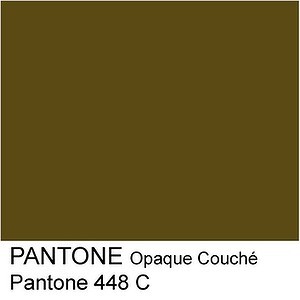
Section 3 deals with the packaging and color thereof of cigarettes, stipulating that all packaging has to be the color Pantone 448 C with a matt finish (already used in Australia), but the use of white is also permitted, more likely on the inside and/or to distinguish the health warnings put on the packaging. The section does permit the inclusion of other elements, set out in Schedule 1, such as the brand of the cigarettes, number of cigarettes in the pack, details of their producer and barcodes (following strict rules on style). This does include the striking health warnings present in packs today as well. Sections 4 and 5 set out rules on the material, shape and function of the cigarette box itself, and the cigarettes contained within. The former is given more allowances, with soft and hard materials being left as a choice, but also on the lid design and its shape. The latter are very much left as they mostly seem to be, with cigarettes only allowed to be a matt white color, but the filter end (or the end that is not intended to be lit) can be colored to resemble cork (as many these days seem to do). The cigarettes can also contain their brand, but under strict design rules. Schedule 2 builds on the above, adding specific rules regarding wrappers, surfaces and inserts in cigarette packs.

Sections 7, 8 and 9 prescribe very similar rules for hand rolling tobacco packaging, allowing only the same Pantone color for the outside and/or for the interior, including plain white. The packaging also allows the inclusion of health warnings or other symbols sanctioned by Schedule 3. The shape of the bag containing the rolling tobacco can also be a variety of shapes, including a cuboid or a cylindrical shape. Similarly to Schedule 2 above, Schedule 4 adds on other provisions regarding the tabs, seals and wrappers in the packaging of rolling tobacco.

Cigarette Lives Matter
Sections 10, 11 and 12 add additional restrictions on packaging for both types, including (through section 10) the denial of any markings that encourage smoking, display information on the chemical composition of the cigarettes and compares favorably a given tobacco product to another. This is in place clearly to further prevent express benefits to any given brand that may, for example, contain less nicotine (or other harmful chemicals) or cost less per cigarette, and to even the playing field for all brands. Sections 11 and 12 prescribe that no packaging can emit smells or noise that is not normally a part of the packaging or product itself, or that the packaging cannot change appearance post purchase.

All of the above changes are quite logical and clearly aim to create an even playing field for all cigarette products, but for many, the question of why these provisions were introduced still remains. The government described the Regulations as a means to "...discourag[e] people from starting to use tobacco products; encourag[e] people to give up using tobacco products; reduc[e] the appeal or attractiveness of tobacco products, the misleading elements of packaging and the potential for packaging to detract from the effectiveness of health warnings; and [to] hav[e] an effect on attitudes, beliefs, intentions and behaviours relating to the reduction in use of tobacco products". The objective is clearly one of policy regarding health, especially targeting more image vulnerable young people and the early days of tobacco use. This writer commends the government for its bold initiative, following its Australian cousins across the way.

The Regulations were challenged in the High Court by all of the major tobacco companies (British American Tobacco (UK) Ltd & Ors, R (On the Application Of) v Secretary Of State For Health), where the companies, as summarized by Mr. Justice Green: "...challenged the Regulations upon the basis of international trade mark and health law, EU law, the European Charter of Fundamental Rights, the European Convention of Human Rights, and the domestic common law. They attack not only the Regulations themselves but also the process by which Parliament came to adopt the legislation". The judge ultimately found that the Regulations were lawful in all respects, and the introduction of plain packaging is almost inevitable.

The looks of products can be hugely beneficial for the sale and mind-share of any goods, and thus the loss of these external attractive features is yet another blow to the tobacco industry, including since the banning of the advertisement of tobacco products in the latter part of the 20th century. This writer thinks the change is nothing but a good one, but the legal professional in him seems to dislike the idea of the removal of all IP in cigarette packaging. Nevertheless, his opinion stays merely a single opinion, and the attitudes of the world have changed and plain packaging will probably spread further after this change.

04 October, 2014

Cigarette Smoke and Olive Green - Australian Plain Packaging Law Challenged

Cigarettes and smoking have always been a controversial topic, especially in the last few decades. From misconceptions as to cigarettes' health benefits in the early-to-mid 1900s, to a more modern understanding, the topic often polarizes both sides of the discussion regardless if you smoke or not. Whether it is purely a deterrent ideology or a perspective from which you want to enforce and strengthen individual responsibility, smoking really has no answer for either side. A gallant effort at the reduction of smoking, especially in younger individuals, with nearly a third of 16 year olds having had at least tried smoking, is the plain packaging initiative, which has been either debated or even started in some countries in the last few years. One of these countries, Australia, instated their plain packaging laws, the Tobacco Plain Packaging Act 2011, some few years ago, showcasing a 15% drop in smoking rates between the Act's introduction and the year 2013.

The Act's life, albeit right now in its infancy still, has not been an easy one, and the Act has since been challenged at the WTO by several countries. The dispute, dubbed "Certain Measures Concerning Trademarks and Other Plain Packaging Requirements Applicable to Tobacco Products and Packaging" essentially deals with potential damage to the tobacco industry in Australia as a result of the Act, or as put forth in the complaint by the Ukraine: "...erode[s] the protection of intellectual property rights [and] impose severe restrictions on the use of validly registered trademarks". Arguably the Act does just that, but under proper justification; the denial of trademark usage can be balanced with a public interest health wise. This was countered by the Ukraine: "...[it] considers that governments should pursue legitimate health policies through effective measures without unnecessarily restricting international trade and without nullifying intellectual property rights as guaranteed by international trade and investment rules". What the Act does is not nullify the rights guaranteed by the Australian Trade Marks Act 1995, but skirts the law by preventing those marks' use. The marks themselves are still quite valid, just not usable in all instances.

When does 'plain' become 'too plain'?
Australia has protected its plain packaging law by stating that "...[it] is a sound, well-considered measure designed to achieve a legitimate objective — the protection of public health... nor is [it] more restrictive than necessary to fulfill its legitimate objective". Arguably, as said above, this is very true, yet the Ukraine does have a point in its argument, at least in relation to tobacco products. Trademarks, especially those relating to tobacco packaging (for example Marlboro and Camel), are quite valuable as they are predominantly how the products are distinguished among a myriad of similar of even identical flavors (as a non-smoker, this writer has no knowledge whether this holds true or not, so please correct me if I am wrong here). As such, rendering them useless in the sphere where they are used strips them of their usability and does impede on their use; however one has to still emphasize the public health concerns which underpin the legislation. Trademarks are a badge of origin relating to quality, authenticity and expertise, yet most tobacco products cause the same health issues regardless of origin or manufacturer, rendering the badge of origin quite useless in the face of health concerns or causation.

The legality, and the purpose behind the Act, was further defended by the High Court of Australia in JT International SA v Commonwealth of Australia, where the Court stated that "There are and always have been purposive elements reflecting public policy considerations which inform the statutory creation of intellectual property rights... [and] Australian trade marks law has 'manifested from time to time a varying accommodation of commercial and the consuming public's interests'". This varying accommodation is just that; the promotion of legitimate rights, but still keeping them in balance with public interests. Health considerations are one of the bigger interests in the public sphere, and are worth defending, even at the detriment to some commercial interests.

Do trademarks then confer a non-restrictable ability to use them? Arguably no, and this was supported by Justice Grummow in the JT International case: "...the TMA, like other trade mark legislation, does not confer on registered owners or authorised users a liberty to use registered trade marks free from restraints found in other statutes". This can be stated to be correct, but a balance still needs to be struck in the event of new legislation that might or might not impede intellectual property rights.

What the decision does, however, is establish a precedent which can be used for or against future plain packaging laws, such as in Ireland or France. The outcome of the WTO panel decision has yet to emerge, but the possible resolution of the dispute seems to lean towards Australia and the TPPA. As explained by Tania Voon and Andrew Mitchell: "...the law applies equally to all tobacco products from all countries, including Australia and New Zealand. The law is also based on years of research showing that standardised packaging will reduce the appeal of tobacco products and enhance the effectiveness of health warnings. Finally, the law implements Australia’s obligations under the WHO FCTC (Framework Convention on Tobacco Control). All these factors enhance Australia’s position in the WTO dispute". Should Australia lose the dispute, the fate of the TPPA would be suspect, and potentially would have to be repealed entirely, setting a precedent to other countries which are a part of the WTO.

This writer for one is intrigued by the prospects of this challenge, but believes that the TPPA will triumph and plain packaging will become more prevalent in the coming years. Its impact on trademarks will be negligible, bar the tobacco industry, which will have to revamp its approach to marketing. Maybe one day we will all reminisce the fancy cigarette packages of yore, or just recoil at the thought of smoking altogether.

Source: The Guardian