Plain Packaging, the initiative to effectively remove all identifying markings (one could say the only distinctive features in tobacco), is a debate that has been raging on for years, with both sides voicing very valid concerns. Australia has been on the forefront of plain packaging, passing the Tobacco Plain Packaging Act 2011 over 5 years ago, and the Act has not been without its challenges. Currently there still are suspended proceedings at the WTO, initiated by Ukraine, over the legality of the Act (discussed, prior to the suspension, here); however, this has not been the only battleground the Act has been fought over in.
In a recent action in the Permanent Court of Arbitration, Philip Morris Asia Limited (Hong Kong) challenged the legislation under the 1993 Agreement between the Government of Australia and the Government of Hong Kong for the Promotion and Protection of Investments, which sets certain rules for both countries in relation to foreign investments from those countries. These are, inter alia, that "[e]ach Contracting Party shall encourage and create favourable conditions for investors of the other Contracting Party to make investments in its area" and that "[i]nvestors of either Contracting Party shall not be deprived of their investments nor subjected to measures having effect equivalent to such deprivation in the area of the other Contracting Party except under due process of law". The latter of the two is the more important argument, as Philip Morris argued that Australia infringed this Article (Article 6) through its plain packaging law. Additionally Philip Morris argued that the law did not treat their investment fairly and equally (as mandated by Article 2(2)).
Without discussing the merits of Philip Morris' case, Australia argued a lack of proper jurisdiction for the Court of Arbitration, as, among other factors, Philip Morris Asia had only acquired the full shareholding of their Australian counterpart after the introduction of the legislation, leaving them fully aware and accepting of the potential negative influence on their investment by the law's passing.
The Tribunal decided on this late last year (with the decision not having been published as of yet, due to confidentiality reasons, which this writer was waiting for) that it did not have jurisdiction to hear the case, and dismissed Philip Morris Asia's case.
The decision, albeit very low in substance of the intellectual property laws that underpin plain packaging, is an interesting one, and a worthwhile illustration of the power of international trade agreements. The Transatlantic Trade and Investment Partnership (TTIP) and the controversy surrounding it only makes this more pronounced, which could, potentially, afford similar routes for corporations to challenges laws that make like difficult for them. In any event, this writer found the case interesting, although underwhelming in its substance, and would have liked to see things debated in more length as to the actual law and its possible infringement of the Agreement.
Source: Sydney Morning Herald
The discussion of news, cases, legislation and anything to do with Intellectual Property law (and associated topics), made accessible to everyone.
Showing posts with label phillip. Show all posts
19 February, 2016
09 February, 2014
Retrospective - Intention to Use Trademarks
Often in business it pays off to preempt what might be the next big thing, especially when it comes to names. The right timing can yield quite the monetary results, even if such predatory practices could be argued to linger outside of what is acceptable. To limit the potential hoarding of signs which could be used as trademarks, most common law legislatures have enacted provisions preventing such practices, such as in the United Kingdom and Australia for example. Under such provisions a mark has to be used, or intended to be used, as a trademark for it to be eligible for protection as such. Without proper use, or the compulsion to do so, companies would hoard any and all marks they could, with no intent to use them, only to sue for infringement if others would use that mark even when they are not doing so themselves. Even with the existence of such provisions, the question still remains as to what counts as an intention to use in the absence of actual usage; a question which was subsequently answered in the 1980s.
The case in question is Imperial Group v Philip Morris & Co, decided in the very beginning of the 80s. This concerned the prior Trade Marks Act 1938; however the provision in question is still in the currently in force Trade Marks Act 1994, and would apply equally in relation to the more modern legislation. The case concerned the word "NERIT", which was successfully registered by Philip Morris. Their registration of the word was a result of an unsuccessful attempt to register the word "MERIT" in relation to tobacco products; a mark which was rejected due to it being a laudatory and thus, descriptive word. In their mind the registration of the word "NERIT" would be close enough to be used to enforce against any uses of the word "MERIT" should their competition adopt or use the word in relation to competing products. To further legitimize the mark, Philip Morris sold roughly 1 million cigarettes under the name "NERIT", although had no real interest in using the mark as a legitimate trademark aside from its potential use against anyone using the word "MERIT". Subsequently Imperial Group challenged the mark, having used the word "MERIT" in relation to their cigarettes, and the case finally ended up in the UK Court of Appeals.
In its deliberation the Court of Appeals saw that Philip Morris' mark was merely a ghost mark, with no real intention to be used as a legitimate trademark, and was registered under bad faith, contrary to the Trade Marks Act 1938. For a trademark to be considered legitimate under the legislation it must be used "...in the normal course of trade", and not merely under the guise of use through the manufacture of a small batch in order to legitimize the mark or its use. What the plaintiff had was merely a ghost mark. To further illustrate the intent by the plaintiff in the matter, the Court saw that "[t]hey wanted to treat the word "MERIT" as if they had a copyright interest in it"; which they clearly did not have. The Court of Appeal in the end determined that the word "NERIT" was not registered bona fide, and clearly not used for a legitimate commercial purpose and therefore would not be allowed as a registered trademark.
As one can see the use of trademarks is complex, and predatory registrations are no longer allowed. Registration of ghost marks was common practice before the Imperial Group decision, and clearly the case illustrates a well-needed adjustment from those practices. Should frivolous marks, or unused marks, be allowed to be registered by anyone, their function as a badge of origin could potentially cease to exist, and would only serve as a means to prevent others from trading through legitimate marks. The Imperial Group case has been decided in a multitude of countries, such as Australia, with similar results, clearly showcasing the common law's position in relation to modern trademark law with regards to ghost marks.
The case in question is Imperial Group v Philip Morris & Co, decided in the very beginning of the 80s. This concerned the prior Trade Marks Act 1938; however the provision in question is still in the currently in force Trade Marks Act 1994, and would apply equally in relation to the more modern legislation. The case concerned the word "NERIT", which was successfully registered by Philip Morris. Their registration of the word was a result of an unsuccessful attempt to register the word "MERIT" in relation to tobacco products; a mark which was rejected due to it being a laudatory and thus, descriptive word. In their mind the registration of the word "NERIT" would be close enough to be used to enforce against any uses of the word "MERIT" should their competition adopt or use the word in relation to competing products. To further legitimize the mark, Philip Morris sold roughly 1 million cigarettes under the name "NERIT", although had no real interest in using the mark as a legitimate trademark aside from its potential use against anyone using the word "MERIT". Subsequently Imperial Group challenged the mark, having used the word "MERIT" in relation to their cigarettes, and the case finally ended up in the UK Court of Appeals.
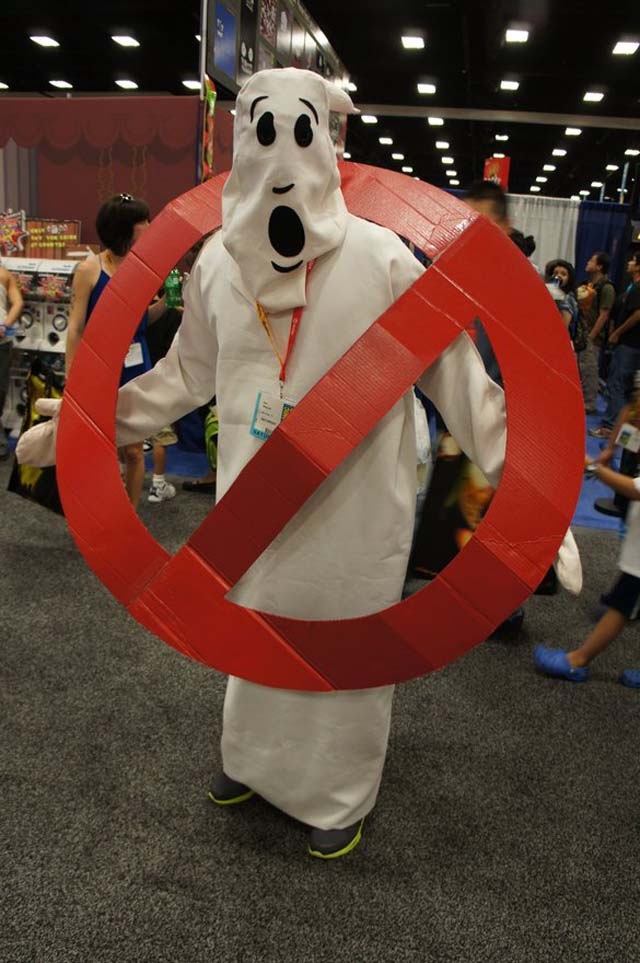
| Mark loved to dress up as a ghost |
As one can see the use of trademarks is complex, and predatory registrations are no longer allowed. Registration of ghost marks was common practice before the Imperial Group decision, and clearly the case illustrates a well-needed adjustment from those practices. Should frivolous marks, or unused marks, be allowed to be registered by anyone, their function as a badge of origin could potentially cease to exist, and would only serve as a means to prevent others from trading through legitimate marks. The Imperial Group case has been decided in a multitude of countries, such as Australia, with similar results, clearly showcasing the common law's position in relation to modern trademark law with regards to ghost marks.
Subscribe to:
Posts (Atom)