The case in question is Deckmyn v Vandersteen , decided only a few weeks ago, which dealt with a drawing relating to a recent election in Belgium, which was released in a calendar edited by Mr. Deckmyn, who is also a member of the Vlaams Belang party. During an event Mr. Deckmyn handed out the aforementioned calendars, on the cover of which was the picture at issue in the matter; an image which highly resembled that of the book "De Wilde Weldoener", an edition of the famed Suske en Wiske comic books. As explained by the court: "...[the] drawing is a representation of one of the comic book’s main characters wearing a white tunic and throwing coins to people who are trying to pick them up. In the drawing at issue, that character was replaced by the Mayor of the City of Ghent and the people picking up the coins were replaced by people wearing veils and people of colour". Subsequently the Vanderseteens, relatives of the comics' creator and holders of the copyright, among others, brought an action against Mr. Deckmyn asserting copyright infringement.
Under the Belgian Law on Copyright and Neighboring Rights, a copyright protected work is not infringed "[o]nce a work has been lawfully published, its author may not prohibit... caricature, parody and pastiche, observing fair practice". Mr. Deckmyn argued that his use of the comic's cover would be protected from infringement as a fair use under parody, yet the questions posed to the ECJ were:
"1. Is the concept of “parody” an autonomous concept of EU law?
2. If so, must a parody satisfy the following conditions or conform to the following characteristics: display an original character of its own (originality);
display that character in such a manner that the parody cannot reasonably be ascribed to the author of the original work;
seek to be humorous or to mock, regardless of whether any criticism thereby expressed applies to the original work or to something or someone else;
mention the source of the parodied work?
3. Must a work satisfy any other conditions or conform to other characteristics in order to be capable of being labelled as a parody?"
The ECJ was faced with the definition of what amounts to parody, and whether this concept was truly autonomous within the EU law, more specifically Directive 2001/29.
The court quickly established that the concept of 'pardy' was indeed an autonomous concept in European law, as the Directive made no express mention of any national laws, giving the law a uniform interpretation within the Union, although Member States as still very much able to limit or extend the exception beyond its Union interpretation.
The second and third questions took the bulk of the ECJ's judgment, effectively determining the definition of a parody in European law. The court first established that, as the term is not defined in the Directive, that its interpretation would be "...determined by considering its usual meaning in everyday language, while also taking into account the context in which it occurs and the purposes of the rules of which it is part". This in the court's judgment, while agreeing with the Attorney General's definition, is "...first, to evoke an existing work while being noticeably different from it, and, secondly, to constitute an expression of humour or mockery". This writer would like to further add that, in most cases, national courts would also assess whether the parody itself, or the mockery or humor, is actually a genuine expression of mockery, rather than just a guise to prevent the courts from finding infringement.
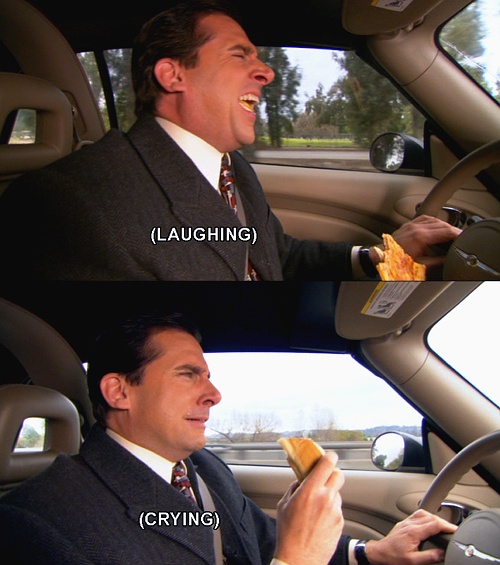 |
| Parodies can evoke a multitude of feelings |
The exceptions application has to be balanced, even in the light of its much less restricted interpretation, as noted by the court: "...the exception for parody... must strike a fair balance between, on the one hand, the interests and rights of persons... and, on the other, the freedom of expression of the user of a protected work who is relying on the exception for parody". This assessment has to take into account all circumstances in each instance, and should not be a mere prima facie 50/50 assessment.
The ECJ then relayed the final decision to the Belgian national courts, but did however express a need to assess the work on potential racial impacts, and negative connotations on such ground, as the work did indeed depict individuals of certain ethnic background in a very compromising light.
The UK government has already issued some guidance on the new exceptions coming into force next Wednesday, which helps in the future assessment of parody in this new regime. In their definition: "[t]he words “caricature, parody or pastiche” have their ordinary dictionary meanings. In broad terms, parody imitates a work for humorous or satirical effect, commenting on the original work, its subject, author, style, or some other target. Pastiche is a musical or other composition made up of selections from various sources or one that imitates the style of another artist or period. A caricature portrays its subject in a simplified or exaggerated way, which may be insulting or complimentary and may serve a political purpose or be solely for entertainment". Yet again this writer would have to point out that the use of a work under such a definition would still entail an assessment of whether the parody, pastiche or satire is well and truly such a work, and not just a faint attempt at parody purely to use the work at no cost.
All-in-all the ECJ's definition makes sense, at least to this humble writer, and does afford genuine parodies a wide shield in protecting their legitimate expression. Should conditions be set on the application of parody, such as in Belgium, the hurdles could become nearly insurmountable, and curb any real interest or willingness to create parody works. How the UK courts will apply this new exception remains to be seen; however the ECJ's considerations will undoubtedly serve as a great starting point.
Source: The 1709 Blog


