Showing posts with label humor. Show all posts

28 September, 2014

Chuckles or No - European Court of Justice Takes on Parody

European fair dealing is ever so slowly growing into its big boy shoes, and amidst that growth there are some growing pains that need to be sorted out by the guardians, the judiciary. With new fair dealing exceptions only days away from coming into force here in the United Kingdom, it seems only pertinent that the most influential court in Europe deals with an issue that is so close to this new set of fair dealing exceptions; parody and satire. Although the UK's cousins across the pond in the United States and Australia have accepted parody as a form of fair dealing or use prior to the old Kingdom, the UK will face challenges to this new regime in the coming years - for which European consideration is always welcome.

The case in question is Deckmyn v Vandersteen , decided only a few weeks ago, which dealt with a drawing relating to a recent election in Belgium, which was released in a calendar edited by Mr. Deckmyn, who is also a member of the Vlaams Belang party. During an event Mr. Deckmyn handed out the aforementioned calendars, on the cover of which was the picture at issue in the matter; an image which highly resembled that of the book "De Wilde Weldoener", an edition of the famed Suske en Wiske comic books. As explained by the court: "...[the] drawing is a representation of one of the comic book’s main characters wearing a white tunic and throwing coins to people who are trying to pick them up. In the drawing at issue, that character was replaced by the Mayor of the City of Ghent and the people picking up the coins were replaced by people wearing veils and people of colour". Subsequently the Vanderseteens, relatives of the comics' creator and holders of the copyright, among others, brought an action against Mr. Deckmyn asserting copyright infringement.

Under the Belgian Law on Copyright and Neighboring Rights, a copyright protected work is not infringed "[o]nce a work has been lawfully published, its author may not prohibit... caricature, parody and pastiche, observing fair practice". Mr. Deckmyn argued that his use of the comic's cover would be protected from infringement as a fair use under parody, yet the questions posed to the ECJ were:

"1. Is the concept of “parody” an autonomous concept of EU law? 
 2. If so, must a parody satisfy the following conditions or conform to the following characteristics: display an original character of its own (originality); 
display that character in such a manner that the parody cannot reasonably be ascribed to the author of the original work; 
seek to be humorous or to mock, regardless of whether any criticism thereby expressed applies to the original work or to something or someone else; 
mention the source of the parodied work? 
3. Must a work satisfy any other conditions or conform to other characteristics in order to be capable of being labelled as a parody?" 

The ECJ was faced with the definition of what amounts to parody, and whether this concept was truly autonomous within the EU law, more specifically Directive 2001/29.

The court quickly established that the concept of 'pardy' was indeed an autonomous concept in European law, as the Directive made no express mention of any national laws, giving the law a uniform interpretation within the Union, although Member States as still very much able to limit or extend the exception beyond its Union interpretation.

The second and third questions took the bulk of the ECJ's judgment, effectively determining the definition of a parody in European law. The court first established that, as the term is not defined in the Directive, that its interpretation would be "...determined by considering its usual meaning in everyday language, while also taking into account the context in which it occurs and the purposes of the rules of which it is part". This in the court's judgment, while agreeing with the Attorney General's definition, is "...first, to evoke an existing work while being noticeably different from it, and, secondly, to constitute an expression of humour or mockery". This writer would like to further add that, in most cases, national courts would also assess whether the parody itself, or the mockery or humor, is actually a genuine expression of mockery, rather than just a guise to prevent the courts from finding infringement.
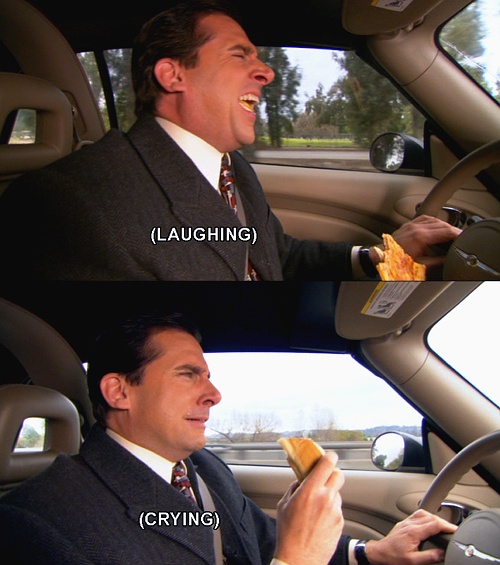
Parodies can evoke a multitude of feelings
The court then assessed the conditions posed in the reference to the ECJ and whether they should be treated as a part of the exception in its application. As the provision is there to safeguard legitimate uses of copyrighted content, the court heavily empathizes that its scope "...of that provision... [should not be] restricted by conditions... which emerge neither from the usual meaning of ‘parody’ in everyday language nor from the wording of that provision". A much less restricted interpretation facilitates both the freedom of expression and a public interest in legitimate parody, as noted by the court.

The exceptions application has to be balanced, even in the light of its much less restricted interpretation, as noted by the court: "...the exception for parody... must strike a fair balance between, on the one hand, the interests and rights of persons... and, on the other, the freedom of expression of the user of a protected work who is relying on the exception for parody". This assessment has to take into account all circumstances in each instance, and should not be a mere prima facie 50/50 assessment.

The ECJ then relayed the final decision to the Belgian national courts, but did however express a need to assess the work on potential racial impacts, and negative connotations on such ground, as the work did indeed depict individuals of certain ethnic background in a very compromising light.

The UK government has already issued some guidance on the new exceptions coming into force next Wednesday, which helps in the future assessment of parody in this new regime. In their definition: "[t]he words “caricature, parody or pastiche” have their ordinary dictionary meanings. In broad terms, parody imitates a work for humorous or satirical effect, commenting on the original work, its subject, author, style, or some other target. Pastiche is a musical or other composition made up of selections from various sources or one that imitates the style of another artist or period. A caricature portrays its subject in a simplified or exaggerated way, which may be insulting or complimentary and may serve a political purpose or be solely for entertainment". Yet again this writer would have to point out that the use of a work under such a definition would still entail an assessment of whether the parody, pastiche or satire is well and truly such a work, and not just a faint attempt at parody purely to use the work at no cost.

All-in-all the ECJ's definition makes sense, at least to this humble writer, and does afford genuine parodies a wide shield in protecting their legitimate expression. Should conditions be set on the application of parody, such as in Belgium, the hurdles could become nearly insurmountable, and curb any real interest or willingness to create parody works. How the UK courts will apply this new exception remains to be seen; however the ECJ's considerations will undoubtedly serve as a great starting point.

Source: The 1709 Blog

23 July, 2013

Retrospective - Parody and Fair Use

Imitation is the greatest form of flattery. A phrase that resonates even today, despite being written by Charles Colton as far as the early 1800s, yet where does one draw the line between mere imitation and copying of another's work? This line is often tread when dealing with parody and copyright, as distinguishing when a work is copied for the sake of utilizing it as a basis for humor, and when it is used as a means for personal gain or notoriety. The issue was brought back into the court's determination in 1994, after the Court of Appeals did not rule on the matter due to division within the bench in Benny v Loew's.

The case of Campbell v Acuff-Rose Music dealt with a song by 2 Live Crew, a rap group, titled "Pretty Woman" which was claimed to being parody of the iconic 1960s song "Oh Pretty Woman" by Roy Orbison. Prior to releasing the song the members of 2 Live Crew sought permission from the publisher of the original to release their version of the song, which was promptly refused by the publisher. Regardless of the denial for permission 2 Live Crew released the song as a part of their album in 1989, still identifying Mr. Orbison and Acuff-Rose in the materials provided with the album. After over 250,000 copies were sold of their new album almost a year later, Acuff-Rose sued the band and their publisher for copyright infringement. The case went all the way to the US Supreme Court after several years of litigation.

What the court had to assess was whether 2 Live Crew's use of the song fell under fair use. The vocal point of the matter was well condensed by the court: "...the need simultaneously to protect copyrighted material and to allow others to build upon it". In this the court had to look at the four factors relating to fair use: the purpose and character of the use; the nature of the copyrighted work; the amount used; and the effect the use had on the potential market value of the original work.

The purpose and character of a work is essentially determining whether the new work adds anything new or substantial to the original, with a further purpose or difference character by altering the first; often mentioned as a 'transformative' work. The more transformative the new work is, the less likely it is that other factors, such as commercialism in this instance, would weigh against in. The court accepted that parody is indeed a transformative function in the creation of new works, and that it could fall under fair use. 

2 Live Crew showcasing just how amazing the 1990s were
The second factor was the assessment of the nature of the original work, meaning whether the original should be protected by copyright. The less 'value' a song has, the more likely it is that the work has not been infringed should it be parodied. The court accepted that Mr. Orbison's original song had value to it and thus could be infringed by 2 Live Crew should their infringement be significant enough. However the court did express that the factor "...is not much help in this case, or ever likely to help much in separating the fair use sheep from the infringing goats in a parody case, since parodies almost invariably copy publicly known, expressive works". The core of parody is the use of the original work as a means to deliver the humorous approach to the work itself. 

The third factor is one where the amount used, often referred to as substantiality, has to be looked at. Better expressed by Justice Story: "...the quantity and value of the materials used"; the quantity and quality of the material which was used in the creation of the parody. The court tried to approach the issue in recognizing its uniqueness to other instances of fair use: "Parody's humor, or in any event its comment, necessarily springs from recognizable allusion to its object through distorted imitation. Its art lies in the tension between a known original and its parodic twin. When parody takes aim at a particular original work, the parody must be able to "conjure up" at least enough of that original to make the object of its critical wit recognizable". The court laid down the foundations for a test to be used in future cases in determining instances of parody, where the original song should be recognizable in the parody, however not too much of the original can be copied. The court saw that 2 Live Crew had not taken a substantial amount of the song, having only used the recognizable bass riff from the beginning of the song and then creating something of their own through the rest of the song. Had they copied Mr. Orbison's song completely, both musically and lyrically, to a degree where it would be hard to distinguish the two, the copying could have been substantial.

Roy forgot he was indoors
The fourth and final factor is the potential impact on the original work's market. This effect has to be a negative one for there to be infringement, for example detracting from the sales of the original song or the image of the song through adverse conduct. The court did finally decide that 2 Live Crew's rap version of the song did not harm the market of the original, due to them belonging to completely different markets to begin with; the original to a more rock-oriented market, and the latter to a rap market. The court did however mention that a parody could potentially still cause harm to the original's market should the right circumstances befall it. A possible example of this is a similar song parodying another in a similar style, in this instance had 2 Live Crew made a rock version it could potentially cause harm. Any effects to that market would then count against finding the use as one that falls under fair use. 

Through Campbell v Acuff-Rose the court unanimously said that parody is a fully accepted form of fair use, should the actual copying of the work be done for a legitimate parody purpose. An artist cannot copy another's work merely in the guise of parodying the song, while still attempting to profit from the potential confusion as to the original song. As stated by Justice Kennedy in his separate opinion:

"Fair use is an affirmative defense, so doubts about whether a given use is fair should not be resolved in favor of the self proclaimed parodist.We should not make it easy for musicians to exploit existing works and then later claim that their rendition was a valuable commentary on the original... If we allow any weak transformation to qualify as parody, however, we weaken the protection of copyright. And underprotection of copyright disserves the goals of copyright just as much as overprotection, by reducing the financial incentive to create".