Showing posts with label trade marks act 1994. Show all posts

15 August, 2017

Into the Slammer - The Sale of 'Grey Goods' a Criminal Offense, Says UK Supreme Court

The sale of branded goods can be a complicated affair, especially when the line between counterfeits and 'authorized' goods can be blurry at times. This is highlighted in the sale of 'grey goods', which are items obtained from licenced manufacturers without the authorisation of the licensor. Having discussed the criminality of the sale of grey goods last year (more here), the decision of the Court of Appeal was appealed by the defendants, ultimately ending up on the desk of the Supreme Court, which handed down its judgment in early August.

The case of R v M, C and T concerned three defendants (including one company), who were engaged in the importation of branded goods into the UK that were manufactured outside the EU. These goods included notable brands such as Ralph Lauren, Adidas and Under Armour. Many of the goods were duly accepted as being counterfeits, but a significant portion of them were ones made by authorized manufacturers, but not authorized for sale to other parties. The defendants were taken to court for, among other offenses, the unauthorized use of trademarks (a criminal offense).

The focus of the case is section 92 of the Trade Marks Act 1994, which sets out that a person commits an offense under the Act if the proprietor "…sells or lets for hire, offers or exposes for sale or hire or distributes goods which bear, or the packaging of which bears [a registered trade mark]". There is a separate offense under section 92 for the possession and control of such goods, for which the defendants were prosecuted as well. The defendants' appeal argues that section 92 would only relate to the counterfeit goods and not the 'grey goods' as set out above.

The defendants argued that the phrase "such as sign" in the Act would only apply where the sign has been applied to the goods without the authorization of the rightsholder. As 'grey goods' have had the sign applied to them with the consent of the rightsholder, section 92 would not apply to those goods, but only to truly counterfeit goods.

Lord Justice Hughes, handing down the Court's unanimous decision, rejected this argument. In his view, the use of the phrase "such a sign" refers to "…a sign which is 'identical to, or likely to be mistaken for, a registered trade mark'", not just in instances where it has been applied without consent. This means that 'grey goods' would be caught by section 92 just as well as counterfeit goods would be.

Making fakes ain't easy
The judge also noted that all three offenses set out in section 92 are separate, not cumulative, and that both intent and the application of a sign without the authorization of the rightsholder apply to all three offenses. This is important, since the defendants argued that there is a link between the first and the second offense (subsections a and b), which, if the offenses are separate, could not be the case. Lord Justice Hughes emphasised that there is no ambiguity or obscurity in the law that would require a further investigation into Parliament's meaning of the section, particularly in relation to the defendants' argument on the different meanings of counterfeit and 'grey goods' (and subsequent differing treatment under section 92).

Lord Justice Hughes acknowledged that there has been a distinction between the two in the case of R v Johnstone; however, the distinction came about through the facts of the case, and does not reflect the general view of the Court on 'grey goods' and counterfeit goods.

The defendants further argued that due to the exhaustion of rights in the goods under EU law, and subsequently section 12 of the Act, any further objections to the sale of the goods would be limited to very narrow special cases, such as changes or impairments to the goods. The Court rejected this argument, as the exhaustion of rights only relates to civil law, not criminal, nor would it be useful in interpreting the construction of section 92.

A further argument put forward was that the more stringent test of a mental element used in the previous Trade Marks Act 1938 would exclude 'grey goods' from the current Act due to the previous Act only applying to only 'true counterfeits' (and therefore carrying over into the new Act in intention). The Court rejected this interpretation, as the previous Act would have included 'grey goods' due to its inclusion of goods irrespective of the authorized application of the mark onto the goods or not. Lord Justice Hughes also mentioned that, in his view, the sale of 'grey goods' and counterfeits would both be unlawful, as "…[b]oth may involve deception of the buying public".

Finally, the defendants argued that the construction of section 92 to include 'grey goods' would infringe on their human rights to enjoy and keep their possessions. The Court rejected the notion that the defendants have any rights in the trademarks affixed on the goods, even though they have the right to the goods excluding the marks. While they could sell those goods without the marks on them, the Act prevents them from misleading purchasers and infringing on the marks while doing so. The defendants are not deprived of the goods they own, but only regulated in the manner of the disposal of the goods. Lord Justice Hughes concluded that there was nothing disproportionate in the imposition of criminal sanctions under the Act, which legitimately balances "…the rights of the proprietor to protect his valuable trademark and goodwill, and those of the person who wishes to sell goods which he has bought".

Ultimately the Court rejected the appeal and allowed for the criminal trial to proceed.

The case will undoubtedly be hugely influential, especially for rightsholders who wish to prevent the sale of 'grey goods' in the UK market. This writer would agree with the interpretation of the Court, as the inclusion of 'grey goods' under section 92 makes sense, since one can draw an analogy between them and counterfeit goods due to the lack of authorization during their initial sale to the ultimate distributor. Should a proprietor wish to sell the goods without the marks they would be wholly entitled to do so, provided no other rights exist in the goods. The case seems to have finally settled the matter of 'grey goods' in the UK, at least for now.

Source: JDSupra

06 December, 2016

As Clear as Grey - Sale of 'Grey' Goods a Criminal Offense in the UK

The sale of counterfeit goods is a touchy subject, and definitely an issue that many rightsholders are attempting to tackle head on, particularly in the context of the Internet (a good example is the recent Cartier litigation, more on which here and here). Added to this is also the "grey" market, meaning items obtained from duly licenced factories; however, bought without the authorization of the original licensor. This is, as the name indicates, a grey area within the law, and whether the sale of 'grey' goods is actually an offense under the law remains unclear. While arguments can be thrown back and forth, a recent case in the Court of Appeal set to decide the criminal ramifications of the sale of 'grey' goods in the UK, on which the Court handed down its judgment early last month.

The case of R v C & Ors dealt with a limited liability company that sold shoes and clothing, the operation of which included several different defendants. In the course of their business, the defendants sold branded goods, such as Ralph Lauren, Adidas and Under Armor, attained from sources outside of the EU, both from factories that were and were not authorized by the original rightsholder (and subsequently sold without their authorization in both instances). The goods sold included "...goods which had been part of an order placed with an authorised manufacturer by the trade mark proprietor but then cancelled; goods part of a batch whose manufacture had been authorised but which, after manufacture, were rejected as not being of sufficient standard; or goods manufactured, pursuant to an order, with authority but in excess of the required amount" (none of the categories had been confirmed by the prosecution). None of the goods sold were a part of any authorized batches of produced goods or parallel imports. The parties were taken to court for the contravention of section 92 of the Trade Marks Act 1994. 

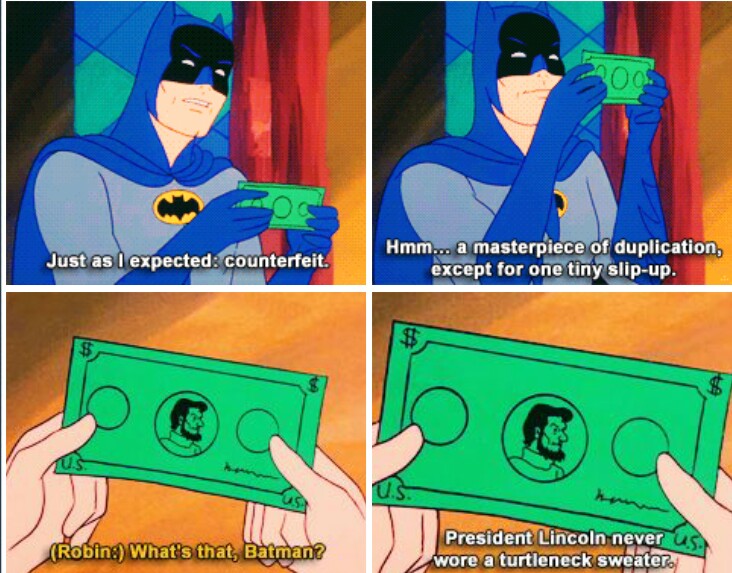
Counterfeit Criminals Countered by Caped Crusader
Having set the legislative scene for trademarks in general, the Court moved onto dealing with the criminal aspect of the case. What section 92 sets out is that a person commits a criminal offense if they, either causing loss or aiming to gain from, use trademarks on goods and sell them, or uses the same marks for advertising or packaging in general. While the provision is very similar to that of trademark infringement (a civil offense), what distinguishes the criminal aspect is the mental state of the infringer, i.e. that the act has to be done "with a view" to gain or cause loss. AS established by previous cases, there is clear overlap, and a criminal offense under section 92 cannot happen without civil infringement as well.

The defense tried to separate the application of the mark by an authorized licensee on the goods from ones where it was done by an unauthorized entity. The Court rejected this position as patently false. According to the Court, the wording in the provision does not support this line of argument. In particular, the Court highlighted the lack of implied consent on the part of the authorizing entity for the brands applied on the goods, especially in the case of 'grey' goods. Their sale was not, through the licensing of the marks, authorized to unauthorized third-parties.

The final argument put forth by the appellants was that of ambiguity, and required clarification on Parliament's intention. The Court swiftly dispatched with the argument, deeming that the language of section 92 was perfectly clear and required no discussion of Parliamentary debates as to its meaning. While the discussions in Parliament were often lacking in detail as to the meaning of a 'counterfeit' (i.e. would it include 'grey' goods), the Court still considered that "...Trade mark violation gravely undermines the value of a brand and affects legitimate trade. The very fact of a cheap sale of a an unauthorised branded item can both dupe a customer and diminish the market and overall value of the trade mark, in terms of perception of quality and exclusivity. In some cases moreover (for example, electrical goods or toys) very real issues of public health and safety can arise where the goods are fake or, even if originally manufactured with the trade mark proprietor's authorisation, are then rejected as sub-standard but nevertheless sold on without authorisation". Due to this potential impact on the brand and public safety, the sale of 'grey' goods would therefore be detrimental in a multitude of ways, and should be protected by criminal sanctions. The Court did concede that the definition of 'grey' goods does potentially raise issues with parallel imports, but discussion on this was kept limited, as it did not apply to the case at hand.

The Court of Appeal ultimately considered that the sale of grey goods could amount to a criminal offense under section 92.

The case is a very important one, especially as a reminder to those who wish to import goods from outside the EU, and don't do their due diligence as to their origin and legitimacy. Businesses would need to be careful and verify that the products sold would be fully authorized, even for sale if bought directly from the factory itself. This writer would hesitate to wager that the case will have major implications to businesses importing branded goods from abroad, since the courts are reluctant to push criminal prosecution, even in parallel importation matters; however, one needs to be careful to dismiss the possibility outright.