Many national governments, and indeed US states, have particular immunities when it comes to their legal liability. In the UK, for example, the Crown has sovereign immunity from civil claims, which prevents the Crown from being sued by individuals or companies (to put things very simplistically). Similar legislation exists in the US, and there have been efforts to pass legislation to stop the immunity held by States. With this in mind, what is the extent of this immunity with regards to copyright? Can States simply infringe copyright without any regard to the copyright holders, or would they have to face some accountability? Luckily the Supreme Court recently took on this case and handed down its judgment late last month.
The case of Allen v Cooper concerned videos and photographs taken by Mr Allen for the company Intersal Inc., which discovered the shipwreck of the Queen Anne's Revenge (the famous ship owned by the pirate Blackbeard) in 1996 outside of the coast of North Carolina. The wreck, under both federal and state law, belongs to North Carolina. Mr Allen documented the recovery operation over the course of a decade and registered the copyright in those works. The State of North Carolina then published some of Mr Allen's videos and photographs in 2013 on its website, to which Mr Allen objected to. The parties agreed on a settlement of the initial dispute, however, Mr Allen then alleged further infringements by the State through the publication of five of his videos online and in a newsletter. Subsequently, he sued the State for copyright infringement, with the matter ending up with the Supreme Court.
Generally, a federal court generally may not hear a suit brought by any person against a non-consenting State, although this bar is not enshrined in the US Constitution. However, the courts have allowed suits to be brought if two conditions are fulfilled: (i) Congress must have enacted “unequivocal statutory language” abrogating the States’ immunity from the suit; and (ii) some constitutional provision must allow Congress to have thus encroached on the States’ sovereignty. In short, if there is legislation that repeals the States' immunity, which is permitted by the US Constitution, the suit can be brought against the State in question.
As set out by Justice Kagan (handing down the majority's decision), there is no question that the first requirement has been fulfilled. The Copyright Remedy Clarification Act of 1990 removed the States’ sovereign immunity in copyright infringement cases, and therefore it is possible, pursuant to Constitutional approval, that States could be sued for copyright infringement. The remaining question is whether Congress has the authority to pass the legislation.
After a very thorough discussion of the previous cases dealing with State immunity, the Supreme Court noted that Mr Allen will not be able to overcome the precedent set, where States cannot be sued for copyright infringement as matters stand.
The Court then moved onto discussing section 5 of the Fourteenth Amendment to the Constitution, which, can authorize Congress to strip the States of immunity. The abrogation has to be "appropriate" under section 5, which means that the abrogation must be "tailored to “remedy or prevent” conduct infringing the Fourteenth Amendment’s substantive prohibitions". Furthermore, the courts have held that the appropriate test for section 5 is that "...must be a congruence and proportionality between the injury to be prevented or remedied and the means adopted to that end" - to put differently, the courts have to consider both the nature and the extent of state conduct violating the Fourteenth Amendment.
Justice Kagan decided that the issue of copyright infringement didn't pass the above test. In the Court's view, the infringement of copyright by States is not a prevalent issue (consisting of only 12 cases), which left the balancing of the stripping of States immunity askew and not proportionate to the injury posed by State infringement. The Court did, however, leave the door open for Congress to pass laws in the future to abrogate States' immunity with regards to copyright infringement.
Ultimately, the Supreme Court dismissed Mr Allen's case and ruled that section 5 of the Fourteenth Amendment does not support the abrogation of States' immunity with regards to copyright infringement, and Mr Allen could not bring his infringement case against the State forward.
State or sovereign immunity cases don't come across very often, and it is always interesting to see the extent to which the courts will protect that immunity. The Court's approach to the proportionality of the possible injury with the stripping of the entire immunity seems sensible in this instance since governments should be given broader protections lest we see the dams break and a wave of cases being brought against States or governments. They shouldn't, by any means, be given carte blanche to do as they wish, but the stripping or specific immunities will need thorough and appropriate consideration in the future.
Showing posts with label State. Show all posts
Showing posts with label State. Show all posts
08 April, 2020


28 October, 2015
Impulsive Decisions - Reputation of a Trademark in Europe
In the world of trademarks the goodwill, or in other words reputation, of goods and services is paramount for their protection and enjoyment in a relevant territory. As commerce has become more and more global, with other territories seeing goods or services after their introduction to others, jurisdictional issues are even more poignant and relevant, providing a judicial headache for many attempting to benefit from those limitations (for example, in the recent NOW TV case, discussed here). Community Trade Marks, or CTMs for short, are registered as European-wide trademarks, but the goods or services' introduction to all of the Member States can sometimes differ, and potentially leave their registration open to challenge. Could, however, a proprietor prove goodwill in a Member State through use in other Member States, without actually having a commercial presence for that item in the Member State in question? Luckily, the European Court of Justice answered this question over a month ago.
The case of Iron & Smith v Unilever dealt with a national application for the mark "be Impulsive" in Hungary, lodged by Iron & Smith. The application was challenged by Unilever on he basis of their earlier mark "IMPULSE" (CTM 3116233); however they failed to demonstrate goodwill in Hungary, although Unilever had done so, arguably at least, in the UK and Italy.
The Court was asked four questions, the first three of which were distilled down by the Court as "...what conditions, in circumstances such as those at issue in the main proceedings, are to be met in order for a Community mark to be regarded as having a reputation in the European Union, pursuant to Article 4(3) of Directive 2008/95".
After a brief consideration of precedent relating to goodwill the Court quickly saw that "...if the reputation of an earlier Community mark is established in a substantial part of the territory of the European Union, which may, in some circumstances, coincide with the territory of a single Member State, which does not have to be the State in which the application for the later national mark was filed, it must be held that that mark has a reputation in the European Union". What this means is that you don't have to prove reputation all over Europe, but only in a substantial part of it (how ever that might be defined), in order to establish reputation in any Member State. This is a curious finding, as not all nationals of all Member States are aware of goods or services elsewhere in the Union, and effectively creates goodwill in those that have not, and might never, see those goods or services.
The final remaining question for the Court was also put in very succinct terms: "...in what circumstances Article 4(3)... is applicable if the earlier Community trade mark has already acquired a reputation in a substantial part of the territory of the European Union, but not with the relevant public in the Member State in which the registration of the later national mark concerned by the opposition has been applied for".
The Court, again, briefly considered earlier decisions, and concluded that "...if the earlier Community trade mark has already acquired a reputation in a substantial part of the territory of the European Union, but not with the relevant public in the Member State in which registration of the later national mark concerned by the opposition has been applied for, the proprietor of the Community trade mark may benefit from the protection introduced by Article 4(3)... where it is shown that a commercially significant part of that public is familiar with that mark, makes a connection between it and the later national mark, and that there is, taking account of all the relevant factors in the case, either actual and present injury to its mark, for the purposes of that provision or, failing that, a serious risk that such injury may occur in the future". The answer relates heavily to the above, as if goodwill is proved in a significant part of the Union, it is possible to rely on a CTM to invalidate a national mark, provided there is actual or potential damage to the CTM or its owner if the national mark were to be registered.
Overall the decision of the Court seems odd, effectively creating goodwill where none have existed in evidential terms, but aligns itself with earlier precedent. To prove goodwill or reputation in any European Member State one only has to prove it in a 'significant' portion of the European Union, which, to this writer's mind, expands the remit of an unused CTM beyond that for which it is intended (even if the mark is registered in the whole of Europe). Although the Court's rationale aligns itself with earlier decisions, it seems to give rights where no rights existed, potentially even hindering legitimate competition. Nevertheless, this writer will not purport himself to know better than the judges at the Court, but is puzzled by this outcome nonetheless.
Source: IPKat
The case of Iron & Smith v Unilever dealt with a national application for the mark "be Impulsive" in Hungary, lodged by Iron & Smith. The application was challenged by Unilever on he basis of their earlier mark "IMPULSE" (CTM 3116233); however they failed to demonstrate goodwill in Hungary, although Unilever had done so, arguably at least, in the UK and Italy.
The Court was asked four questions, the first three of which were distilled down by the Court as "...what conditions, in circumstances such as those at issue in the main proceedings, are to be met in order for a Community mark to be regarded as having a reputation in the European Union, pursuant to Article 4(3) of Directive 2008/95".
 |
| Extending beyond one's limitations can be a good thing |
The final remaining question for the Court was also put in very succinct terms: "...in what circumstances Article 4(3)... is applicable if the earlier Community trade mark has already acquired a reputation in a substantial part of the territory of the European Union, but not with the relevant public in the Member State in which the registration of the later national mark concerned by the opposition has been applied for".
The Court, again, briefly considered earlier decisions, and concluded that "...if the earlier Community trade mark has already acquired a reputation in a substantial part of the territory of the European Union, but not with the relevant public in the Member State in which registration of the later national mark concerned by the opposition has been applied for, the proprietor of the Community trade mark may benefit from the protection introduced by Article 4(3)... where it is shown that a commercially significant part of that public is familiar with that mark, makes a connection between it and the later national mark, and that there is, taking account of all the relevant factors in the case, either actual and present injury to its mark, for the purposes of that provision or, failing that, a serious risk that such injury may occur in the future". The answer relates heavily to the above, as if goodwill is proved in a significant part of the Union, it is possible to rely on a CTM to invalidate a national mark, provided there is actual or potential damage to the CTM or its owner if the national mark were to be registered.
Overall the decision of the Court seems odd, effectively creating goodwill where none have existed in evidential terms, but aligns itself with earlier precedent. To prove goodwill or reputation in any European Member State one only has to prove it in a 'significant' portion of the European Union, which, to this writer's mind, expands the remit of an unused CTM beyond that for which it is intended (even if the mark is registered in the whole of Europe). Although the Court's rationale aligns itself with earlier decisions, it seems to give rights where no rights existed, potentially even hindering legitimate competition. Nevertheless, this writer will not purport himself to know better than the judges at the Court, but is puzzled by this outcome nonetheless.
Source: IPKat
18 March, 2015
Lawyers Without Borders - Copyright Infringement Jurisdiction in the EU
With a globally interconnected web of information, and the (relatively) free exchange of information comes a great deal of questions alongside the masses of benefits it presents to the 21st century world. Discussion, the exchange of ideas, and the sharing of content has never been easier and more readily available, and admittedly, the infringement of intellectual property rights has also never been easier and "normal" (this writer, for one, has heard many conversations confirming the normality of especially copyright infringement). One can simply download a song, movie or a TV show with a few clicks of their mouse, irrespective of the rights holders' location, time or even the medium of the content (in some instances). This presents many challenges to the modern IP practitioner, amongst which is the conundrum that is jurisdiction. Can an entity or an individual enforce their rights even beyond their own borders, and if so, who has the jurisdiction over this infringement? Luckily, the highest court in the European Union has, yet again, graciously stepped up to the challenge to answer this question.
The case in question was Pez Hejduk v EnergieAgentur.NRW GmbH, decided only a bit over a month ago. What was at issue in the case were various pictures of architecture displaying works by Georg W. Reinberg, taken by the plaintiff in the case Pez Hejduk; a professional photographer of the aforementioned subject matter in her own right. A conference was organized by the defendants, EnergieAgentur, in 2004, during which Mr. Reinberg illustrated his works through Ms. Hejduk's photographs, which were wholly allowed by Ms. Hejduk to be used for. Afterwards, with no permission by Ms. Hejduk, the defendants then made the pictures available on their website for visitors to both view and download as they pleased, subsequently leading to Ms. Hejduk suing for copyright infringement (and a wallet-busting 4050 euros), ultimately leading to the European Court of Justice.
The question posed to the ECJ was, prima facie, a simple one: "Is Article 5(3) of [Regulation No 44/2001] to be interpreted as meaning that, in a dispute concerning an infringement of rights related to copyright which is alleged to have been committed by keeping a photograph accessible on a website, the website being operated under the top-level domain of a Member State other than that in which the proprietor of the right is domiciled, there is jurisdiction only: in the Member State in which the alleged perpetrator of the infringement is established; and in the Member State(s) to which the website, according to its content, is directed?"
What was asked effectively boils down to where the content lies, and whether jurisdiction lies within that country of origin (in the case the top-level domain, for example .co.uk) or in every Member State to which the content is directed. This was explained quite well in the judgment in different terms: "...whether Article 5(3)... must be interpreted as meaning that, in the event of an allegation of infringement of rights related to copyright which are guaranteed by the Member State of the court seised, that court has jurisdiction to hear an action for damages in respect of an infringement of those rights resulting from the placing of protected photographs online on a website accessible in its territorial jurisdiction".
The Court's initial consideration related to the wording of the Article itself, i.e. where the harmful even occurred or may have occurred, deciding that, under established case law, it can be both the source of the infringement (where the website resides) or where the infringement or harm is caused (where the infringement occurs). Even though the defendant's action causing the potential damage was localized only to where their seat is (Germany), this does not prevent jurisdiction from the country in which the case was seised (i.e. filed, as Ms. Hejduk did so in Austria and not Germany). Lastly, the Court saw that there was no need for the infringement to have been directed to the jurisdiction in which the damage was caused, allowing for infringing content on foreign Member State website's to be brought into courts in different Member States where damage might have or did occur.
The Court finally summarized its position regarding the above question: "...Article 5(3) of Regulation No 44/2001 must be interpreted as meaning that, in the event of an allegation of infringement of copyright and rights related to copyright guaranteed by the Member State of the court seised, that court has jurisdiction, on the basis of the place where the damage occurred, to hear an action for damages in respect of an infringement of those rights resulting from the placing of protected photographs online on a website accessible in its territorial jurisdiction. That court has jurisdiction only to rule on the damage caused in the Member State within which the court is situated".
This case is an important statement of jurisdictional consideration, and allows for much more flexibility and freedom within the EU to bring forth claims of copyright infringement, even if that infringement occurs outside of your Member State. Any Member State's court can act as the judicator for damages, even if the court seised is different to the seat of the act of infringement. In an online world this is vastly important, and protects the interests of copyright holders much more effectively than through limitations allowing for claims only within the Member States where an alleged infringement has occurred.
Source: JDSupra
The case in question was Pez Hejduk v EnergieAgentur.NRW GmbH, decided only a bit over a month ago. What was at issue in the case were various pictures of architecture displaying works by Georg W. Reinberg, taken by the plaintiff in the case Pez Hejduk; a professional photographer of the aforementioned subject matter in her own right. A conference was organized by the defendants, EnergieAgentur, in 2004, during which Mr. Reinberg illustrated his works through Ms. Hejduk's photographs, which were wholly allowed by Ms. Hejduk to be used for. Afterwards, with no permission by Ms. Hejduk, the defendants then made the pictures available on their website for visitors to both view and download as they pleased, subsequently leading to Ms. Hejduk suing for copyright infringement (and a wallet-busting 4050 euros), ultimately leading to the European Court of Justice.
The question posed to the ECJ was, prima facie, a simple one: "Is Article 5(3) of [Regulation No 44/2001] to be interpreted as meaning that, in a dispute concerning an infringement of rights related to copyright which is alleged to have been committed by keeping a photograph accessible on a website, the website being operated under the top-level domain of a Member State other than that in which the proprietor of the right is domiciled, there is jurisdiction only: in the Member State in which the alleged perpetrator of the infringement is established; and in the Member State(s) to which the website, according to its content, is directed?"
What was asked effectively boils down to where the content lies, and whether jurisdiction lies within that country of origin (in the case the top-level domain, for example .co.uk) or in every Member State to which the content is directed. This was explained quite well in the judgment in different terms: "...whether Article 5(3)... must be interpreted as meaning that, in the event of an allegation of infringement of rights related to copyright which are guaranteed by the Member State of the court seised, that court has jurisdiction to hear an action for damages in respect of an infringement of those rights resulting from the placing of protected photographs online on a website accessible in its territorial jurisdiction".
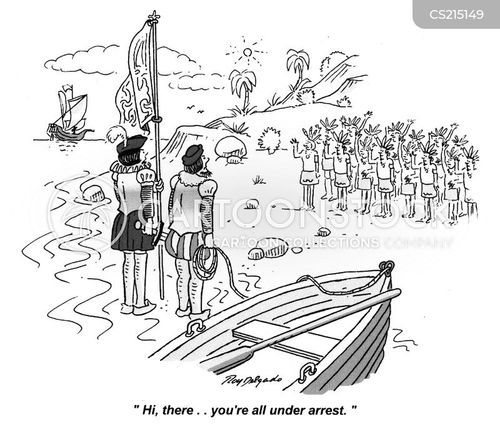 |
| Gregory asserted his jurisdiction no matter where he went |
The Court finally summarized its position regarding the above question: "...Article 5(3) of Regulation No 44/2001 must be interpreted as meaning that, in the event of an allegation of infringement of copyright and rights related to copyright guaranteed by the Member State of the court seised, that court has jurisdiction, on the basis of the place where the damage occurred, to hear an action for damages in respect of an infringement of those rights resulting from the placing of protected photographs online on a website accessible in its territorial jurisdiction. That court has jurisdiction only to rule on the damage caused in the Member State within which the court is situated".
This case is an important statement of jurisdictional consideration, and allows for much more flexibility and freedom within the EU to bring forth claims of copyright infringement, even if that infringement occurs outside of your Member State. Any Member State's court can act as the judicator for damages, even if the court seised is different to the seat of the act of infringement. In an online world this is vastly important, and protects the interests of copyright holders much more effectively than through limitations allowing for claims only within the Member States where an alleged infringement has occurred.
Source: JDSupra
Subscribe to:
Posts (Atom)