Showing posts with label national. Show all posts

12 December, 2013

Retrospective - Passing Off in the United States

The tort of passing off has been discussed on this blog before, yet the tort primarily exists in that form in some common law countries, such as the United Kingdom and Australia, but takes a different form in the US. The term more commonly used in America is not 'passing off', but 'misappropriation'. Misappropriation falls under the tort of unfair competition in the US, made even more complex through the existence of varying laws in all US States pertaining to unfair competition. The common law origins of misappropriation stem from a decision in the early 20th century.

The milestone case concerning misappropriation was International News Service v Associated Press, decided in 1918 by the US Supreme Court. Both parties in the case dealt with the distribution of news in the US, both of which exist even today as independent news agencies or having merged with others. The Associated Press at the time of the case was a representative organization of 950 newspapers all over the US. News items were shared between its members through a bulletin boards, some of which were taken by the International News Services (in addition to news from early editions of newspapers), rewritten and published in different parts of the US for sale, fully utilizing the time differences in the vast country. The Associated Press did not take to this kindly and took the International News Services to court, finally reaching the US Supreme Court.

The Supreme Court had to look at whether International News Services infringed the Associated Press' property rights in their literary work, and whether this amount to unfair competitive practices in business. The Court shortly touched on the existence of copyright in news, and saw no breach of it in International News Services' practices; however what was paramount to the Supreme Court was whether this would be unfair competition. The Court admitted there was no breach of confidence, although it was speculated that some of the news published by International News Services was obtained through paying some of Associated Press' employees to obtain early copies of news articles.

The work put into news can sometimes be extraordinary
The Court's focus turned to the effort and expenditure used by the Associated Press to acquire their news, stated by Justice Pitney: "Not only do the acquisition and transmission of news require elaborate organization and a large expenditure of money, skill, and effort; not only has it an exchange value to the gatherer, dependent chiefly upon its novelty and freshness, the regularity of the service, its reputed reliability and thoroughness, and its adaptability to the public needs; but also, as is evident, the news has an exchange value to one who can misappropriate it". News as a copyrighted work has very little value, but its main value is in its initial delivery and punctuality; one which was clearly abused by International News Services by obtaining and publishing the Associated Press' news. Due to this expenditure and labor which has been placed into the collection of the current news, and without International News Services actually contributing to it and still using it, they are "...endeavoring to reap where it has not sown", which amounts to "...an unauthorized interference with the normal operation of [Associated Press'] legitimate business precisely at the point where the profit is to be reaped". To further his point, Justice Pitney saw that this was underpinned by the equitable consideration of consideration, or in other words: "...he who has fairly paid the price should have the beneficial use of the property". Clearly the Associated Press should be able to enjoy the fruits of their labor, whereas if International News Services were allowed to swoop in and utilize that work and benefit, it would undermine the Associated Press' equitable interest; making International News Services' actions unfair competition.

Although news in itself is not the property of anyone or any entity, the Court saw it akin to quasi-property through its use. Justice Pitney summarized this well:
"Regarding news matter as the mere material from which these two competing parties are endeavoring to make money, and treating it, therefore, as quasi property for the purposes of their business because they are both selling it as such, defendant's conduct differs from the ordinary case of unfair competition in trade principally in this that, instead of selling its own goods as those of complainant, it substitutes misappropriation in the place of misrepresentation, and sells complainant's goods as its own". 
As such International News Services, by using the quasi-property of the Associated Press, misappropriated that property, and although they did not show any misrepresentation, prevented the Associated Press from enjoying the benefits of their work. International News Services' appeal was therefore unsuccessful.

The current form of misappropriation is slightly more developed since its inception. The requirements were well set-out in the case of National Basketball Association v Motorola, where Circuit Judge Winter set them out as:
"(i) the plaintiff generates or collects information at some cost or expense; (ii) the value of the information is highly time-sensitive; (iii) the defendant's use of the information constitutes free-riding on the plaintiff's costly efforts to generate or collect it; (iv) the defendant's use of the information is in direct competition with a product or service offered by the plaintiff; (v) the ability of other parties to free-ride on the efforts of the plaintiff would so reduce the incentive to produce the product or service that its existence or quality would be substantially threatened... rend[ering] [the] publication profitless, or so little profitable as in effect to cut off the service by rendering the cost prohibitive in comparison with the return".
As one can observe, misappropriation is a much looser, more flexible doctrine than that of passing off. The attitude of both judiciaries is the same however, preventing others from using the work or labor of another for their own benefit.

26 October, 2013

Retrospective - Genericization of Trademarks

The name of a product can often be an incredibly strong identifier of a certain type of goods. Think of Aspirin, Cellophane, Yo-Yo, Escalator or even Heroin, and you automatically associate them with a particular type of good as opposed to a particular brand of goods. This is called the genericization of a trademark; where the trademark has become so ubiquitous of a type of good it loses its distinctiveness towards a particular brand of goods.

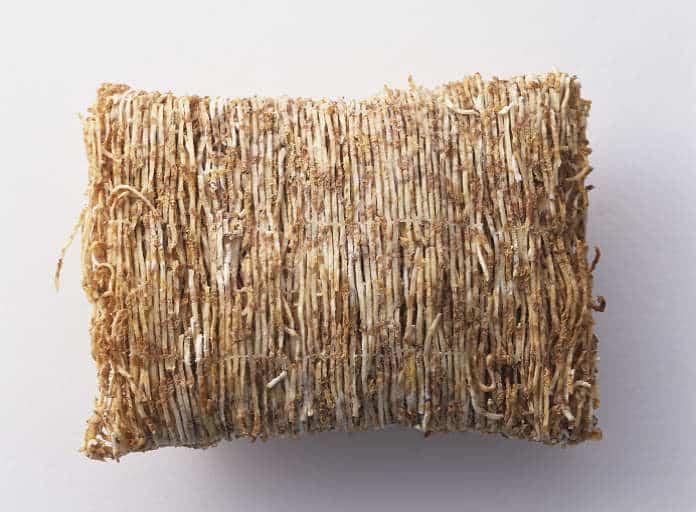
A pillow you can sleep on AND eat
A case which illustrated the genericization of a trademark was the case of Kellogg Co v National Biscuit Company. The case dealt with the sale of a product many are even familiar with today called 'Shredded  Wheat' For the uninitiated, this product is a breakfast cereal consisting of pillow-shaped wheat shreds, which was made by both companies. The product was initially made by a company called the Natural Food Company (which underwent a name change to the Shredded Wheat Company later on) since the early 1900s, which was subsequently bought by National Biscuit Company in 1930. The Kellogg's Company had made their own variant of Shredded Wheat since the late 1920s, although they had a similar product produced before that time. The National Biscuit Company subsequently sued Kellogg's for unfair competition for the use of the name 'Shredded Wheat' due to them producing a similar product and using the same name for that product.

In the case there were two considerations that the Federal Court of Delware had to decide on; one relating to the patent of the manufacture of the products, and the aspect of the use of the name. For our consideration the latter part is of more interest, however the patent does affect this particular point to an extent.

In the Court's decision they saw that the National Biscuit Company had no exclusive right to use the term 'Shredded Wheat' in selling their product. According to the Court the term is merely a descriptive one of a pillow-shaped wheat cereal, and the public recognize the name as an identifier of such products, due to Kellogg's ability to make the product (as the patent for the manufacturing method had expired in late 1912). The product had been sold since the late 1890s under the name of 'Shredded Wheat', and the term had not been trademarked until it was attempted to be trademarked by the Natural Food Company in 1905 - which was subsequently refused.

What makes this case peculiar is the inclusion of the name 'Shredded Wheat' as part and parcel of the patent for its manufacture. As the patent for the product's manufacture had gone into the public domain upon its expiry, so had the term which had been used to identify products which were manufactured in that particular way. According to the Court:
"It equally follows from the cessation of the monopoly and the falling of the patented device into the domain of things public that along with the public ownership of the device there must also necessarily pass to the public the generic designation of the thing which has arisen during the monopoly... To say otherwise would be to hold that, although the public had acquired the device covered by the patent, yet the owner of the patent or the manufacturer of the patented thing had retained the designated name which was essentially necessary to vest the public with the full enjoyment of that which had become theirs by the disappearance of the monopoly."
Eating breakfast can be complicated
In other words, the term 'Shredded Wheat' had become generic in the description of pillow-shaped wheat cereal products, and therefore could be used by anyone wishing to make and sell those products. Kellogg's had to merely distinguish its products from the plaintiffs so as to avoid any confusion, and through which a potential action in passing off. This was done through a distinctive look of the Kellogg's box, which did not resemble the one used by the National Biscuit Company, and the actual product differed both in size and appearance slightly from those made by the plaintiff.

The genericization of trademarks is a complex analysis of both the goodwill of the product in question (its reputation and imagine in the mind of the consumer) and other potential factors. It can be argued that even though the Court saw that the patent contained the use of the term 'Shredded Wheat', this would not be the case today. Arguably the use of the same term by Kellogg's could be an act of passing off the product, regardless of the manufacturing methods employed, as the plaintiff had been selling the product for over 20 years prior to Kellogg's adopting the name for its product. The plaintiff's inability to register the trademark would go against their action; however the motives of Kellogg's in the use of the name can be questioned.

13 August, 2013

Retrospective - Manner of Manufacture in Australia

With the Myriad Genetics appeal here in Australia looming in the near future, I thought it'd be time to discuss an important aspect in the case, both at first instance and in the appeal; what can be classed as being a 'manner of manufacture'? To give more clarity as to where this stems from, a component for an invention to be patentable is that is has to be 'a manner of manufacture' under the Patents Act 1990. This requirement dates as far back as the Statute of Monopolies 1623 in England. What can be classed as such has not been restricted to a literal meaning of the phrase, but has encompassed a wide variety of things, not purely industrial inventions relating to the manufacture of goods. The leading case in Australia in what can be seen as a 'manner of manufacture' is National Research Development Corporation v Commissioner of Patents, often referred to simply as the NRDC case.

The bane of every budding farmer
NRDC concerned a patent relating to the killing of weed plants in agriculture. NRDC had developed a method of using previously known chemicals and applying them directly to the soil, killing weed plants but still retaining the crops. What was new in this invention was that the chemicals only killed the weeds if applied in this specific manner, when it was previously believed they would not have this effect. NRDC applied for a patent for their invention which was rejected by the Patent Office based on the fact that it was not a manner of manufacture under the (at the time in force) Patents Act 1952 as the chemicals used were already known and their application in that manner would not constitute a 'vendible product'. The matter was taken further to the Deputy Commissioner of Patents, who also rejected the patent based on the same facts. NRDC subsequently appealed and the case went all the way up to the High Court of Australia in 1959.

The High Court therefore had the final say in determining whether NRDC's invention was indeed a 'manner of manufacture' under the 1952 Act, which was previously rejected both during the initial application and on its appeal. Their Honors considered other matters in the case, such as novelty, however these are not relevant to determine what can constitute a manner of manufacture; although equally still important as requirements for patentability in their own right.


A manufacturer with great manners
In their decision Justices Dixon, Kitto and Windeyer boiled down the matter into one single question: "Is this a proper subject of the letters patent according to the principles which have been developed for the application of s 6 of the Statute of Monopolies?" This was, in their mind, a matter of weighing the old definition according to the evolution of patents and how they have been assessed relying on older precedents and formulating an approach that would encompass the considerations put forth prior. Their Honors considered the case of Re GEC's Application where Justice Morton formulated the definition for what could amount to a 'manner of manufacture': "a method or process is a manner of manufacture if it (a) results in the production of some vendible product or (b) improves or restores to its former condition a vendible product or (c) has the effect of preserving from deterioration some vendible product to which it is applied". The judges in NRDC criticized this approach as having a narrowing effect if given a literal interpretation. This however links a 'manner of manufacture' to the idea of a 'vendible product', which was the consideration taken into account in the Patent Office's decision regarding NRDC's patent. Putting forth a clarification on Justice Morton's 'rule', their Honors stated that "It is, we think, only by understanding the word "product" as covering every end produced, and treating the word "vendible" as pointing only to the requirement of utility in practical affairs, that the language of Morton J.'s "rule" may be accepted as wide enough to convey the broad idea which the long line of decisions on the subject has shown to be comprehended by the Statute." Their Honors therefore accepted Justice Morton's approach, but insisted that the term 'vendible product' be given a wide and generous interpretation so as to not limit it.

Setting out the test for what would amount to a 'manner of manufacture', their honors saw that the invention "...must be one that offers some advantage which is material... the process belongs to a useful art as distinct from a fine art... [and] that its value to the country is in the field of economic endeavour." Applying this to the case at hand their Honors saw that the method employed by the claimant fell squarely within the definition of a manner of manufacture. The method can be considered a 'product' as it consists of an artificial state of affairs which can be observed if looking at the growth of the crops and the weeds when used. The method also has a significant economic effect as it gives an advantage to its users, yielding more and better crops. Clearly it also is a useful art as opposed to a fine art. The judges accepted the appeal and saw that NRDC's application should be accepted as lodged.

As one can easily see, the test for what can amount to a 'manner of manufacture' is quite broad, and justifiably so. With new technologies evolving fast and new inventions taking on wholly new functions and applications, leaving the test narrow, much like in Justice Morton's test, would hinder the progress of industry and lower the desirability of patenting those inventions or methods. Even though the test was formulated over 60 years ago, it still plays an important part in modern litigation; most recently the genetic patent litigation (which was discussed on this blog previously here) involving Myriad Genetics. What the appeal will yield still remains to be seen, but whether the isolation of genes is a 'manner of manufacture' still plays an important part in that determination.