Showing posts with label passing off. Show all posts

31 October, 2017

Needs Formatting - TV Show Formats Potentially Protected by Copyright

As companies like Netflix and Hulu are entering the fray of traditional TV production, creating their original content and licensing others, the value of more typical TV competition for eyeballs on particular timeslots has become negligible. Grabbing the attention of viewers are a fixed time, competing with other networks for the same slot, used to be a competition of outsmart and 'outcreate', giving TV formats incredible value if done right. Even if the specific production of 'prime time' TV has diminished due to the shift towards on-demand, TV formats still have value under IP laws. The matter rarely sees the light of day in a court room, but a recent UK High Court decision discussed whether a TV format can be protected under copyright.

The case of Banner Universal Motion Pictures Ltd v Endemol Shine Group Ltd & Anor concerned a TV gameshow called "Minute Winner", which was created by Derek Banner, the owner of Banner Universal Motion Pictures. Allegedly Mr Banner had disclosed a document detailing the format of the show to Friday TV (the second defendant in the matter), a Swedish TV production company at a meeting in 2005. Mr Banner also claimed that the defendants had misused confidential information to create and broadcast a show called "A Minute to Win It" in 2011, infringing on BUMP's rights in the format, breaching confidence in the same and passing off. The defendants contested the rights in the format document, that a breach of confidence claim was estopped due to a decision earlier by the Swedish courts and the passing off claim.

The Court first addressed the issue of whether the format document was a copyright protected work, specifically as a dramatic work under section 1 of the Copyright, Designs and Patents Act 1988.

As discussed, for example in SAS Institute Inc. v World Programming Ltd, a work has to be 'original', i.e. "…the work must be an expression of the author's own intellectual creation". This is assessed by looking at the whole of the work, not just its constituent parts, including both novel and non-novel parts. A dramatic work itself is defined as "…a work of action, with or without words or music, which is capable of being performed before an audience".

There has been some degree of case law on TV formats; however, only in the far-away land of New Zealand. The leading authority is Green v Broadcasting Corporation of New Zealand, where the New Zealand Court of Appeal considered that merely the idea of a TV format is not sufficient to be a dramatic work protected by copyright. This was in that "…because [the format] could not be acted or performed, being no more than a general scheme for a proposed entertainment", and "…in what way the underlying idea has been distilled out and translated into an expression thereof in a material form sufficiently identifiable to be copied". Due to this lack of tangible expression, bar an idea, leaves the subject matter unclear and therefore not protectable.

Brad was truly captivated by the TV format
Justice Snowden disagreed with the New Zealand authorities, and set out that TV show formats could arguably be protected by copyright under certain criteria. These would be, as a minimum: "…(i) there are a number of clearly identified features which, taken together, distinguish the show in question from others of a similar type; and (ii) that those distinguishing features are connected with each other in a coherent framework which can be repeatedly applied so as to enable the show to be reproduced in recognisable form". Under the criteria, Justice Snowden concluded that BUMP had a low likelihood of success to meet them for an arguable case of infringement, due to a lack of "…a coherent framework or structure which could be relied upon to reproduce a distinctive game show in recognisable form". All of the features of the show were commonplace and indistinguishable from other similar shows (including its name). Even if there were copyright in the work, the show that was produced differed from the BUMP work in many ways, and there would be no infringement.

The second matter was of breach of confidence. Having considered the principles of estoppel and res judicata, Justice Snowden determined that the action would fail due to Mr Banner being estopped from pursuing the claim as it is res judicata or an abuse of process. The legislation in the UK and Sweden is sufficiently similar so as to not require further determination.

Finally, the Court considered the matter of passing off. As discussed in Starbucks (HK), to establish a claim under passing off the claimant has to "…establish that it has actual goodwill in this jurisdiction, and that such goodwill involves the presence of clients or customers in the jurisdiction for the products or services in question". Even without a physical presence in the country it is possible to have goodwill. Justice Snowden swiftly dismissed this argument, as Mr Banner never had any customers in the UK who purchased the rights to the TV show. He did have a website displaying his formats, but the TV show in question was only one of several on that site, and it was nonetheless one of many sent to ITV by email after the meeting in 2005. No goodwill was therefore established in the UK, and the passing off claim failed.

The case has opened the door for claims on TV show formats, but clearly sets a high threshold to establish actual rights in that format. As no UK authorities have dealt with this subject matter, the case is a welcome one, even though the matter is a very niche one. A good TV show format is still very valuable, and protection should be offered, but not willy-nilly.

Source: IPKat

19 September, 2017

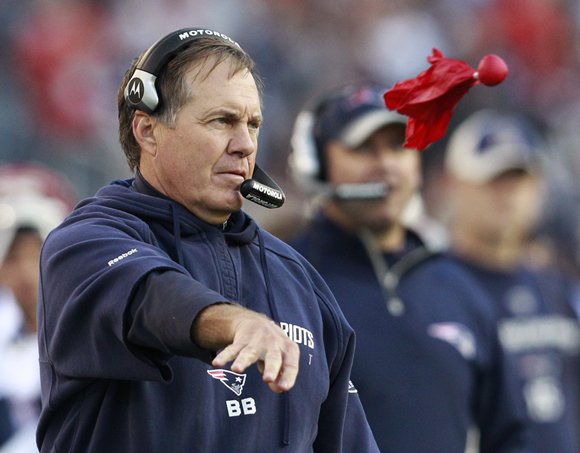
Throwing a Flag - The Use of an Amazon Listing can be TM Infringement and Passing Off

With more sales of goods being conducted online, it is often very difficult to distinguish your goods from a cascade of others, particularly on third-party selling platforms like Amazon. How these platforms often work is either by listing individual sales in isolation, therefore potentially swarming the website with similar, isolated sales of the same goods, or by lumping them together in one entry, promoting the best price for the consumer from all of the sellers on that listing (how Amazon works, for example). But with this mixing of sellers on a given listing could there be trademark infringement or passing off in these instances over the original goods being sold? A recent Intellectual Property Enterprise Court decision looked at this very question.

The case of Jadebay Ltd & Ors v Clarke-Coles Ltd (t/a Feel Good UK) dealt with the sale of aluminium flagpoles on Amazon. Jadebay sold the flagpoles under the trademark "Design Elements" (UKTM 2653159) on the platform through a licensor, which were listed under the seller "DesignElements" on the website. The defendant, Feel Good, listed their equivalent flagpole, with a lower price, under the sale Amazon listing, ultimately becoming the default seller of the goods on the listing. The claimants took Feel Good to court, alleging both trademark infringement and passing off due to Feel Good's use of the listing for inferior, non-identical goods, also excluding the trademark as above.

Judge Clarke, the presiding IPEC judge for the case, first considered the matter of trademark infringement. Under section 10(2) of the Trade Marks Act 1994, a trademark is infringed if, in short, it is used in the course of trade and there is a likelihood of confusion on part of the public, including association with the registered trademark.

The use of a sign in the course of trade includes "…offering or exposing goods for sale, putting them on the market or stocking them for those purposes under the sign", or simply used "…in the context of commercial activity with a view to economic advantage and not as a private matter". A variety of principles are applied when considering a likelihood of confusion, set out in more detail in the decision of Comic Enterprises Ltd v Twentieth Century Fox Film Corporation (discussed more here).

An alternate claim under section 10(3) of the TMA sets out that a trademark is infringed when it a person "…uses in the course of trade, in relation to goods or services, a sign which is identical with or similar to the trade mark, where the trade mark has a reputation in the United Kingdom and the use of the sign, being without due cause, takes unfair advantage of, or is detrimental to, the distinctive character or the repute of the trade mark".

Finally, the claim of passing off concerns the elements set out in Reckitt & Colman Product v Borden (discussed more here), which look at goodwill or reputation, misrepresentation leading to deception or a likelihood of deception, and damage resulting from the misrepresentation.

Judge Clarke then turned to analysing the issues at hand, starting with trademark infringement.

In her view, the average consumer would be an average flagpole-buying consumer, purchasing it for their home or commercial setting. The purchase would be driven by considerations of utility, quality and price rather than aesthetics or design, and that his purchase will be a considered one, rather than a whimsical or impulsive one, leading to an inclination of looking at the details and specifications of the listing used.

In terms of the use of the sign that was complained about, i.e. the name "Design Elements", the judge saw that it had been used by the Defendant. I her view "…[w]hether the sign complained of appears in the listing title itself, or in the descriptor 'by DesignElements', it still acts to indicate the origin of the goods for sale on the listing". The descriptor isn't merely a shop name, but an indicator of manufacturing origin, and a sign of their quality to the consumer.

Throwing your flags away isn't a viable option to avoid infringement
Looking at the actual similarities of the signed complained of and the registered trademark above, the judged had to consider their visual, aural and conceptual similarities (does it sound the same, look the same and cover the same or similar good/services). Their aural and conceptual similarities were not disputed by the defendant, so the judged quickly determined them to be identical. As to their visual similarity, the judge concluded that, as the trademark and the sign complained of share the same words in the same order, and while they are connected as one word, they are nonetheless separated by the capitalization of both words. Lastly, stylistically there were few differences between the two. Judge Clark therefore decided that the sign and the trademark had a high degree of similarity.

The judge then moved onto the next components in infringement. She swiftly determined that the sign is clearly used in the course of trade, and that it was used in relation to similar goods (i.e. the sale of flagpoles).

The next step is to establish a likelihood of confusion on the part of the average consumer. In her view, after a review of all of the circumstances, there was a high probability of a likelihood of confusion. This included factors such as the similarity of the sign and the trademark, careful consideration by the average purchasing consumer and the likelihood that the average consumer would think the product came from Design Elements. While she considered the lack of evidence of actual confusion, this didn't change the ultimate determination.

The judge concluded that there was therefore trademark infringement under section 10(2).

Judge Clark moved onto infringement under section 10(3). In looking at the trademark's reputation in the UK, the first limb of the test under the subsection, the judge saw that reputation in relation to the trademark only existed with the people who had bought a flagpole bearing the trademark. Without proper evidence as to the relevant public judge Clark couldn't establish that the trademark would have a reputation amongst a significant part of the relevant public. Infringement under section 10(3) therefore failed.

Finally, the judge turned to the claim of passing off, and determined that the defendant had passed off their goods as the claimant's.

It was quickly established that the claimant's business did have goodwill in the UK (albeit at a very low threshold on non-triviality). According to the judge, the sale of many flagpoles of a number of years, including garnering positive reviews, clearly demonstrated goodwill. The judge also agreed that a substantial number of members of the public would be misled by the defendant's listing, especially once the consumer would dive deeper into the details of the listing and the flagpoles themselves. Finally, the judge saw that almost every sale the defendant made would have been a lost sale to the claimant, and they had suffered damage as a result.

The case is quite the curious one, since it has, in effect, created a new type of trademark offense. Should someone use a pre-existing Amazon listing, they could potentially infringe on any associated trademarks, and would have to be careful to sell goods under that particular brand. The decision does set the bar quite high, and anyone selling authentic goods for a lower price would be safe, but anyone trying to ride the coat tails of a more well-known brand, selling inferior or different branded goods, might just fall foul of the precedent set.

06 February, 2017

All the Right Words - The British Columbia Court of Appeal Decides on Keyword Advertising and Passing Off in Canada

While the Internet's vastness and accessibility seems like a given for those who've seen it grow over the years, finding what you need can still be quite the struggle, especially when you're looking for more niche or specific information or services. Search engines like Google have made this a breeze in most cases, but unbeknownst to most, there is a war going on underneath the surface of search engines and websites. Due to the sheer amount of competition in most sectors, being the top result in a search query, or at least making it to the first page and above your competitors, pushes website administrators and creators to rely on less 'nice' methods to push their results ahead of others. One way is through the use of website metadata, particularly the keywords associated with your website. In the light of this specific feature, could you use your competitors' name or trademarks in your own website's keywords? The Canadian Court of Appeal looked to settle this point after a first instance decision sometime in late 2015.

The case of Vancouver Community College v. Vancouver Career College (Burnaby) Inc. dealt with the use of the acronym VCC, which has been used by Vancouver Community College for some time, which had also registered the abbreviation and its full name as trademarks in Canada (marks 0910482 and 0916687). Vancouver Career College also aimed to use the same acronym with or in place of their name, in their domain name, incorporating it into their marketing materials and in social media, and also purchased the keyword advertising rights to it on Google and Yahoo. Vancouver Community College subsequently took Vancouver Career College to court under claims of passing off and trademark infringement.

The Court first dealt with the claim of passing off, which is enshrined in the Canadian Trade-marks Act in section 7. Similarly to the concept of passing off, a claim in Canada needs to consist of three components: "… the existence of goodwill, deception of the public due to a misrepresentation and actual or potential damage to the plaintiff ".

The first component is goodwill in the name 'Vancouver Community College' and 'VCC', which, putting it into more simple terms, amounts to "…the positive association that attracts customers towards the owner’s wares or services rather than those of its competitor". In particular to names, this requires specific recognition in a primary sense of the name in the relevant marketplace as distinctive to that entity. The Court rejected the notion from the Supreme Court of BC had erred in required an additional secondary meaning, as only the primary meaning would be needed to establish goodwill in 'VCC'. Having considered the evidence submitted at first instance, the Court determined that the Supreme Court had erred in their finding of no goodwill (overstating the scope of evidence to the contrary, and failing to consider a body of evidence to the positive), and that there indeed was goodwill in the acronym at the relevant time.


Keywords can be quite "persuasive" (Source: Dilbert)
The second component is confusion, i.e. deception through misrepresentation to the relevant public causing confusion in the minds of the public as a likely consequence of the impugned actions. Justice Saunders, handing down the Court's unanimous decision, saw that the Supreme Court erred in their assessment of confusion in the case, as "… confusion is fully established by proof that the respondent’s domain name is equally descriptive of the appellant and contains the acronym long associated to it". The Supreme Court determined that confusion was only achieved when the searcher arrived at the website's landing page, and not before the fact. While Justice Saunders did see that the mere existence of the acronym was enough to cause confusion, the bidding for keywords containing the full name or the acronym would not cause confusion as "… the critical factor in the confusion component is the message communicated by the defendant. Merely bidding on words, by itself, is not delivery of a message. What is key is how the defendant has presented itself, and in this the fact of bidding on a keyword is not sufficient to amount to a component of passing off".

The Court then moved on to consider damage caused to the plaintiff, which, according to Justice Saunders, can include damage to one's goodwill or loss of control of that same goodwill (i.e. there is not necessarily a need for actual monetary damage). Concluding her judgment on passing off, Justice Saunders did indeed confirm that Vancouver Community College had suffered damage to their goodwill, and that Vancouver Career College had passed off their services.

Finally, the Court looked at whether the registered trademarks had been infringed under section 9 and section 11 of the Trade-marks Act. Justice Saunders dealt with this matter briefly, and saw that "… there are too many factual determinations and outstanding issues" for the Court to determine and that the matter is best remitted back to the Supreme Court for fresh consideration.

Ultimately, the Court of Appeal issued a permanent injunction against Vancouver Career College for the use of the acronym 'VCC' and 'VCCollege' in its Internet presence. The matter of damages and the breach of the trademarks were to be looked at by the Supreme Court.

The case is quite the interesting one, and the Court's considerations in terms of confusion seems to focus on the searcher's viewing of the results page, rather than the viewing of the landing page after clicking a link. It did, however, entrench the determination that the purchasing of keywords incorporating others' marks would be wholly acceptable in Canada, which does leave rightsholders somewhat exposed.

Source: JDSupra

23 August, 2016

A Piece of Humble Pie - Design of Apple Pie Not Registrable, Says US Court of Appeals

What is more enjoyable than a case involving food and an intellectual property law? This writer for one will freely admit his love of both, and any case that presents a scenario mixing the two is a delight. Many recent cases have touched on the design of various food items, including the recent Kit Kat litigation in the UK (discussed more here) and in the CJEU (discussed more here), and as manufacturers and makers of edible goods compete for marketshare, the shape of these items can become quite valuable and important. One still has to distinguish this from recipes (discussed more here), and while they are much less likely to be protectable, shapes are a different matter altogether. With that said, could you protect the shape of a dish, specifically a pie? The Court of Appeals in the US aimed to answer this question only late last month.

The case of Sweet Sweet Desserts, Inc. v Chudleigh's Ltd dealt with a design of a single-serving apple pie, meaning a whole pie meant for one person in a neat, convenient package. This particular food item was the creation of Scott Chudleigh, the owner of an apple farm and bakery in Ontario, Canada. It consisted of a ball-like shape, with upward facing, spiralling petals that overlap each other, encasing the apple pie filling within. He subsequently filed for a trademark in 2005 (US trademark 2262208, which includes an illustration of the design). The pies where distributed to various companies for resale, including a discussion with Applebee's in the US for the sale of the item in their restaurants, but the negotiations fell through. In 2010 Applebee's approached Sweet Sweet Desserts to create a single-serving apple pie, much akin to the idea conjured by Mr Chudleigh, who developed an "apple pocket" with a pie-like bottom and an overlapping spiral top design, leaving a gap in the top (subjectively quite similar to Chudleigh's apple pie design).  After launch Mr Chudleigh noticed, through online advertising, the similarities of the two designs, and took Sweet Sweet Desserts to court over trademark and trade dress infringement.

Little Jimmy's "floor pie" was received with less enthusiasm
The first issue dealt with by Justice Shwartz was whether Chudleigh's design was merely functional, and thus not registrable as a trademark. 15 USC section 1125(a) prohibits the use of any marks that would deceive a consumer as to the origin of goods or services, potentially including the aforementioned design, provided the design is not only functional and thus not a designation of such an origin. Justice Shwartz further set out that "...in general terms, a product feature is functional, and cannot serve as a trademark, if it is essential to the use or purpose of the article or if it affects the cost or quality of the article". Even if a feature were deemed to not be functional, a court can still find against the owner should the mark put competitors "...at a significant non-reputation-related disadvantage", therefore potentially restricting competition in the field (i.e. if a design or shape of a mark is essential or near-essential to the creation or presentation of certain types of goods).

What the Court found was that the design was indeed functional, as "...the shape of the dough is essential to the purpose of an effective single-serving fruit pie, and affects its cost and quality". Arguably this is correct, since the folding of the dough in order to seal the filling into the pie does just that, and does not, at least for the most part, act as purely decorative, clearly designating an origin for those particular pies. Mr Chudleigh admitted to this fact somewhat, stating that the use of the dough in that particular shape was designed to save on cost and to fill a particular market need for single-serving pies. Additionally, the number of 'petals' in the pies would be predominantly as a functional aspect, giving the best results for holding in the filling and baking, again enforcing a lack of decorative purpose and pure functionality. The Court therefore determined the design to be functional, and revoked Mr Chudleigh's registration.

The final claim dealt with by the court was Sweet Sweet Desserts' claim for tortious interference with their relationship with Applebee's through Mr Chudleigh's assertion of his alleged rights (being very similar to groundless threats in the UK). Justice Shwartz quickly ruled against this claim, determining that Mr Chudleigh's cease-and-desist letter, sent to Applebee's after his discovery of the Sweet Sweet Desserts' apple pie, since the letter was an "...objectively plausible effort to enforce rights" and not a sham to extract a settlement from the parties prior to a full case. Even though he failed in the case at hand, losing his rights in the design, does not take away from his legitimate belief at the time as to the existence of these rights. The Court ultimately allowed the application for summary judgment for both parties.

The case, albeit not ground-breaking in any way, is a curious predicament for the law, especially considering the uncertain world of food-related trademarks and rights. This writer would fully agree with the Court, since the design of the pie was purely functional, and any decorative or indicative purposes were either incidental or minor in the grand scheme of things. It is unclear whether Mr Chudleigh could have succeeded in a claim for passing off in the UK, and this writer sure does have his doubts as to this, but the idea would seem to be a novel one as a hypothetical.

Source: JDSupra

25 February, 2016

Retrospective - Worldwide Injunctions on Search Results

Most of us, this writer included, take Internet search engines for granted, especially the research power they provide. Google, Yahoo and Bing offer a battery of tools to find nearly anything you'd want online, however, many of us would not be able to envision a world where their capabilities are restricted. The freedom of the Internet is one of its cornerstones, but it does cast a dark shadow through the very same freedom, for example, offering an avenue for those who wish to share, download and sell illegal materials with relative ease. In the same vein, those protecting their rights (or their online exposure, in lieu of any IP rights) undoubtedly would want to limit the capabilities offered by search engines, whether rightfully so or not. The question of injunctions over search results came to ahead in British Columbia, Canada, nearly two years ago, in a case that will be ultimately decided on by the Supreme Court of Canada in the near future.

The case of Equustek Solutions Inc. v Jack dealt with Equustek Solutions' technology that allows for industrial equipment made by two separate manufacturers to communicate with each other in a variety of ways. The defendants, Morgan Jack, Andrew Crawford, John Doe and Lee Ingraham (and their company Datalink), acted as distributors for Equustek's technology, ultimately conspiring to develop a competing piece of technology called the "GW1000", using their trade secrets attained through their role as distributors. Additionally, Equustek asserted that the competing technology used their logo and name, passing it off as the same (or similar) as the original. The use of the logo and the name (an the sale of GW1000) was conducted online by the defendants on their own website, selling the original product but switching it for their own equivalent once a sale had been concluded. Google, as a third-party, had nothing to do with the sale of the product, but they did display the infringing website as a part of their search results; however, refused to altogether block the defendants' website, voluntarily complying with only a part of the request made by Equustek. The plaintiff then sought a court order for the removal of the website from Google's search results altogether globally.

The Supreme Court of British Columbia then had to answer three questions: (i) Does this Court have territorial competence over a worldwide internet search provider such as Google?; (ii) if the answer to the first question is yes, should this Court decline to exercise jurisdiction on the basis that California is the more appropriate forum?; and (iii) Should the order sought be granted?

Roger Smith was preparing for the inevitable shut down of the Internet
The first question dealt with territorial competence, and whether the Court could rule in a worldwide capacity, especially against a US entity in Google Inc. (and its Canadian subsidiary). The starting point under Canadian law is to establish "...the existence of defined connections between the territory or legal system... and a party to the proceeding or the facts on which the proceeding is based". This, however, is assessed on a balance of probabilities based on submitted evidence, rather than a stricter evaluation of a connection. Due to the heart of the case being the misuse of intellectual property in British Columbia by Datalink, and the business therein, there would be a connection between the region and the proceedings (creating territorial competence under the Court Jurisdiction and Proceedings Transfer Act). Going against this, Google's operation of a website accessible in British Columbia would not, in itself, be enough to establish a firm connection. In the end, Justice Fenlon saw that, in the Court's assessment, Google had a connection with the jurisdiction through its advertising activities in British Columbia, and the active provision of tailored search results therein as well.

As jurisdiction was established, the Court moved onto the question of whether British Columbia would be the appropriate forum, or whether the Court would determine California to be more appropriate, as is allowed under section 11(1) of the CJPTA.

Justice Fenlon deemed that there was no out of court relief available to Equustek, as Google's takedown system was seen as inadequate and not an appropriate remedy to protect any future infringement or sale of infringing goods by the defendants. This established a firmer need to conduct the proceedings in British Columbia, but was not the only consideration contemplated by the Court, as section 11(2) of the CJPTA imposed further factors for considerations. While Justice Fenlon dealt with the majority of the factors briefly, however, she considered the likelihood of enforcement of an order in California at more length. What this writer has to note is the potential negative ramifications of this, and the excessive reach the reach of the question of jurisdiction. Justice Fenlon saw things differently, as, in her mind: "...[the order potentially] would give every state in the world jurisdiction over Google’s search services. That may be so. But if so, it flows as a natural consequence of Google doing business on a global scale". In the end the Court deemed that Google failed to prove that California would be the more appropriate forum for the dispute, and moved onto the final question on whether the order can be granted.

The final question hinged on two aspects: whether an order can be granted against a non-party (with Google being a third-party to the dispute), and whether this order should be made against Google in a worldwide capacity.

There are certain exceptions under Canadian law that allow for the making of an order against a third-party, namely if they have knowledge of a court order and deliberately disobey it, or if that order is necessary for the aiding of fact finding or the administration of justice in any given matter.

As Google were notified by the Court of an order to take down the websites in question, the first exception potentially applied. Although not deliberately done, Google had not complied with the order before the Court of Appeal proceedings due to an administrative oversight. Justice Fenlon also confirmed that the Court could potentially grant a Mareva order (a freezing injunction) in this instance under the second exception to enforce the order against Google. Concluding the Court's position in their ability to grant this order against Google, Justice Fenlon saw that: "...the Court has authority to grant an injunction against a non-party resident in a foreign jurisdiction in appropriate circumstances. The fact that an injunction has not before been made against an internet search provider such as Google is reason to tread carefully, but does not establish that the Court does not have subject matter competence".

The last question on whether the order ultimately should be granted remained as the Court's last point of contention.

The Court considered Google's submissions on why the order should not be granted, which focused on Google's role as a passive third-party and the sheer volume of material it indexes, making it difficult or nigh impossible to police it all effectively and efficiently. Additionally the removal of the websites (or websites in general) under an order would be tantamount to censorship, and that the order sought would be way too broad.

Justice Fenlon disagreed with Google, approving the order. In her judgment, the order would not require Google to monitor its online content or activities, but to simply comply with the order to remove the websites from its services. Google also have complied with the removal of offensive or other illegal content, such as child pornography, doing so at their own behest, clearly showcasing that the removal of the websites would not be censorship or go above and beyond what the service usually does. She also distinguished the potential effect of the order from the purpose of the order itself, even if it gives worldwide effect. The impact of an order is a valid consideration, however, it does not in itself prevent or affect the Court's ability to issue one (and often, this worldwide effect is needed, as in this instance). This would have to be assessed in the light of "...a strong prima facie... or a good arguable case... to cross the threshold, and then to balance the interests of the two parties, having regard to all the relevant factors in each case, to reach a just and convenient result". As Equustek clearly suffered irreparable damage due to the inclusion of the results, and subsequent sale of the goods, the order was deemed to be equitable under the circumstances.

The Court, as said above, issued the order, with Justice Fenlon summarizing the Court's final position succinctly: "The Court must adapt to the reality of e-commerce with its potential for abuse by those who would take the property of others and sell it through the borderless electronic web of the internet. I conclude that an interim injunction should be granted compelling Google to block the defendants’ websites from Google’s search results worldwide. That order is necessary to preserve the Court’s process and to ensure that the defendants cannot continue to flout the Court’s orders".

The case is an incredibly interesting one, with the up-coming Supreme Court decision adding an extra dimension of importance to this saga. The removal of search results is clearly a big point of contention, and should the Supreme Court follow the decision of the Supreme Court of British Columbia, Canada could become the next destination for intellectual property rights holders to better enforce their rights on the Internet. Although the decision will not necessarily change the Internet as we know it, it can have a major impact on the freedom in it (for better or worse) and this writer keenly awaits the decision of the Canadian Supreme Court.

12 December, 2013

Retrospective - Passing Off in the United States

The tort of passing off has been discussed on this blog before, yet the tort primarily exists in that form in some common law countries, such as the United Kingdom and Australia, but takes a different form in the US. The term more commonly used in America is not 'passing off', but 'misappropriation'. Misappropriation falls under the tort of unfair competition in the US, made even more complex through the existence of varying laws in all US States pertaining to unfair competition. The common law origins of misappropriation stem from a decision in the early 20th century.

The milestone case concerning misappropriation was International News Service v Associated Press, decided in 1918 by the US Supreme Court. Both parties in the case dealt with the distribution of news in the US, both of which exist even today as independent news agencies or having merged with others. The Associated Press at the time of the case was a representative organization of 950 newspapers all over the US. News items were shared between its members through a bulletin boards, some of which were taken by the International News Services (in addition to news from early editions of newspapers), rewritten and published in different parts of the US for sale, fully utilizing the time differences in the vast country. The Associated Press did not take to this kindly and took the International News Services to court, finally reaching the US Supreme Court.

The Supreme Court had to look at whether International News Services infringed the Associated Press' property rights in their literary work, and whether this amount to unfair competitive practices in business. The Court shortly touched on the existence of copyright in news, and saw no breach of it in International News Services' practices; however what was paramount to the Supreme Court was whether this would be unfair competition. The Court admitted there was no breach of confidence, although it was speculated that some of the news published by International News Services was obtained through paying some of Associated Press' employees to obtain early copies of news articles.

The work put into news can sometimes be extraordinary
The Court's focus turned to the effort and expenditure used by the Associated Press to acquire their news, stated by Justice Pitney: "Not only do the acquisition and transmission of news require elaborate organization and a large expenditure of money, skill, and effort; not only has it an exchange value to the gatherer, dependent chiefly upon its novelty and freshness, the regularity of the service, its reputed reliability and thoroughness, and its adaptability to the public needs; but also, as is evident, the news has an exchange value to one who can misappropriate it". News as a copyrighted work has very little value, but its main value is in its initial delivery and punctuality; one which was clearly abused by International News Services by obtaining and publishing the Associated Press' news. Due to this expenditure and labor which has been placed into the collection of the current news, and without International News Services actually contributing to it and still using it, they are "...endeavoring to reap where it has not sown", which amounts to "...an unauthorized interference with the normal operation of [Associated Press'] legitimate business precisely at the point where the profit is to be reaped". To further his point, Justice Pitney saw that this was underpinned by the equitable consideration of consideration, or in other words: "...he who has fairly paid the price should have the beneficial use of the property". Clearly the Associated Press should be able to enjoy the fruits of their labor, whereas if International News Services were allowed to swoop in and utilize that work and benefit, it would undermine the Associated Press' equitable interest; making International News Services' actions unfair competition.

Although news in itself is not the property of anyone or any entity, the Court saw it akin to quasi-property through its use. Justice Pitney summarized this well:
"Regarding news matter as the mere material from which these two competing parties are endeavoring to make money, and treating it, therefore, as quasi property for the purposes of their business because they are both selling it as such, defendant's conduct differs from the ordinary case of unfair competition in trade principally in this that, instead of selling its own goods as those of complainant, it substitutes misappropriation in the place of misrepresentation, and sells complainant's goods as its own". 
As such International News Services, by using the quasi-property of the Associated Press, misappropriated that property, and although they did not show any misrepresentation, prevented the Associated Press from enjoying the benefits of their work. International News Services' appeal was therefore unsuccessful.

The current form of misappropriation is slightly more developed since its inception. The requirements were well set-out in the case of National Basketball Association v Motorola, where Circuit Judge Winter set them out as:
"(i) the plaintiff generates or collects information at some cost or expense; (ii) the value of the information is highly time-sensitive; (iii) the defendant's use of the information constitutes free-riding on the plaintiff's costly efforts to generate or collect it; (iv) the defendant's use of the information is in direct competition with a product or service offered by the plaintiff; (v) the ability of other parties to free-ride on the efforts of the plaintiff would so reduce the incentive to produce the product or service that its existence or quality would be substantially threatened... rend[ering] [the] publication profitless, or so little profitable as in effect to cut off the service by rendering the cost prohibitive in comparison with the return".
As one can observe, misappropriation is a much looser, more flexible doctrine than that of passing off. The attitude of both judiciaries is the same however, preventing others from using the work or labor of another for their own benefit.