Showing posts with label rogers. Show all posts

04 March, 2015

Retrospective - IP Infringement and Free Speech

Almost as holy as expression in its many forms, is the fact that, in most countries at least, expression is largely free of limitations, and that even dissenting opinions can, and should be voiced. With this vast freedom, especially in the United States, one can argue that the freedom of expression can be misused and utilized for nefarious means, or to harm others or their more intangible assets such as reputation or notoriety. In any instances where one's reputation is harmed through the freedom of expression (assuming that expression falls within the letter of the law), those parties would clearly want to prevent that speech through any means necessary; even more questionable ones. The attempted curtailment of speech has been discussed on this blog before, but that still leaves the question of can intellectual property rights be used to prevent freedom of expression? A case in the US Court of Appeals attempted to face this very question some decades ago.

The case in question was Rogers v Grimaldi, decided in the late 80s, which concerned a movie made by Frederico Fellini for the defendants in 1986. The subject matter of the movie, wonderfully titled as "Ginger and Fred", were two fictional cabaret dancers, Pippo and Amelia, who were known for their imitation of both Ginger Rogers (an Academy Award winning actress in the 1940s, and the plaintiff in the case), and Fred Astaire, who Ms. Rogers often co-starred with in various productions. The cabaret dancers were known as "Ginger and Fred" to their viewers in Italy, and the movie's title, and subsequent plot, refers to their reunion after years of retirement. After distribution within Europe and the US the movie was received rather negatively, and undoubtedly in the wake of this negative publicity, Ms. Rogers sued and claimed false designation of origin under 15 USC section 1125 and a violation of her common law rights to publicity.

Effectively what the case is assessing is a balance between free speech and the protection of an individual's (or entity's) rights in their trademarks, albeit more in the context of passing off than registered trademarks (more on which can be found here). Justice Newman presented the question well in the majority's opinion: "Poetic license is not without limits. The purchaser of a book, like the purchaser of a can of peas, has a right not to be misled as to the source of the product. Thus, it is well established that where the title of a movie or a book has acquired secondary meaning — that is, where the title is sufficiently well known that consumers associate it with a particular author's work — the holder of the rights to that title may prevent the use of the same or confusingly similar titles by other authors".
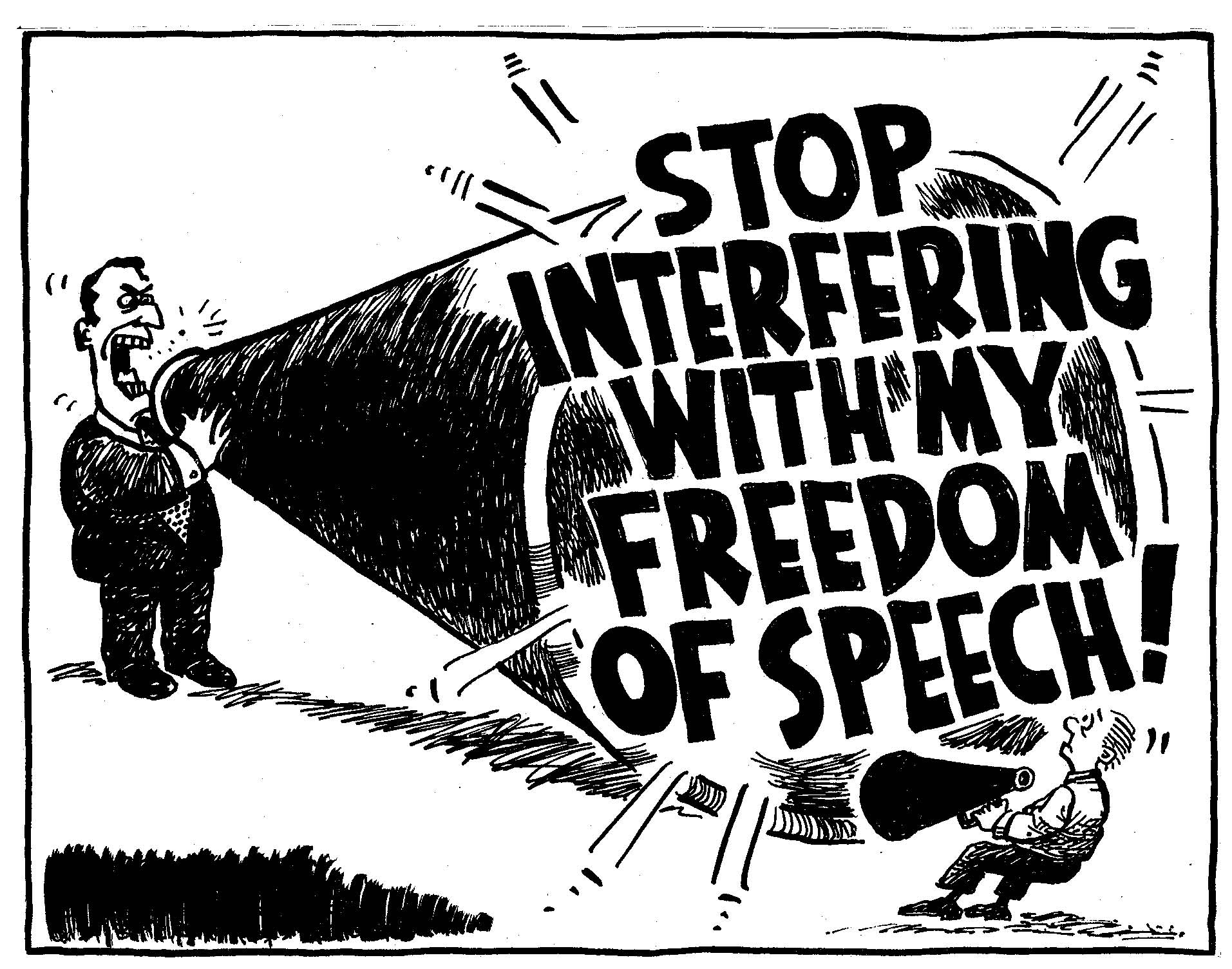
Frank was worried he would not be heard
In answering this question, the Court of Appeal approached the matter through a balance of public interest and those of any affected parties: "We believe that in general [15 USC 1125] should be construed to apply to artistic works only where the public interest in avoiding consumer confusion outweighs the public interest in free expression. In the context of allegedly misleading titles using a celebrity's name, that balance will normally not support application of the Act unless the title has no artistic relevance to the underlying work whatsoever, or, if it has some artistic relevance, unless the title explicitly misleads as to the source or the content of the work". What Justice Newman's opinion states, is that the potentially misleading title has to apply to the work it represents, or in other words, has to showcase or illustrate the work somehow, and not merely mislead a person to pay for the work thinking it is connected to a potentially affected party such as Ms. Rogers. Arguably this approach is sensible, as the use of IP rights to protect those rights has to be legitimate, just as much as the use of those rights in conjunction with newer works is. Free speech should be promoted through legitimate use, and not stifled merely to further shallow interests such as fame.

The Court of Appeal lengthily discuss the nuances of this approaches application, yet, what remains relevant is the use and applicability of those rights to the underlying work, and the legitimacy of that use. Ms. Rogers relied heavily on survey and anecdotal evidence in establishing a claim of false advertising of designation of origin; however this was dismissed handily by the Court: "...the title "Ginger and Fred" surpasses the minimum threshold of artistic relevance to the film's content. The central characters in the film are nicknamed "Ginger" and "Fred," and these names are not arbitrarily chosen just to exploit the publicity value of their real life counterparts but instead have genuine relevance to the film's story". No amount of confusion, arguably at least, will counteract freedom of speech, so long as the use of a name or names is relevant to the underlying work. As such the Court of Appeal dismissed Ms. Rogers' appeal.

Freedom of expression poses an interesting balancing act of human rights and commercial interests (or even other human's rights against said expression). The European Court of Human Rights weighed on the issue of copyright interfering with freedom of expression in the case of Ashby Donald and Others v France (case text only in French), and deemed that "...a conviction based on copyright law for illegally reproducing or publicly communicating copyright protected material can be regarded as an interference with the right of freedom of expression and information under Article 10 of the European Convention". Even so, the case saw that the copyright interests asserted did trump the appellants' human rights, as their interests were purely commercial and did not contribute to a specific expression or discussion of opinion. As such, the case can be seen to align with the view that intellectual property rights should not hinder legitimate expression, but can, and should, be used to protect commercial interests.

Overall one can appreciate that freedom of speech is seen as a valuable tool for discussion and a strong point of public interest, yet it should not overshadow the protection of some rights, at least in some instances. A blatant use of copyrighted material, or trademarks, for the purposes of making a quick buck should be dissuaded; however one man's folly should not silence a nation.

18 November, 2013

Retrospective - What is an Invention? An Early Australian Perspective

When considering the humongous advances through invention humanity has undergone in its existence in this world, starting from the primitive inventions such as the ability to control fire to more modern marvels such as the Internet, one cannot be nothing but at awe with the collective capabilities of humans. Inventions themselves can cover almost anything when thinking in laymen's terms, but what amounts to an invention under law? In Australia this is judged based on the NRDC case, which has been discussed on this blog prior; however a case nearly 50 years earlier set the stage for NRDC which is often overlooked.

The case in question is Rogers v Commissioner of Patents, decided in 1910 by the High Court of Australia. The invention being dealt with in the case was a device or a contraption designed to burn down standing timber, causing only a segment of the bottom to burn, thus felling the tree once burned sufficiently. The device used kept the burning piece of wood used to burn down the tree in constant contact with the tree through a tripod of sorts (two forked pieces of wood) which rested the burning piece of wood against the base of the tree at an angle. Due to this the smaller burning piece of wood would fall towards the base of the tree as it was heavier, keeping it in constant contact with it as desired. 

Much like the aforementioned NRDC case the question at hand for the High Court of Australia was whether this device would fall under the 'manner of manufacture' requirement in the Statute of Monopolies 1623. Chief Justice Griffith contemplated the phrase's meaning in the majority decision, seeing that the word 'manufacture' can apply both to the product itself or the manner in which it is produced. He further distinguished that mere new ideas themselves will not be sufficient to be patentable, drawing from the case of Harwood v Great Northern Railway Co: "...you cannot have a patent for a well-known mechanical contrivance merely when it is applied in a manner or to a purpose, which is not quite the same, but is analogous to the mariner or the purpose in or to which it has been hitherto notoriously used". His Honor clearly refers to the use of the two forked sticks in the device in question as to whether they would fall under such a definition. In further explaining his position, his Honor referred to the case of Lane Fox v Kensington and Knightsbridge Electric Lighting Co: "A patentee must do something more; he must make some addition, not only to knowledge, but to previously known inventions, and must so use his knowledge and ingenuity as to produce either a new and useful thing or result, or a new and useful method of producing an old thing or result".

Joseph was confused as to how to use the device
As said above, the use of a very primitive device, clearly already known, would be hard-pressed to fall under the definition of a manner of manufacture under his Honor's considerations. His Honor does go into more detail applying the aforementioned precedents in the patentability of new ideas: "There may... in some circumstances be a patentable invention if the discovery involves novelty in the use of a known thing as distinguished from novelty of purpose or if any new modification of the thing or any new appliance is necessary for using it for the new purpose". In his mind a tripod, as the two sticks served as, did not fall under this doctrine, as the device was not a modification of the conventional tripod nor was there a new appliance; the sticks merely served as a tripod even under the new use. His Honor dismissed the appeal on these grounds.

Justice Isaacs showed a different approach, giving a dissenting opinion. In his Honor's mind new uses for old apparatuses could attract patentability, quoting a number of cases, the more illustrative of which is the House of Lords decision of Patterson v Gas Light and Coke Co: "...if by reason of knowing the theory he [the appellant] is enabled to make some improvements he may take out a patent for those improvements, but he cannot take out a patent to prevent others using what they had used before, though only empirically". In his Honor's mind the use of the tripods in this manner would be patentable.

As one can see the old views of what can be considered an invention, or a manner of manufacture, showcase themselves to be incredibly archaic, although still very useful in further considerations. Rogers v Commissioner of Patents was used extensively in NRDC, and therefore merits discussion, but it's application in today's patent law can be said to be minimal at best. Regardless, this case is still overlooked, and does give more insight to the origins of modern patent laws and their application.