Showing posts with label criticism. Show all posts

18 April, 2014

Free Speech and Copyright - When Copyrights and Personal Rights are at Odds

Although intellectual property law protects expression in its multitude of applications sometimes it comes at odds with the rights that are conveyed through the aforementioned expression, whether it was intended or not. Previous examples are the potential curtailing of criticism by using trademarks, where the line between the intended protection offered by trademarks and its potential misuse against freedom of speech came to light. Copyright in itself can potentially be used in a similar fashion, although most common law jurisdictions do expressly allow for copyrighted content to be used for criticism. A recent instance in the United States faced this very conundrum; can copyright trump your right to criticize another?

The case in question was Garcia v Google, which concerned Ms. Cindy Lee Garcia, who acted in a small role in a movie titled "Desert Warrior" (a working title at the time of casting). Even though Ms. Garcia had participated in the filming of the movie, the finished film never saw the light of day. Some time after Ms. Garcia's scene was used in the infamous YouTube video "Innocence of Muslims", in which her scene was partially dubbed having her say "is Mohammed a child molester?". As a result Ms. Garcia soon began receiving death threats from various parties, and she subsequently took precautions and asked Google to remove the aforementioned video relying on the Digital Millennium Copyright Act and its take-down provisions. Google refused her initial reasoning for the video's removal, finally having Ms. Garcia resort to a copyright claim over the video's content, asserting it infringed her copyright in her performance.

Although the case discussed Ms. Garcia's copyright in the film quite extensively, it remains but worth a mention. In Chief Justice Kozinski's judgment Ms. Garcia did have a copyright interest in the film, even though her part was only 5 seconds long in a 13 minute video. As a copyright interest was seen by the court Google were ordered to remove the video from YouTube due to it infringing the aforementioned rights. In Chief Justice Kozinski's view this was a matter of balancing equities, in other words, an assessment of the balance of fairness, and saw that Ms. Garcia's rights in the video overshadowed those afforded in the First Amendment of the American Constitution through free speech. Her security was also a consideration in this assessment; a truly sad result of her unwilling part in the video.

Compliance, or passive aggressiveness?
What should be discussed in this instance, and has rightfully so become the vocal point of this case, is whether copyright should be able to be used to curtail free speech. As Google argued in the case: "[a] court order requiring removal from YouTube of the Film or any portion thereof would impose a substantial burden on free expression, without preventing any future harm to [Ms. Garcia]". In the majority's opinion Ms. Garcia only had the likelihood of success in her claim, or in other words, potentially had a copyright interest in the work, and the majority subsequently saw that this potential interest would weigh heavier than the public interest under free speech. Commenting on this, in his dissenting judgment, Justice Smith saw that "...the law and facts do not clearly demonstrate how granting a preliminary injunction in Garcia's favor would serve the public interest". Clearly one can agree with Justice Smith in this instance, at least under these facts. Although this writer fully accepts that Ms. Garcia's safety is paramount and should be a consideration in this instance, her argument fails in the uncertainty of her copyright interest and lack of concrete harm caused. Her protection should not be handled through copyright, and as stated by Justice Smith: "It's disappointing, though perhaps not surprising, that Garcia needed to sue in order to protect herself and her rights".

The Garcia case is an unfortunate result of unforeseen circumstances and the infamy to which the video rose. The decision has since come to a vote over whether the 9th Circuit Court of Appeals should rehear the case. The video's infamy served a two-fold purpose when gauged under US law; it started a conversation over religion and attitude's towards it, however it also caused severe distress to Ms. Garcia and even fear for her life. Her argument through copyright was flimsy at best, but seemingly was her only avenue for respite. The majority's view on the matter can be argued to be incorrect, and does not fairly assess the balance between her alleged copyright interest and the public interest. As Google stated: "...[o]ur laws permit even the vilest criticisms of governments, political leaders, and religious figures as legitimate exercises in free speech", and this right should be protected, although not used as a veil to protect those who wish to blatantly infringe copyright under the guise of free speech. Even though copyright and free speech do overlap quite extensively, their relationship does come with a price, and each case will present a different situation where the court will have to find the right spot where protection is afforded, but not at the expense of free speech. Copyright serves as a shield to those expressing themselves, and it should not be used to stifle others; something which clearly was not Ms. Garcia's intention in her action.

Source: Reuters

07 September, 2013

New Zealand Bans Software Patents - Or Did They?

As we have turned towards an ever-more computerized world, software has arguably become almost as valuable as the hardware it runs on. Without effective protection through patents for innovative software products, the field would be a free-for-all of copying, using others' methods and creating an environment where innovation would not persist. Some have argued, and rightfully so to an extent, that the field has lead to a culture of abuse and 'patent trolls' where software patents are merely a conduit for quick cash-in schemes for companies who have no intention of ever using the patented software. Due to this clear misuse there have been calls for reform or the full fledged abolishing of software patents in the common law, and finally those calls have been answered by the far-away land of New Zealand.

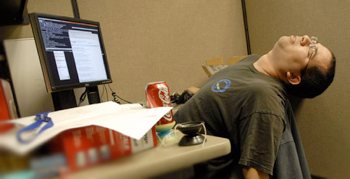
Software engineers' collective disappointment
In mid-2008 the New Zealand Parliament had the Patents Bill introduced, which sought to "...update the New Zealand patent regime to ensure that it continues to provide an appropriate balance between providing adequate incentives for innovation and technology transfer". The Bill introduces a cavalcade of changes to the old Patents Act 1953, being one of the biggest modifications of the New Zealand patent legislation in 60 years. The Bill introduces an exception to patentability for computer programs in very express terms. Although the exclusion provision states that computer programs are not patentable, this is not the case entirely. 

Under a Supplementary Order Paper to the Patents Bill computer programs are not patentable "...as such if the actual contribution made by the alleged invention lies solely in it being a computer program" (emphasis added). The first two words highlighted in the quote above prove integral to the interpretation of this new provision; software patents are not allowed as such, but should they be a way to implement a patentable process, they can be patentable. The SOP provides an example of a chip in a washing machine, through which a computer program in the chip improves the washing machine's operation. In such instances the software in the chip could be patentable. What is important is the interconnection between the software and the improved process.

In interpreting this the new provision employs a similar approach to that of the European Union and the United Kingdom. This approach was set out in the case of Aerotel Ltd v Telco Holdings Ltd (and others) and Macrossan's Application, intepreting section 1(2) of the UK Patents Act 1977 dealing with the subject matter of what is not an invention. The New Zealand provision's wording, albeit slightly different, still encompasses the heart of the Aerotel considerations, while adding specifics pertaining to their own legislation, and arguably using the Aerotel test would prove beneficial for the New Zealand judiciary.
Kiwis are very apt with technology

In assessing a patent and whether it is excluded from patentability under the Aerotel approach, the courts would have to properly construe the claim; identify its actual contribution; ask whether it falls solely within the excluded subject matter; and check whether the actual or alleged contribution is technical in nature. The first factor is purely a standard assessment of the patent claim, deciding what the monopoly would be before considering its possible exclusion. The second factor is deciding whether the inventor has really added anything to the stock of human knowledge, emphasizing the substance of the invention (what it actually contributes) above the form of the claim itself (what is argued it contributes). The third factor is assessing whether the contribution is solely an unpatentable subject matter. Should the invention be a patentable subject matter, the final consideration is if it is of a technical nature. 

The New Zealand approach is assessing the substance of the claim (rather than its form and the contribution alleged by the applicant) and the actual contribution it makes; what problem or other issue is to be solved or addressed; how the relevant product or process solves or addresses the problem or other issue; the advantages or benefits of solving or addressing the problem or other issue in that manner; and any other matters the Commissioner or the court thinks relevant. Clearly this echoes the approach given above, and would be served well should the New Zealand judiciary consider the Aerotel test.

So as one can see New Zealand has effectively banned software patents, but only to the extent that they exist independently. Calling this a blanket ban is merely hyperbolic, but the potential abuses that have been experienced with pure software patents have been remedied, and it remains to be seen whether the rest of the world will follow suit. Calls have been made for the US to do the same, but with vast amounts of money being tied into software innovation in the US, it can be argued that a ban over software patents in the US is still well behind the horizon.

Source: ZDNet