Showing posts with label twitter. Show all posts

10 October, 2017

Shared by a Little Bird - Does Retweeting Protected Works Infringe IP?

Social media has made the near-thoughtless sharing of content a part of everyday life, whether it is sharing an article you liked or a picture you found somewhere. Even though the sharing of the content seems innocuous and more often than not will drive views towards the original creator, the possible legal issues of sharing without actually seeking permission or checking whether, for example, a Creative Commons licence exists. One such platform that might not come to people's mind at first is Twitter, where users can 'retweet' content that someone else has posted on their Twitter account (more on Twitter in general here and here) with very little effort. In the light of this, could the retweeting of content infringe on someone's rights?

This question will soon potentially get an answer, after a claim was commenced in the District Court of the Middle District of Pennsylvania, as reported on JDSupra. In the complaint Keith Bell, a well-known sports psychologist and author, sued King's College (a Pennsylvanian private educational institution) and Jeffrey Knarr (the head coach of American football at King's College) for both copyright and trademark infringement. Mr Knarr had retweeted two images of pages from Mr Bell's book "Winning Isn’t Normal", which were originally shared by a separate Twitter account operated by Northeastern State University's baseball team. While the baseball team removed their tweet after being approached by Mr Bell, Mr Knarr didn't do so, and his retweet had garnered some degree of interest. Mr Bell had registered copyright and trademark rights in his book well before the claim.
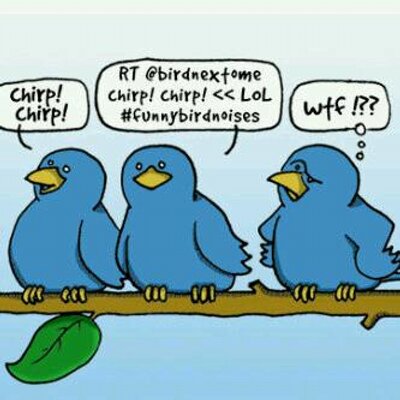

Sharing is caring?
As a starting point, Twitters TOS set out that "[b]y submitting, posting or displaying Content on or through the Services, you grant us a worldwide, non-exclusive, royalty-free license (with the right to sublicense) to use, copy, reproduce, process, adapt, modify, publish, transmit, display and distribute such Content in any and all media or distribution methods (now known or later developed). This license authorizes us to make your Content available to the rest of the world and to let others do the same". Clearly this is simply to protect Twitter's position in the event that an author of a work posts their content on the platform, but it doesn't offer a safe harbour for those who post material they have no rights in (or equally, further sharing that material through retweets). Clearly there would be no protection offered by the TOS to any users sharing materials without ensuring its legitimacy.

Case law doesn't shed light on this issue much, as most cases dealing with social media have yet to hit the scene in a big way. For example, a similar claim to the above was filed in 2015, but the case settled before being decided.

Even so, the case of Agence France Presse v Morel offers some guidance. In the case a photographer claimed copyright infringement after a picture they took was copied from their Twitter account and used in newspaper reporting. Among many other observations, the District Court of the Southern District Court of New York saw that the Twitter TOS didn't protect copying the works from the service, as the artists retained the rights in the works even when posted (but Twitter could put them on the website and display them on the artist's account). No licence is therefore given to the copier, even if the TOS state terms that might indicate as such. The retention of rights and the work's subsequent copying are therefore the important considerations around Twitter and copyright infringement.

Arguably, by retweeting e.g. a picture of a work you are creating a copy of that work, and should it be substantial enough it can be copyright infringement. There can be an argument under fair use in the US, which would be, in this writer's mind, a good one, but in the UK fair dealing would be more difficult to argue. A claim of trademark infringement would also be very viable, as the full name of the book (a registered trademark) is included in the Twitter post with the body of the text.

Overall it seems that retweeting material can be risky, particularly if the content is not attributed at all. This writer is a large proponent of sharing content on social media, and believes that the more sharing the better (with proper attribution, of course); however, users need to keep in mind that not everyone wants that to happen. It will be interesting to see where the law develops in terms of social media in the coming years, but it seems that the rights in an author's works would still very much remain and be enforceable.

10 August, 2015

Tweets Stolen - Further Thoughts on Tweets and Copyright

The impact of social media on today's social interaction is undeniable, with people turning to Instagram, Facebook and Twitter for more and more of their entertainment, social and news needs. As this new interaction space has grown, and seemingly keeps growing, the value of the content within it has grown as well. This writer recently noted newly emerged discussion surrounding Twitter and reusing jokes and/or content lifted from Tweets, especially in the light of having discussed this on a very superficial level some time ago, I thought it merited expanding more in detail.

In a recent development it has come to light that Twitter hides certain tweets it deems to be infringing copyright, pending a response from the copyright holder as to their respective fates. This is expanded on in Twitter's Copyright and DMCA Policy: "Twitter will respond to reports of alleged copyright infringement, such as allegations concerning the unauthorized use of a copyrighted image as a profile photo, header photo, or background, allegations concerning the unauthorized use of a copyrighted video or image uploaded through our media hosting services, or Tweets containing links to allegedly infringing materials". One has to note that, although the policy does focus on images and videos, it does leave its definition of "copyright infringement" as open-ended, potentially catching tweets themselves.

This begs the question, is a tweet protected by copyright? As discussed in my previous article, the UK Copyright, Designs and Patents Act 1988 does not set a limit on what can amount to a copyright protected literary work, which allows for even tweets to be potentially protected under the provision. As long as the work originates from the author and contains a certain level of originality. The ECJ decision in Infopaq International A/S v Danske Dagblades Forening further elaborated on what amounts to originality, with the court deciding that a work is protected by copyright if it is "...the expression of the intellectual creation of [the] author". So long as you have put in effort and some level of choice and creativity into your work, even a tweet, it would arguably be protected by copyright within the UK and the EU, irrespective of the tweet's length (140 characters or fewer).

Twitter can be serious business
In the US things can potentially be a little different. Under 17 USC section 102 copyright protection extends, much like in the UK, to literary works. The provision itself does not prescribe any length requirements no works for copyright to be applicable, and section 101 offers no further assistance in answering the above question. The Electronic Code of Federal Regulations aids somewhat, as section 202 of the Regulations stipulates that works that will not (necessarily) be protected by copyright are "[w]ords and short phrases such as names, titles, and slogans" - although, the CFR merely sets these out as examples, not definitive limitations. Whether a tweet would count as a "short phrase" and therefore is not protected would remain an assessment of its creativity (as was discussed in Arica Institute Inc v Palmer, for example), as if the phrase exhibits a minimal amount of creativity, it would arguably be protected by copyright in the US.

As can be seen Twitter and tweets do pose a challenge to copyright and whether its protection extends to them within the common law. Although literary works are nearly universally protected all over the world, their length and specific content does dictate the protection afforded, especially when its creativity or originality comes into question. One big consideration is the monetization of tweets and whether they would ever merit protection to the point where they would be challenged in court. This writer would love to see a tweet or a series of tweets be evaluated by the courts at some point, but heavily doubts the likelihood of this ever happening. Without judicial consideration one can still very much appreciate the creativity of tweets and their content, as the character limitations present a unique obstacle to comedic delivery; something when achieved can be powerful.

Source: The Verge

13 October, 2014

Birds Of A Feather - Twitter and Copyright

Social media has changed how we interact with others, both online and to an extent, in real life, but its impact on creativity and the spreading of such materials is unrivaled, with content that goes 'viral' producing unprecedented revenue figures in recent years. With this in mind, capitalizing on such successes for others seems like an easy opportunity to make some money, and using social media to do so gives us all an avenue where it's both effortless and instantaneous. One such platform is Twitter; something which most people are aware of these days (even this blog has its own Twitter account). For the hopelessly uninitiated, Twitter allows you to share content, be it links, statements or quotes, with relative ease to all of your followers (and their followers, should they choose to share - i.e. retweet - your content), but allows you to only do so within the limit of 140 characters. With such restrictions, and the medium itself considered, would a tweet be enough to merit copyright protection? Furthermore, can you infringe copyright by tweeting someone else's content?

Whether tweets are indeed protected by  copyright is an assessment of whether they can be deemed to be literary works under such regimes. The Copyright, Designs and Patents Act 1998 in the UK, and other similar laws within the common law, does not set out any word or character limits to what can be deemed as a literary work. Should the tweet itself be original, and admittedly this writer for one has seen his share of funny or interesting tweets over the years, it could be considered a literary work and thus be protected by copyright. Tweeting about pictures or videos one has made does not in itself afford copyright protection to that particular tweet, but the copyright in those standalone works still quite well exists by its own merits. This question does not have a straightforward answer at the end of things, but should your Twitter output be interesting, funny or creative enough, you can rest easy your 140 character gold will most likely be protectable.

Some tweets are less 'original' than others, quite frankly
Copyright infringement on the other hand is a wholly different beast when it comes to Twitter, and as stated above can be something your average tweeter might not think about in the casualness of the medium. Albeit not exactly a tweet, an advertisement in the New York Times used a tweet by A. O. Scott, a film critic of some note, as a form of endorsement (one which was not approved by the critic himself) landed them in a bit of hot water, and prompted a conversation on whether tweets carry copyright protected subject matter. As can be seen above they arguably do, and this instance further enforces that notion. Some estimates have put a worth of several thousands of pounds on a celebrity's tweet, which only goes to show that even without much literary merit, a tweet can still be quite valuable, and therefore, worthy of protection. Using other people's tweets therefore can be an issue, should one do so without proper authorization.

But getting back to your average Twitter user; can you infringe copyright by retweeting someone else's tweet? Should someone post a tweet which infringes copyright, say an unauthorized excerpt from a famous book, containing an integral part of the story, one could potentially infringe copyright by retweeting that same excerpt. Should that part be deemed substantial enough to infringe copyright under the CDPA 1998, a retweet could very well infringe copyright. Again, retweeting and infringing copyright has no clear-cut answer, and given the length of each tweet, infringement would have a much harder time if dealing with more extensive works and excerpts of those works in the twittersphere.

Albeit a very brief consideration, one can see above that Twitter does provide us with an interesting sphere in which copyright resides. Most users of Twitter are incredibly casual with the medium, and although it will probably not cause any major issues for most copyright holders, some frequently more hilarious tweeters might want to be on their toes when they hear the birds chirping.

31 December, 2013

Review of 2013

As the year of 2013 comes to a close, I thought it'd be time to give some information about IP Iustitia to my readers and anyone who might be interested in some figures. This blog has been a great way for me to engage in the IP law community, and I'm grateful for the moderate success I have had over the majority of the year.

In under a year of operation the blog has had over 10,000 visits, which went over and beyond any of my expectations. Thank you to those who've visited and enjoyed my work, and hopefully things will improve even more as we move forward. The site also migrated to its current domain (www.ipiustitia.com), which I hope you've firmly bookmarked!

Feedback about the blog and its contents has been almost unanimously positive, but do send me an email should you have any thoughts or even ideas on what to write about. Even though the blog is a one-man operation (for now), community participation is paramount and always appreciated.

The blog's Twitter account also has been a success, with 167 followers as of right now. If you have not followed the blog on Twitter, please do so and you'll receive direct links to all new articles the moment they're published. You can also use this as an alternate method to contact me with any questions, IP law related or not, should you want to do so.

In terms of developments in the area, the year has been eventful. The Myriad Genetics decision in the US Supreme Court was one which was anticipated by many, and one which this writer is awaiting to emerge from the Australian Full Federal Court. The Google Books decision, which barely fit into 2013, was monumental as well. In addition the year has been filled with law reviews galore, with the United Kingdom and Australia looking ahead, while Ireland flashed its copyright future in its released review. Many things have happened, and looking at 2014 one cannot be but hopeful as to the future of copyright especially.

I'd like to wish you all a great coming year, and hope that 2014 will be just as good, or even better, than 2013 has been for you! The blog will continue as usual once the new year comes along, firmly going towards it's first anniversary in March. A big thank you to all of my regular and sporadic readers - you are the ones I do this for at the end of the day.