13 January, 2017

Not Taking a Break - EU General Court Sends Kit Kat TM for Reconsideration at EUIPO

The Kit Kat chocolate bar trademark saga is one that seems to just keep on giving and giving to the IP community, offering new and fangled ways where the iconic (or dare we might now say the opposite) chocolate bar has been fought over in Europe. After a hard-fought several rounds in the CJEU and the UK courts, it all seemed all over; however, the EU General Court offered us a new judgment as an early Christmas present in mid-December.

The case of Mondelez UK Holdings & Services Ltd, formerly Cadbury Holdings Ltd v EUIPO dealt with an EU registered trademark (2632529) for a three-dimensional mark comprising of the Kit Kat chocolate bar without any markings. The mark was subsequently challenged by Nestle's favorite candy competitor, Cadbury (now owned by Mondelez), and the matter has since ultimately ended up in the General Court, largely dealing with lack of use and distinctive character.

The GC only concerned itself with Article 52(2) of the Community Trade mark Regulation, in conjunction with Article 7(3), which set out that a trademark, even if potentially found invalid, might still be registrable should the mark have acquired a distinctive character with respect to the goods and services covered. Mondelez argued that the EUIPO had failed to correctly assess this distinctive character (allowing the mark to be registered), and directed their argumentation in four separate parts.

The Court initially dealt with the second part of their plea argues that the mark had not been used for all of the relevant goods it was registered for. The Board of Appeal had seen that, based on the evidence submitted, the mark had been used for all of the goods listed above. This assessment, according to the GC, would be done "...in relation, on the one hand, to the goods or services in respect of which registration has been sought and, on the other, to the presumed perception of the mark by an average consumer of the category of goods or services in question, who is reasonably well informed and reasonably observant and circumspect". Any proof employed would have to be viewed independently within the context of sub-sections within the broad terms of goods to identify whether the mark has been used for those goods.


Gilbert always forgot what his chocolate bars looked like

Under the evidence supplied, the GC did concede that the Kit Kat mark had been used for the majority of the goods listed; however, saw that it had equally not been used for bakery products, pastries, cakes and waffles, since the advertising materials only showed biscuit-like, chocolate treats with no real bakery goods included at all. This was deemed an error on the part of the Board of Appeal.


The first part of the plea dealt with a lack of use of the mark in the form as registered, and therefore would only stem from the branding or the use of other marks in conjunction with the contested mark. The EU courts have previously held that a 3D mark can acquire distinctive character even if used with other marks, as long as the public distinguishes the product from originating from a particular source as a result. The GC quickly rejected this argument, as surveys indicated a high percentage of individuals identifying the brand from just the shape alone.

They then moved onto the third part of the plea, which argues that there is a lack of use of the mark as an indicator of origin and insufficient evidence to that effect. The latter point would be assessed based on evidence showing that a significant portion of the public identifies the mark as an indicator of origin, which entails in it several factors, including market share and duration of use. The GC rejected this argument as well, having extensively discussed the evidence submitted and its application to the matter at hand, illustrating a clear recognition of the mark as an indicator of origin for those particular goods, and that it was sufficient to overcome this plea.

Finally, the fourth part of the plea asserted a lack of proof of distinctive character acquired through use of the contested trade mark throughout the European Union. Mondelez contested that, as Nestle only provided evidence with respect to 10 Member States out of 15, the Board of Appeal should not have extrapolated from that evidence applicable to the entire EU (with the Board only finding evidence of distinctive character for 5 being sufficient for the whole of the EU). According to established EU case law, a mark needs to have distinctive character in the whole of the EU, and would fail to be registered should it not have it for a part of the EU, even one single Member State. Evidence provided needs to be quantitively sufficient to prove distinctive character in the Member States concerned. The GC corrected the Board of Appeal's approach in assessing this, and set out that "…the relevant question is not whether it was shown that a substantial proportion of the public in the European Union, merging all the Member States and regions, perceived a mark as an indication of the commercial origin of the goods designated by that mark, but whether, throughout the European Union, it was proved that a significant proportion of the relevant public perceived a mark as an indication of the commercial origin of the goods designated by that mark".

The GC allowed this part of the first plea, determining that a lack of evidence for the rest of the Member States would mean that the mark has not been established to have distinctive character in the entire EU, and the registration is therefore invalid and would have to be re-examined.

The case is a very curious one, and highlights a potential big issue for applicants when it comes to evidencing the distinctive character in the entire EU. With surveys and other evidence gathering exercises being costly both monetarily and time wise, and newer launches in other territories being a hindrance for proving distinctive character. In the end, the threshold should be high; however, this writer would be a firm believer in statistics, especially for more notable, established brands, and would want more flexibility at the EUIPO (although, understanding the risks associated with giving away trademarks like candy). It will remain to be seen whether the case is appealed, and this writer would not want to see the fight for chocolate bars to ever end.

Source: Reuters

22 December, 2016

A Big Bite of the Apple - Supreme Court Decides the Fate of Design Patents

The two titans of technology, Apple and Samsung, have fought long and hard over many aspects of intellectual property law, especially ones relating to the design of the (now ancient, at least in smartphone terms) iPhone. The two companies have fought legal battles all over the world since 2011, with varying results for both parties. After a monstrous $1.05 billion award of damages to Apple in earlier cases by a jury, the matter ended up with the Supreme Court, who were destined to look at an aspect of design patents often overlooked by the judiciary, even if it was merely from a damages perspective. The Supreme Court handed down its judgment in early December.

The case of Samsung Electronics Co. v Apple Inc., dealt with design patents owned by Apple on aspects of the iPhone, in particular a black rectangular design (D618,677), the same with a bezel on a surrounding rim (D593,087), and a colourful grid of 16 icons on a black screen (D604,305). Samsung employed similar design aspects in its various smartphones (including the Galaxy S line), and Apple took them to court for infringement in the aforementioned design patents. What the Supreme Court were tasked to determine was the infringement, and subsequent award for damages for infringement, under section 289 of the US Patent Act.
The above section provides a remedy for damages when "[a] person who manufactures or sells “any article of manufacture to which [a patented] design or colorable imitation has been applied shall be liable to the owner to the extent of his total profit". While this is more straightforward in instances of whole infringement of a simple, single article, it is more difficult, as admitted by Justice Sotomayor (handing down the Court's unanimous judgment), in cases with complex, multi-component items and subsequent profits using the infringing elements.
Complexity comes with a need for introspection
What remains key is the liability for the infringing articles where the designs have been applied, which has been traditionally set at "…the extent of his total profit, but not less than $250". This then means you have to initially identify the 'article of manufacture' to which the infringed design has been applied, and then calculate the infringer's total profit made on that article of manufacture.  The Court therefore had to decide "…whether, in the case of a multicomponent product, the relevant “article of manufacture” must always be the end product sold to the consumer or whether it can also be a component of that product". This would either enable the patent holder to claim all profits made by selling the Samsung smartphones (i.e. the whole phone), or restrict the damages that can be claimed (i.e. only allowing damages for the particular designs used, and not the whole phone) by the rightsholder.

The Supreme Court left quite a bit unanswered in relation to the question of when an article of manufacture would be the whole product, or simply a component thereof, which, at least to this writer's mind, is a huge part of this matter and many others involving complex technology. Arguably, as the decision will be sent to the Federal Court for a rethink, the lower rungs will have to fill this space; however, there is a chance that an agreement will not be reached (yet again) by the lower courts, and the Supreme Court will have to address this matter in the future.

Justice Sotomayor saw that, after a simple reading of the term 'article of manufacture' that it would encompass both an individual component of a product, or the product as a whole. Design patents can be acquired for both, and while a component has to be embodied in an article, the designs can themselves only cover those components.p
The Supreme Court ended up saying very little in their judgment, and the future of design patents, especially in the smart device space, will remain very unclear. Whether the Federal Court comes up with a good test for the above remains to be seen, but this writer for one thinks the Supreme Court should've added more meat to their decision. Although they did highlight some issues with the parties' briefs, one would have concieved that some more guidance was to be given. Either way, the decision is important, and sets the scene for Apple and Samsung to compete more for the future of their devices and their designs.

Source: IPKat

06 December, 2016

As Clear as Grey - Sale of 'Grey' Goods a Criminal Offense in the UK

The sale of counterfeit goods is a touchy subject, and definitely an issue that many rightsholders are attempting to tackle head on, particularly in the context of the Internet (a good example is the recent Cartier litigation, more on which here and here). Added to this is also the "grey" market, meaning items obtained from duly licenced factories; however, bought without the authorization of the original licensor. This is, as the name indicates, a grey area within the law, and whether the sale of 'grey' goods is actually an offense under the law remains unclear. While arguments can be thrown back and forth, a recent case in the Court of Appeal set to decide the criminal ramifications of the sale of 'grey' goods in the UK, on which the Court handed down its judgment early last month.

The case of R v C & Ors dealt with a limited liability company that sold shoes and clothing, the operation of which included several different defendants. In the course of their business, the defendants sold branded goods, such as Ralph Lauren, Adidas and Under Armor, attained from sources outside of the EU, both from factories that were and were not authorized by the original rightsholder (and subsequently sold without their authorization in both instances). The goods sold included "...goods which had been part of an order placed with an authorised manufacturer by the trade mark proprietor but then cancelled; goods part of a batch whose manufacture had been authorised but which, after manufacture, were rejected as not being of sufficient standard; or goods manufactured, pursuant to an order, with authority but in excess of the required amount" (none of the categories had been confirmed by the prosecution). None of the goods sold were a part of any authorized batches of produced goods or parallel imports. The parties were taken to court for the contravention of section 92 of the Trade Marks Act 1994. 

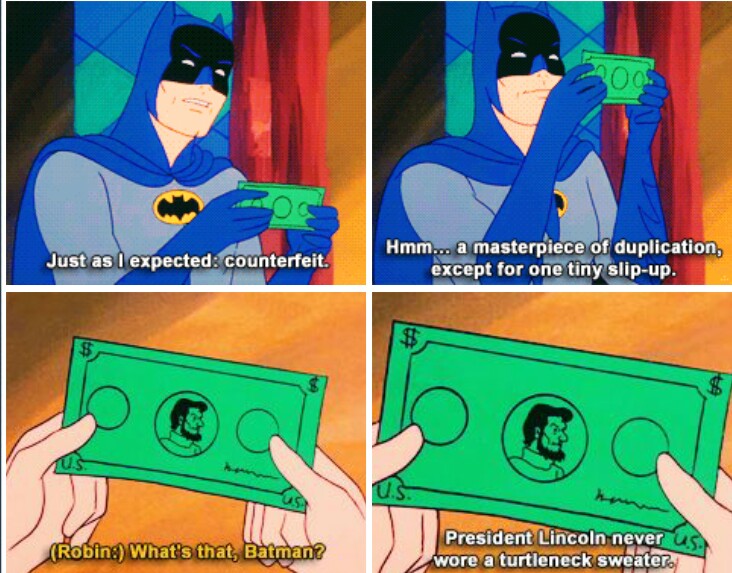
Counterfeit Criminals Countered by Caped Crusader
Having set the legislative scene for trademarks in general, the Court moved onto dealing with the criminal aspect of the case. What section 92 sets out is that a person commits a criminal offense if they, either causing loss or aiming to gain from, use trademarks on goods and sell them, or uses the same marks for advertising or packaging in general. While the provision is very similar to that of trademark infringement (a civil offense), what distinguishes the criminal aspect is the mental state of the infringer, i.e. that the act has to be done "with a view" to gain or cause loss. AS established by previous cases, there is clear overlap, and a criminal offense under section 92 cannot happen without civil infringement as well.

The defense tried to separate the application of the mark by an authorized licensee on the goods from ones where it was done by an unauthorized entity. The Court rejected this position as patently false. According to the Court, the wording in the provision does not support this line of argument. In particular, the Court highlighted the lack of implied consent on the part of the authorizing entity for the brands applied on the goods, especially in the case of 'grey' goods. Their sale was not, through the licensing of the marks, authorized to unauthorized third-parties.

The final argument put forth by the appellants was that of ambiguity, and required clarification on Parliament's intention. The Court swiftly dispatched with the argument, deeming that the language of section 92 was perfectly clear and required no discussion of Parliamentary debates as to its meaning. While the discussions in Parliament were often lacking in detail as to the meaning of a 'counterfeit' (i.e. would it include 'grey' goods), the Court still considered that "...Trade mark violation gravely undermines the value of a brand and affects legitimate trade. The very fact of a cheap sale of a an unauthorised branded item can both dupe a customer and diminish the market and overall value of the trade mark, in terms of perception of quality and exclusivity. In some cases moreover (for example, electrical goods or toys) very real issues of public health and safety can arise where the goods are fake or, even if originally manufactured with the trade mark proprietor's authorisation, are then rejected as sub-standard but nevertheless sold on without authorisation". Due to this potential impact on the brand and public safety, the sale of 'grey' goods would therefore be detrimental in a multitude of ways, and should be protected by criminal sanctions. The Court did concede that the definition of 'grey' goods does potentially raise issues with parallel imports, but discussion on this was kept limited, as it did not apply to the case at hand.

The Court of Appeal ultimately considered that the sale of grey goods could amount to a criminal offense under section 92.

The case is a very important one, especially as a reminder to those who wish to import goods from outside the EU, and don't do their due diligence as to their origin and legitimacy. Businesses would need to be careful and verify that the products sold would be fully authorized, even for sale if bought directly from the factory itself. This writer would hesitate to wager that the case will have major implications to businesses importing branded goods from abroad, since the courts are reluctant to push criminal prosecution, even in parallel importation matters; however, one needs to be careful to dismiss the possibility outright.

25 November, 2016

All Checked Out - CJEU Decides on e-Lending of Books by Libraries

As previously discussed on this very blog, the issue of e-lending has come up in the European courts recently, specifically relating to whether it is allowed under EU law. While one would think the question is quite straight-forward, especially when specific restrictions have been put in place to prevent any abuse, the matter isn't necessarily answered in one word. Advocate General Szpunar handed down his opinion during the Summer, with many awaiting the ultimate decision of the CJEU; however, the wait is now over, and the Court has handed down its judgment on the future of e-lending a couple of weeks ago.

By way of a brief exposition for those who have not read the previous article above, the case of Vereniging Openbare Bibliotheken v Stichting Leenrecht dealt with the lending of electronic copies of books by libraries in the Netherlands, and the remuneration of collection societies in the country for those activities (given for the lending of physical books). Per government policy, e-lending did not fall under the legislation entitling the authors to be remunerated for the lending of their works, but this was disputed by Stichting Leenrecht, ultimately ending up in the CJEU.

The Court dealt with each question posed by Stichting Leenrecht in turn.

The first question posed, as summarized by the Court, asked "...whether Article 1(1), Article 2(1)(b) and Article 6(1) of Directive 2006/115 [Lending Right Directive] must be interpreted as meaning that the concept of ‘lending’, within the meaning of those provisions, covers the lending of a digital copy of a book".

The Court looked at whether the legislation would cover both electronic copies of books, and the concept of 'lending' could apply to the same. They concluded that, after considering all the applicable authorities, that "...intangible objects and non-fixed copies, such as digital copies, must be excluded from the rental right, governed by Directive 2006/115, so as not to be in breach of the agreed statement annexed to the WIPO Treaty, neither that treaty nor that agreed statement preclude the concept of ‘lending’, within the meaning of that directive, from being interpreted, where appropriate, as also including certain lending carried out digitally". The Lending Right Directive expressly applied to physical books, and thus excluded electronic copies of the same; however, the concept of lending under Article 2(1)(a) of the Directive applied to a more abstract, open interpretation of rights (rather than a right, potentially restricting it to only one form), allowing for the inclusion of digital copies as well as their physical counterparts.

This applies to considerations that the Directive should adapt to "...new economic developments such as new forms of exploitation", and clearly the exclusion of any future forms of media would be short-sighted and undesired, and would limit the protection offered to authors through copyright. The Court also considered the derogation from the rights afforded in the Directive by Member States, and concluded that it could potentially apply in order to protect the public interests underlying the lending of books through libraries.

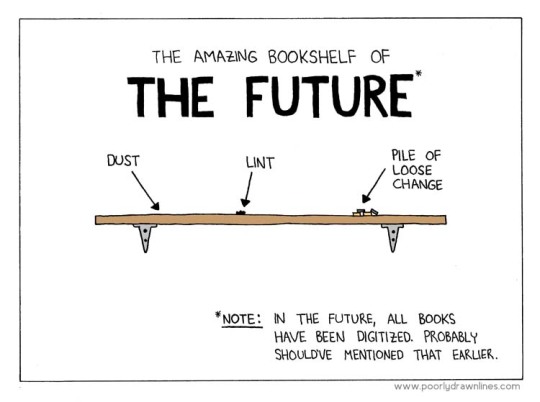
Also the library of the future?
The Court summarized their findings in relation to question one as "...[the texts of the Articles above] must be interpreted as meaning that the concept of ‘lending’, within the meaning of those provisions, covers the lending of a digital copy of a book, where that lending is carried out by placing that copy on the server of a public library and allowing a user to reproduce that copy by downloading it onto his own computer, bearing in mind that only one copy may be downloaded during the lending period and that, after that period has expired, the downloaded copy can no longer be used by that user". The restrictions set a clear dividing line between lending and selling and/or distribution of the content, since this makes it very much akin to that of lending a physical book.

They then moved onto the second question dealt with the possibility of derogating under Article 6(1) of the Directive, and subjecting it to the condition that the digital copy of a book made available by the public library must have been put into circulation by a first sale or other transfer of ownership of that copy in the European Union by the holder of the right of distribution to the public or with his consent. Quickly dealing with the second question, the Court saw that Article 6 did not preclude Member States from making the application of the provision subject to the above condition, since the condition would reduce the risks of prejudicing the authors of those works.

This was followed by the third question, which asked whether Article 6 precludes "...the public lending exception laid down [in Article 6(1)] from applying to the making available by a public library of a digital copy of a book in the case where that copy was obtained from an unlawful source". Even though the Article is quiet on the legitimacy of the sources of those works, the Court dismissed the possibility, as this would "...amount to tolerating, or even encouraging, the circulation of counterfeit or pirated works and would therefore clearly run counter to [the] objective". This makes perfect sense, since the allowance of the use of illegal copies would be tantamount to legalising copyright infringement, at least in cases such as this. Article 6 therefore was seen to preclude the above possibility.

The Court deemed the fourth question to not require an answer.

The case is a very positive step towards accepting and embracing technological change, whether it is in the context of libraries or the use of digital content as a whole. The decision also leaves quite a bit of wiggle room for Member States to implement the Lending Right Directive, which allows for a more nuanced control of copyright protected works in e-lending.

Source: IPKat

16 November, 2016

A New Era - What Does the Donald Trump Presidency Potentially Mean for IP?

Now that the dust has settled in the long and arduous process that is the American presidential race, it is time to look ahead to the future and the possible implications of the Donald Trump presidency. While it can be appreciated that the next 4 (or even 8) years will be ones of change one way or the other, this writer is not concerned with the wider implications, but only of those impacting intellectual property law. The 45th president's particular focus on this area of law still remains very murky; however, his position has been stated in some amount of press and campaign materials, which will form a basis for this discussion.

In his own policy manifesto for his campaign, Mr Trump set out that he will "...use every lawful presidential power to remedy trade disputes if China does not stop its illegal activities, including its theft of American trade secrets - including the application of tariffs consistent with Section 201 and 301 of the Trade Act of 1974 and Section 232 of the Trade Expansion Act of 1962". Clearly his approach echoes largely a trade-based plan, rather than the change of laws and regulations surrounding IP in the United States. Arguably, these are quite strong deterrents for the infringement of intellectual property rights in China, but these measures have had little effect before due to the massive presence of Chinese manufacturing in the world stage (although the country has taken significant steps forward to better enforce IP rights). Recent changes to the Chinese IP law landscape have possibly mitigated the current issues highlighted by the Trump campaign, but this will undoubtedly not deter him should the president want to go after China in a more direct fashion.

Aside from legislative or policy changes, his 100 day plan encompasses withdrawal from the Trans-Pacific Partnership and the renegotiation of bilateral trade agreements, many of which will touch on IP in one way or another. This will have drastic effects on US trade relations, but the implications for IP will be minimal.

The face of an uncertain future for IP
Some have argued that, per his close ties to the entertainment industry, that copyright regulations would be tightened and copyright enforcement made stricter, with higher sentencing and easier claims by rightsholders (in this writer's thinking anyway). Similarly, his position on copyright might impact the regulation of the Internet, with broad-ranging implications should it be used as a weapon to combat against those who infringe copyright online. Overall Donald Trump has been quite quiet in his views on intellectual property and what his concrete plans are during his presidency.

This can be compared with Hillary Clinton's Initiative on Technology & Innovation, which set out a myriad of action points in this sphere, but specifically targeted copyright as a sub-point. In her initiative she set out to "...modernize the copyright system through reforms that facilitate access to out-of-print and orphan works, while protecting the innovation incentives in the system.  It should also promote open-licensing arrangements for copyrighted material supported by federal grant funding". Her plan seemed to focus more on accessibility than enforcement, but echoes vagueness, as expected in a political campaign. Similarly, she aimed to take on patents with "...reforms to the patent system to reduce excessive patent litigation and strengthen the capacity of the Patent and Trademark Office". Clearly this was to reduce frivolous patent litigation by patent trolls, but more particular reforms were left to be sorted if she were ultimately elected. Mrs Clinton was overall much more up-front with her plans and vision for IP, but even so it left much to decipher as to what might actually happen, rather than what might.

As one can appreciate the future developments of this coming presidency are unknown, and while candidates often give indications as to their stances or policy intentions, these don't necessarily stick once they reach the Oval Office. This writer will remain optimistic, but does wonder whether a more pro-rightsholder position will become the norm, with a clear reduction in fair use and other legitimate uses of copyright materials, especially in an online environment. Odds are the trajectory that IP legislation was already headed will most likely remain the same irrespective of who the president is, as a swooping overhaul of this would lead to too much uncertainty and possibly a negative impact in IP and innovation as a whole (with the rapid pace of technological development making things even worse if not kept up with). While the media has calmed down after the election, it will surely be quite the next 4 years to come.

10 November, 2016

Ringing Hollow - Ringtone Trademark Rejected by EU General Court

Since the introduction of the new Trade Mark Regulation No 2015/2424, this writer for one has been awaiting the inevitable landslide of unusual trademark registrations, particularly for sounds and even smells. While this rush has yet to materialize, some attempts have been made, and quite recently one of those applications ended up in the EU General Court. This writer laments his lateness in relation to this case; however, it is interesting enough to have to be discussed even a month or two after the fact.

The case of Globo Comunicação e Participações S/A v EUIPO concerned the registration of a mobile phone ringtone by Globo for goods and services in classes 9, 16, 38 and 41, covering a wide array of tangible and intangible goods (the musical notation for the sound can be viewed here). The mark was rejected by both the Examiner and the Board of Appeal for a lack of distinctive character under Article Article 7(1)(b) of the old Trade Mark Regulation No 207/2009. The matter was subsequently appealed to the General Court, who handed down their judgment in mid-September.

The first matter dealt with by the General Court was a simple procedural point, where Globo argued that no reasons were given by the Board of Appeal as to why the mark was rejected under Article 7(1)(b). While the Court acknowledged that the Board of Appeal does have a requirement to state their reasons for rejecting a mark, this was not omitted in the case at hand, as the reasons issued (namely on the banality of the sign with regard to the relevant goods or services) and their correlation with the classes was clearly given, even if regarding all of the classes of goods as a whole. A single conclusion did not result in reasons only being given to one class, but all classes summarily.

The Court then moved onto the meat of the matter, namely whether the mark infringed Article 7(1)(b) through a lack of distinctive character. Globo argued that, contrary to previous findings, the brevity or the simplicity of the sound in question should not impact the assessment of its distinctive character. 

Some combinations of notes are a little less simple
As with 'traditional' marks, the assessment of distinctive character is based on the goods or services in respect of which registration of the mark is sought and to the relevant public’s perception of that mark. While this is much more straightforward in word or image marks, as observed by the Court: "...although the public is used to perceiving word or figurative marks as signs which identify the commercial origin of goods and services, the same is not necessarily true when the sign consists solely of a sound element". Arguably it is much more difficult to build an association with a sound, but a good example of a an arguable successful campaign to do so is the whistle adopted by McDonald's in their TV advertising.

The unfamiliarity of peoples' perceptions on sound marks is also added to by the classes of goods or services the mark is registered for. The use of sound marks in TV, for example, would lead to a much higher likelihood of consumer identification and association, while physical media does not lend itself to this perception. The Court explained that "...as regards certain goods and services linked, in particular, first, to tools for communicating or entertaining by means of television broadcasting or radio broadcasting and to telephony and, secondly, to IT media, computer software or to the media sector in general, sound elements, such as jingles or melodies, are used in order to enable the product or service at issue to be identified aurally as coming from a particular undertaking". Consumers would therefore have to perceive the sound as indicating a particular brand of goods or services via these mediums.

The Court found that, a sound that only consists of merely a banal combination of notes would not be perceived as referring to any particular brand, as it would cause a 'mirror effect', meaning it only refers back to itself. Following this, the General Court considered whether the sound in the mark in question would be distinctive, and found that it isn't, as the simple two note combination would only "...be perceived by the relevant public only as a mere function of the goods and services covered and not as an indication of their commercial origin". This was further exasperated by the excessive simplicity (only sounding like an alarm or a telephone ringing) and only therefore refers to itself, rather than the goods or services in was applied for. The Court concluded that the Board of Appeal did not err in their findings and dismissed the appeal.

The case shows the difficulty in the registration of simple sound marks, especially ones that are not 'jingle-like', i.e. serve as a longer, more distinctive part of a product or show for example. It will be interesting to see how the change in the requiremet of graphical representation changes things; however, as the sound was played in court, it seems unlikely that the addition of a playable example would sway the pendulum the other way.

Source: Ars Technica

02 November, 2016

Before the Supreme Court - Copyright Protection of the Design of Uniforms in the US Court of Appeal

In the light of the pending US Supreme Court decision regarding copyright protection in the design of cheerleaders' uniforms, this writer thought it would be good to set the scene for the decision by discussing the decision handed down by the Court of Appeal. The judiciary rarely takes on design copyright cases, as often their value is negligible or protection is not even sought (especially in the US where copyright registration is an important part of IP).

The case of Varsity Brands Inc. v Star Athletica LLC dealt with the design of a cheerleader uniform, comprising of several different designs, incorporating various colors that divide the uniform into specific shapes and segments (visible here). The designs themselves were of non-functional nature, and were only intended to be of aesthetic value. The original works were produced and sold by Varsity Brands, who noticed that a competitor, Star Athletica, also sold similar outfits in competition with Varsity's uniforms, and took the company to court for copyright infringement and a number of other civil claims in competition.

The Court of Appeal first took on the issue of whether Star Athletica has infringed Varsity Brands' copyright in the uniforms; the designs for which have been successfully registered at the US Copyright Office. After lengthy discussions, the Court did agree that successful registration at the Copyright Office could offer prima facie, although rebuttable, protection and acceptance of copyright in a given work. Star Athletica did, however, argue that the designs were in themselves useful article, and thus not protectable by copyright. The designs therefore would need to be "…identified separately from, and are capable of existing independently of, the utilitarian aspects of the article" for copyright protection to be afforded.
What amounts to a useful article is an article that has a utilitarian function that is not there merely to convey the appearance of the article (i.e. for aesthetic reasons). Following the above, the Court established that this would be determined by a two-prong test: "…first, whether the design for which the author seeks copyright protection is a 'design of a useful article,' and if so, second, whether the design of the useful article 'incorporates pictorial, graphic, or sculptural features that can be identified separately from, and are capable of existing independently of, the utilitarian aspects of the [useful] article'".
Alan's Halloween outfit was totally non-functional
The Court then turned to the first prong of the test on separability, meaning that the article would not be a useful one, but only conveys the items appearance.  As illustrated by the Court's discussion, both appellate and first instance courts have struggled to formulate a concise and uniform approach in determining what would amount to a 'useful article'. The Court moved on to applying what they considered to be the correct approach, which would be applying a number of questions based on the Copyright Act itself. These questions are effectively to ask whether the design is "…a pictorial, graphic, or sculptural work", and if so, whether the design is a useful article within the definition above. The Court would then have to ask "…[w]hat are the utilitarian aspects of the useful article", which can include several aspects (for example, aesthetic, functional and non-functional elements).
Once the Court has identified the relevant utilitarian aspects of the design, it would then finally move onto assessing whether "…the viewer of the design [can] identify pictorial, graphic, or sculptural features separately from... the utilitarian aspects of the useful article", and if these features could exist separately from the design itself (i.e. are removable from the design and don't impact its functionality). If either one, or both, of the final questions fails, the design is not protected by copyright.
The Court subsequently moved onto its consideration of the copyright protection for Varsity Brands' designs. They quickly answered the first two questions in the affirmative, expanding on the second question that the designs, represented in sketches of the uniforms, have an "intrinsic utilitarian function that is not merely to portray the appearance of [clothing] or to convey information". They then set out the particular utilitarian aspects of the designs, which were to "cover the body, wick away moisture, and withstand the rigors of athletic movements". The Court rejected Star Athletica's assertion that the uniforms, through a decorative function, would not be copyrightable, as, rightfully so, this would cause artworks and other similar works to not be protected by copyright by virtue of their decorative function
Finally, the Court sought to answer the final two questions. In determining the separability of the pictorial, graphic or sculptural features (particularly the arrangement of stripes, chevrons, zigzags, and color-blocking), the Court saw that they could indeed be separated, as they do not enhance the uniform's functionality, and the uniforms remain fully identifiable even in the absence of this stylisation due to its distinctive shape. Additionally, purchasers would be able to distinguish each style from each other, and choose accordingly, making the designs separate and individual and therefore protectable. Even so, would they still exist independently of the utilitarian aspects of the uniforms, even if separable? The Court said yes, as the features could be incorporated into a number of garment styles, even if they are not meant for cheerleaders (meaning the designs are transferable), and do not affect the uniform's functionality for those purposes even if used or not. Following the answers to the questions the Court ultimately determined that the designs were copyrightable.

The Court distinguished this from the design of a dress, which, through its shape rather than a mere graphical addition adorning its surface, as its shape, cut and other features are "…inextricably connected with the utilitarian aspects of clothing" and thus can't be identified separately. This illustrates the difference in protectability for fabric designs and dress designs.


As is clear the US courts desperately need a unifying precedent to determine what the correct test is in relation to useful articles and the extent of copyright protection thereof. The Supreme Court's decision is still forthcoming, and this writer will be curious to see whether they follow the Court of Appeal's test, or formulate a different one entirely.